Supplements & Companions
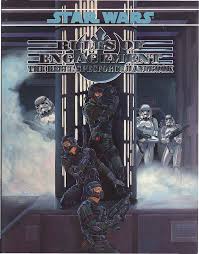
RULES OF ENGAGEMENT: THE REBEL SPECFORCE HANDBOOK
RULES OF ENGAGEMENT: THE REBEL SPECFORCE HANDBOOK
"In half an hour I can put together a strike team of twenty soldiers, capable of succeeding at any mission, under any circumstances, anywhere in the galaxy." — General Crix Madine
CREDITS
Design: Timothy S. O'Brien
Development and Editing: Eric S. Trautmann
Additional Editing: Jen Seiden
Cover Design and Graphics: Brian Schomburg
Cover Art: Alan Pollack
Interior Art: Tim Bobko, Jacen Burrows, Storn A. Cook, Joey Robinson, Brian Schomburg
Playtesting and Advice: Wes Divin, Warrant Officer John Fernandes (retired), Terry Grazier, Rich Hawran, Steve Miller, D. Scott Palter, Peter Schweighofer, Ron Seiden, George R. Strayton, Paul Sudlow, Pat Villanueva, Paul Wocken
Publisher: Daniel Scott Palter
Associate Publisher/Treasurer: Denise Palter
Associate Publisher: Richard Hawran
Editors: Steve Miller, Peter Schweighofer, George Strayton, Paul Sudlow, Eric S. Trautmann
Editorial Assistant: Jen Seiden
Graphic Artists: Tim Bobko, Tom ONeill, Brian Schomburg
Sales Manager: Jeff Kent
Sales Assistant: Timothy S. O'Brien
Licensing Manager: Ron Seiden
Warehouse Manager: Ed Hill
Accounting: Karen Bayly, Mary Galant, Wendy Lord
Billing: Sue Hartung
Published by West End Games.
TM or (R) & (C) 1997 Lucasfilm Ltd. Title and character and place names protected by all applicable trademark laws. All Rights Reserved. Used Under Authorization.
Chapter One: Rebel SpecForces
Introduction
"In half an hour I can put together a strike team of twenty soldiers, capable of succeeding at any mission, under any circumstances, anywhere in the galaxy." —Attributed to General Crix Madine.
The galaxy is at war. The Galactic Empire occupies thousands of systems and exercises indirect control over thousands more. It is opposed by the Rebel Alliance, a small band of freedom fighters dedicated to overthrowing the despotic regime. The Alliance wages an Empire-wide hit-and-fade war. Local sector forces keep their oppressors off-balance with ambushes, sabotage and insurgent campaigns. Starfighters strike from hyperspace against Imperial convoys. The tiny Alliance fleet is constantly strengthening itself, in preparation for the day it can engage the mighty Imperial Navy in direct combat. The Alliance refuses to take ground or keep territory, instead attacking the Empire's weak points and morale. For this duty, the Alliance has raised a corps of elite strike teams, the sharp end of the Alliance fighting forces: Special Forces.
A special force is any fighting unit specially trained to undertake extremely difficult missions. The Rebel SpecForces (often referred to simply as "SpecForce"), Imperial Storm Commandos and Thyrsus Sun Guards were created to handle specific missions that regular troops could not be expected to perform. Stormtroopers, for example, assault enemy positions and guard high-security installations. Alliance Infiltrators enter high-security areas to sabotage enemy equipment and sow confusion. Pathfinders scout and secure landing zones. SpaceOps troopers perform ship-boarding actions.
Whiskers
"So, Sergeant, when can I shave?" asked Jop quietly. "This thing's starting to itch." He scraped out the last of his cold ration pack dinner and ate the thick gray stuff.
Unit tradition declared that all newly transferred troopers grow beards, if they could, or braids, if they couldn't. Jop was only a couple weeks out of drop-camp. He knew he could shave it at some point, but exactly when remained a mystery. Most of the troopers kept a beard or didn't shave in the field, but Jop figured that was their choice. Jop's own beard was coming in strong and was reaching a stage where it felt like it was about to crawl off. It was cold in these woods, but the beard didn't seem to help.
Sergeant Hork scratched his own thick beard and looked at Jop with secrets in his eyes. "I'll let you know, trooper. Meantime, put up with it. You're not on watch tonight. Get some sleep. There's a big push coming on tomorrow."
"Thrilling." Jop had only been in one minor lightfight, and wasn't eager to experience it again. Still, that's what he'd signed on for: a chance to fight the Empire.
He quietly crawled to his slithole. Imperial troopers were out there, a couple hundred meters away. Nobody was interested in night combat, so by unspoken agreement the shooting stopped at sunset. Despite the informal nocturnal cease-fire, Jop knew better than to tromp along at night. That would give away our position, he thought, and you never know if a sharpshooter is sitting out there. Fortunately, the Imperials didn't really know where the Alliance troopers were, and mostly stayed in their fortified position. Jop's platoon had remained under cover enough to keep the Imperials guessing.
Jop dozed, dropping into a dreamless, timeless sleep. Suddenly, he felt something cold brush his cheek. His eyes snapped open, his heart leapt, and he froze. The moons had gone down. It was pitch-black.
"You're all right, troopy. Go back to sleep," a voice calmly intoned in his ear. He stayed still and waited. No sound. He realized his heart was pounding. He slowly moved his hand to his rifle, picked it up, and waved it in the dark. Nobody there. Time passed. His heartbeat slowed to normal. The stars slowly moved in the sky. Eventually, he dozed once again.
The next morning, he told the story to his squad over another helping of cold gray "nutritive supplement"—pausing only to wash the gummy taste out of his mouth with a lukewarm cup of cafstim. "Who in the name of Garhol's Pain was that?" he finished, looking pointedly at Sergeant Hork.
"Infiltrator. You can't see 'em, hear 'em or touch 'em. They were heading out to the Imperial strongpoint to soften things up for us, take out a few stormtroopers and scare the flarg out of the officers. They were probably checking to see if you were an Imperial forward guard," said Hork. "You're a lucky man. They check to see if you've got long hair or stubble. Imperial regulations require troopers to remain clean-shaven and well-groomed, even in the field.
"By the way, you can shave now, if you really want to."
That night Jop couldn't sleep. Adrenaline and fear—the aftereffects of the day's combat—conspired to keep him awake. They'd taken the Imperial strongpoint with only a few casualties. They couldn't keep the position, of course—Alliance military doctrine mandated that all such operations remain hit-and-fade. The platoon moved out almost immediately with prisoners and captured equipment.
As he lay in his makeshift bunk that night, Jop realized his beard hadn't itched all day. Minutes later, he slept.
Historical Special Forces
There have been a number of special forces units throughout history—most notably, the Old Republic Rocket Jumpers, Freedom Warriors and Atrisian Assault Corps.
The Rocket Jumpers—officially designated "the Rocket-jumper Elite Advance Unit"—were short-range assault troops propelled by primitive rocket packs. They jumped into heavy fighting to break stalemates and sieges, seized and held ground until regular units could reinforce the area, and rapidly reinforced threatened positions. Only the most highly qualified and dedicated troopers were allowed to serve the Republic in this way.
The Freedom Warriors were highly trained troops supporting the Jedi Order in resource-heavy operations. Although the unit's ranks were only open to those who could not feel the Force as Jedi do, the Freedom Warriors were able to effectively battle Sith-tainted soldiers and Sith-spawned monstrosities.
The Atrisian Assault Corps was the hammer of the Emperors of the Kitel Phard dynasty—fast, hard-hitting, and able to roll over every enemy it encountered. The Corps included His Majesty's Roto-gunners, the Imperial Atrisian Grenadiers, and the Queen's Own Armored Cavalry Troop.
Special Operations
"You aren't Skywalker. You aren't even Solo." —SpecForce Infiltrator to Rebel SpecOps trooper.
Rebel Special Forces (SpecForces) should not be confused with the similar sounding Special Operations (SpecOps) groups. Special Forces units are made up of military professionals of the highest caliber (in uniform and under military jurisdiction) who perform planned, specific missions. Special Operations agents tend to work on murky undercover missions involving investigation, snooping, desperate lightfights, and performing chaotic, seat-of-the-pants missions. SpecForces recognizes the need for SpecOps—and individual SpecForce members may even consider SpecOps members capable soldiers—but tend to think of their counterparts as amateurs, relying mainly on luck. SpecOps, on the other hand, regards SpecForce as a collection of arrogant, uptight, overtrained grunts with delusions of importance. The rivalry between the two branches of the Alliance runs very deep.
Regulars and Partisans
Special forces troops ("Specs") are drawn mainly from regular troops, but are more carefully and specifically trained to fight in certain ways, on specific terrain, and for select missions.
In the modern galaxy, special forces are used heavily by both sides in the Galactic Civil War. Both the Empire and Rebel Alliance have several such units, formed by the best physically and mentally able volunteers available. No one is drafted into elite units.
The Rebel Alliance relies on SpecForces to raid Imperial strongholds, prepare landing zones for regular troops, board and capture Imperial ships, guard bases, operate tactically important equipment, and execute almost every sort of important mission except one: taking and holding territory. The Alliance rarely takes ground, and when it does—usually temporarily—it uses regular ground troops.
Regular troops—actually partisan fighters and part-time soldiers—are mostly drawn from available sector forces (nicknamed "SecForces" by Alliance special forces soldiers) and are usually only used to fill out rank-and-file. Alliance High Command simply has little use for standard infantry until strategy calls for a general uprising. Local sector forces use regular troops much more often, partially from lack of other troops and partially because a standard sector command mission is to keep the Imperial forces busy.
Regulars deal with theaters of operations, battle lines and control of physical areas. Attacks are for tactical gains and operational success. SpecForces attack objectives regardless of the current battle lines, and usually make no attempt to control zones. Special forces execute missions for operational gains and strategic success.
It should not be imagined that regular forces are less important than special forces. Quite the opposite: one of the special forces' primary missions is to reinforce, support and aid regular troop operations. SpecForces simply perform more difficult missions more routinely.
Creation of Alliance Special Forces
The original Alliance military plan was vague and starry-eyed. Few of the original planners of the Rebellion were militarily experienced. Fortunately, the Alliance was able to recruit a cadre of experienced retired officers like General Jan Dodonna, Admiral Adar Talon, Marshal Pashna Starkiller, and Commander Vanden Willard.
Bail Organa's strategy for the Alliance military called for a three-step process of revolution: First, insurrection, preparation and political groundswell, followed by a period of hit-and-fade warfare (often referred to as a "shadow war") to wear down and eventually crack the Imperial grip on the galaxy, followed by a general uprising and conversion of the Rebellion to a conventional war.
The first step was executed over a period of years. Arms stockpiles were built up and freedom-minded officers recruited. Allies gradually made contributions and small forces of "shadow warriors"—troops that specialize in hit-and-fade ground combat—began to raid Imperial installations. As Imperial crackdowns and "police actions" grew harsher, Rebel commandos began to strike back.
The second phase was thus launched unevenly. There was no formal beginning to hit-and-fade actions. Local resistance had been going on for some time. Unfortunately, local forces could be crushed under the mass and might of the Empire. The Alliance had to develop a fast-response military force. It readily became apparent that while most of the Alliance forces would be local, the deadliest forces would have to be under the direct control of Alliance High Command.
The Alliance was entering a long period of hit-and-fade operations. Early successes were small and mitigated by the overwhelming size of the Empire. The conventional phase of the Rebellion started in some sectors, faltered in most, and continued in a lurching way in others.
The newly formed Special Forces were initially divided into two regiments—Combat and Recon. Over several missions they evolved into the modern regiments. This turned SpecForce from two medium-sized units into several smaller units. Their numbers were reinvigorated by an infusion of SecForce experts. This led to increased confusion. SpecForce, spread among several commands and without a dedicated commander, began to falter.
Then, shortly after the Battle of Yavin, General Crix Madine defected to the Alliance and was placed in command of Special Forces. At the time, SpecForce was chaotically organized and squandering its resources. Madine moved through SpecForce like blast of wind, clearing away confusion and sweeping up the very best of the Alliance military for duty. The best of the SecForces were offered positions in SpecForce. The borderline SpecForce troopers were whipped into shape or transferred.
Conventional war campaigns restarted. SecForces, with SpecForce lending critical support, began to make lasting footholds in the Empire. SpecForce became a military branch feared by the Empire. When Imperial propaganda mentioned "Rebel terrorists" they meant SpecForce, the branch of the Alliance that the Empire's military feared the most.
As the conventional war heats up, SpecForce units can expect to be used more and more. Infiltrator and Pathfinder units are already being used to prepare the way for invasion forces, and SpaceOps and HWS units will likely be attached to regular line divisions, spearheading planetary landings and assaults.
Special Forces in the New Republic
Alliance Special Forces becomes New Republic Special Forces after the Alliance seizure of Coruscant. The New Republic maintains SpecForce under the command of General Madine until his death.
The main difference between Alliance and New Republic SpecForces is that the later units are somewhat better trained, perhaps a little less experienced on average (since many veterans of the war have retired in the post-Endor period) and are given much better equipment.
New Republic Special Forces are instrumental in the ongoing drive against the Empire until the change in military policy toward the Empire, shortly before Mon Mothma's resignation. Once the final phase of Organa's overall plan is implemented and a conventional war starts up, Special Forces comes into its own as the Alliance's most elite fighting force.
As the New Republic-Empire War calms down, SpecForce contracts again, returning to roughly the same operation size it was under the Alliance. In this later period, SpecForce is a tool for defense and rapid solutions to military problems, and its role as an invasion force is left largely behind.
Chapter Two: SpecForce Life
"Regular troops in the field live in holes or ruins, eat out of cold ration packs, and move and fight according to opaque orders (usually relayed from well behind the front lines). Troopers are generally careful, fairly well-trained and have a single overriding goal: avoid getting shot. They are under threat not only from the enemy, but from local creatures and diseases, and tend to wear down to their physical and mental chassis. Special forces are much the same, only more so." —Dunn Jassigan, military analyst.
Candidates
"Your candidacy for SpecForce training is itself the mark of a superior soldier." —From the standard acceptance holo to SpecForce candidates.
Very few troopers can enter special forces units. The Galactic Empire, for example, has a long and grueling series of examinations to determine a candidate's political, physical, educational, technical, and mental competency to serve in an elite unit. Extensive background checks and interviews of friends, relatives and acquaintances assure the candidate's loyalty and political acceptability. Although the vast majority of Imperial troops are draftees, no trooper is drafted into special military service. All Imperial military elite forces are made up of volunteers. Political connections are of little or no value to individuals attempting to enter Imperial special forces (although unacceptable political views are cause for disqualification). It is unclear whether stormtroopers undergo the same candidacy requirements.
The Alliance makes a concerted effort to perform background checks, but interviews of relatives or old friends are usually impractical. Extremely complete personal interviews, interrogations and examinations make up the bulk of the SpecForce vetting process. In cases where a candidate is highly questionable, he or she is disqualified. Alliance Intelligence makes the vetting of SpecForce candidates a high priority and the percentage of Imperial agents penetrating the organization is surprisingly low.
Surprisingly, the Empire has given the Alliance an advantage in developing special forces assets. The anti-alien bias of the Imperial political system has created a large pool of non-humans who are strongly opposed to the New Order. Many of these aliens possess special skills or abilities particularly suited to covert military operations.
In addition, the Empire's oppressive rule has alienated uncounted numbers of humans who are willing to join the Alliance. The Empire's worst offenses have actually served to bolster Alliance ranks, allowing the Rebels to carefully select and train SpecForce troops.
Training
In both the Alliance and Empire special forces candidates have already endured basic and specialist training. Once selected for special forces training, the candidate goes through another round of advanced drop-camp training. Although the trainees are taught necessary skills, the main purpose of this camp is to weed out those who lack the drive to succeed in their missions. Standards are very high in every area, and failure rates are equally high. A large percentage of Alliance regulars are failed SpecForce candidates. The Imperial washout percentage is slightly higher (but such troops are less common among the Imperial regular forces due to the Empire's larger size).
Failure in the entrance program carries no stigma in either military—washing out of a special forces program is far less serious than failure on the front lines. Simply being accepted to a special forces program is the mark of a superior soldier, and most troops that do not make it through special forces drop-camp go on to good careers.
The identities of special forces trainees are high-level secrets. The trainee ID card carries a holoflat, rank and security clearance, but no name. If special forces troop IDs were known to an enemy, families would be endangered and personality profiles might be assembled. This is a particular concern for Alliance SpecForces, but also a problem for Imperial forces.
Fundamental SpecForce training exercises include two months of weapons drills in blasters, slugthrowers, heavy weaponry, and hand weapons. The trainees perform numerous deployment simulations: overland marches, stealth drills, drop-ship and para-sail deployments, and so on. Also fundamental to advanced training are lectures on military history, theory and practice. As training progresses, the trainees go through increasingly difficult scenarios, including live-fire drills and failure-rigged reenactments, finishing with an extremely realistic war game. Once this program is complete, SpecForce trainees advance to a further four-week specialization program.
Specialization
"One expects they have specialist sanitation engineers as well." —Imperial Ubiqtorate officer commenting on Alliance SpecForce structure.
Once trained to a peak in fundamental skills, special forces trainees are sent to their final training camp for "finishing and polishing" in a particular area of expertise. Each specialization requires a different application of the basic skills learned at drop-camp. The main areas of specialization in the Alliance SpecForces are:
SpaceOps troops. SpaceOps troopers are typically ship-based combat personnel. They spend most of their time developing combat skills and tactics needed to fight effectively aboard starships. Secondary emphasis is placed on technical skills, and stealth training is kept to a minimum. When not engaged in combat, they often provide security aboard ships or at Rebel starship bases.
Pathfinders. Pathfinders' main concentration is stealth and scouting of unexplored or unknown terrain. Pathfinders receive the basic SpecForce training in hand-to-hand combat, though technical instruction (computers, demolitions and repair skills, for example) is less stringent.
Urban Combat Specialists (UCSs). Urban Combat Specialists are deployed in cities and metroplexes. UCSs balance their training between stealth and combat, with secondary instruction in technical and operational skills.
Wilderness Fighters. Wilderness Fighters are the rural counterparts to Urban Combat Specialists, with an emphasis on survival and an additional emphasis on a particular terrain type: arctic, aquatic, desert, forest, jungle, plains, or mountain.
Technicians (Techs). Technicians concentrate almost exclusively on select skills useful to SpecForce operations—demolitions, repair of SpecForce equipment, communications, sensor operations, emergency medicine, or "creative engineering." Techs are marginally deficient in combat skills, but are fully trained as SpecForce troopers. Techs are usually assigned to augment other SpecForce units.
Infiltrators. Perhaps the most feared of all the Alliance SpecForce battalions, the Infiltrators rely heavily on stealth technique and hand-to-hand combat. Select sabotage and demolitions skills are also emphasized. Infiltrators are typically deployed behind enemy lines with minimal equipment.
Heavy Weapons Specialists (HWSs). HWSs are the hammer of Alliance SpecForces. The Heavy Weapons Specialists' training concentrates on combat skills—particularly firing light and heavy repeating blasters. HWS indoctrination focuses on the operation and maintenance of mounted, ship, and vehicle blasters, artillery, and other such weaponry. High casualty rates keep this regiment's numbers lower than other regiments and veteran HWSs are generally revered as fearsome warriors.
In Alliance SpecForces, certain species are divided by terrain adaptation; for example, most of the underwater Wilderness Fighter units are populated by Mon Calamari and Quarren soldiers. Human reliance on technology allows the species to perform adequately virtually anywhere, but many non-humans perform best in particular environments.
In most cases, specializations reflect the terrain in which the trooper was raised. Wilderness fighters are usually natives of rural areas, Urban Combat Specialists are typically from metroplexes. SpaceOps troops are usually from heavily urbanized areas or spacer stock. The main exceptions to this are the Infiltrator regiment (made up of troopers with an exceptionally strong reason to hate Imperials) and the Pathfinders (who come from all sorts of locations).
Other specialists are usually assigned to tasks in areas they are already conversant in; it is often more efficient to train an already skilled medic, pilot, or procurement specialist to SpecForce standards than the other way around. Medics, pilots, comm techs, drivers, supply specs, translators, interrogators, and a host of other necessary specialists are available for missions.
Troopers
The average SpecForce trooper is a little older than a Rebel soldier, has better-than-average intelligence and physical ability, and has a strong dedication to Alliance, unit, and mission. SpecForce troopers can be extremely wild in their private lives, but are usually consummate professionals in the field. Alliance soldiers in general are very idealistic and committed—SpecForce troopers are even more dedicated. A large percentage of SpecForce troops are former Imperial soldiers.
Officers
"Ranking officers on the lines are dangerous." —Experienced trooper's comment.
A large percentage of human Alliance SpecForce officers are ex-Imperials who have been extensively vetted by Alliance Intelligence. SpecForce officers are usually a little younger than their regular counterparts, especially at higher ranks. The nature of special forces usually allows a rapid rate of advancement, both for success and because of positions opening due to the SpecForce's high casualty percentage. SpecForce officers are typically exceptionally intelligent, physically fit and are among the most talented and driven officers in the galaxy. It takes an extraordinary officer to command the respect of SpecForce troopers.
The Daily Grind
"The only thing worse than a fight is waiting for a fight." —Comment overheard on a SpaceOps shuttle in the minutes before a landing assault.
SpecForce troops spend the bulk of their time training, maintaining their gear and moving from place to place. A fairly small amount of time is actually spent on missions. Like a regular combat soldier's life, SpecForce life is generally boring and tense, punctuated by moments of extreme stress and danger. When SpecForce troops are assigned a mission (or "called up") it tends to be short and exceptionally nasty (unlike regular trooper tours, which tend to be long and slightly less nasty). The main difference is that SpecForce units go out actively looking for trouble more often, and are expected to function more reliably.
Downtime—the period between missions—is seldom purely recreational for Specs. Skills are constantly being kept up and sharpened. Marginal skills are improved and new ones developed. An experienced SpecForce trooper is likely to be adept at a wide variety of skills and operations, and has probably been cross-trained to specialist levels in other fields (medical, technical or operational).
SpecForce troops spend a great deal of their time maintaining their own equipment. While techs are primarily responsible for unit equipment maintenance, personal gear upkeep is the individual trooper's duty. Blasters need only be cleaned and checked weekly, but many units use chemical or compressed-air slugthrowers or mechanical bolt-throwers, all of which require more regular attention. SpecForce troops that use armor must check it for damage and repair any minor failures; serious damage must be brought to the unit technician for repair or the battalion quartermaster for replacement. Other equipment, like night-goggles and stealth boots, must be checked for malfunction after every mission. Technicians get the worst of this, as they must perform their own gear maintenance as well as unit equipment repairs, plus spend time sharpening other skills.
Specs also tend to be in transit a great deal of time, whether from system to system or on the ground. Life aboard ship is cramped and dull. Spacers are used to the close quarters and have duties to keep them busy, but specs have to fill their spare time somehow. Even the most dedicated soldier finds empty stretches of time. Long hyperspace jumps are notoriously tense, especially when the Specs know they are on the way to a dangerous mission. SpaceOps troopers are particularly notorious for being vicious; this antisocial behavior is generally attributed to the SpaceOps' long periods aboard ship—in close quarters and waiting for action—for the bulk of their tours of duty.
Rest and recreation is crucial to keeping morale up. SpecForce units can't simply drop into resorts or return home, so most of this recreation is spent on Alliance safeworlds. Interestingly, Specs tend to spend their off-time pursuing intense or dangerous sports and activities. Water-skimmer racing, rock-climbing, para-sailing, big-game hunting, deep-sea fishing, and contact sports like shockball are all popular pastimes while on leave. Leaves are nearly sacrosanct, since the mental health of SpecForces is a primary factor in their performance. Except under the most serious conditions, a Spec can expect to have the full term of the leave off, ranging from three-day passes to one month vacations.
Most Specs report that missions are usually less tense than off-times. The action-oriented Specs find combat preferable to the interminable waiting and training that dominates their lives. These missions are extremely stressful themselves, of course, with high casualty rates in every unit.
SpecForce units concentrate almost entirely on the task at hand. Mission parameters usually leave no room for error or distractions, and a single trooper's misstep can result in failure. Units are extremely tight-knit, with bonds running as deep or deeper than family. Such a group has no room for misfits, outsiders or loners, and troopers who do not fit into the group are quickly transferred. Specs who can't find a home unit usually find themselves assigned to a SpecOps Mission Group eventually—a minor embarrassment.
Ranks in Alliance Special Forces
Since the Alliance's military forces are a mishmash of army and navy forces, determining the relative rank of various officers can be confusing.
During training and while on SpecForce-only missions, SpecCom ranks its members in the following manner:
| SpecForce Rank | Command Level | Equivalent Alliance Army Rank | Equivalent Alliance Navy Rank |
|---|---|---|---|
| General | Division | General | Admiral |
| Colonel | Regiment (TC) | Colonel | Captain |
| Major | Regiment or Company (TC) | Major | Commander |
| Captain | Company or Platoon (TC) | Captain | Lieutenant |
| Senior Lieutenant | Platoon (TC) | Lieutenant | Lieutenant |
| Lieutenant | Platoon | Lieutenant | Ensign |
| Master Sergeant | Platoon Second in Command | Sergeant Major | Chief Petty Officer |
| Sergeant | Squad | Sergeant | Petty Officer |
| Senior Trooper (First Trooper) | Fire Team | Senior Trooper | Senior Deckman |
| Trooper | — | Trooper | Deckman |
Note: "TC" indicates Taskforce Command eligibility.
SpecForce Terms and Jargon
Amphibians — Also Amphibs, Fish. Aquatic Wilderness Fighters. Often literally correct, as Mon Calamari, Quarren and other amphibian species make up a significant percentage of these units. Blaster Magnet — Also Vapebait. SpecForce euphemism for an Imperial officer. Cold — Also chilly, frosty. Refers to a trooper's ability to maintain calm under fire. Commando — Generic term for SpecForce troopers, usually used by non-Specs. Cool Drop — An insertion, typically by para-sail or paraglider, into a relatively safe area. Drop — Also Paradrop. Landing via para-sail. Dropped troops typically land in a pre-selected drop zone or DZ. Drop Zone — Also DZ. A pre-selected area where troops are deployed, or dropped. Field Promotion — Refers to rank advancement given to troops in the field for acts of skill or bravery; is also slang for "killed in action," typically in a successful mission (from the High Command habit of promoting and commending fallen troopers). Gunner — Also HSW. Heavy Weapon Specialist, uses an ISW. Hardpoint — Also strongpoint. A fortified enemy emplacement or other well-defended target. High drop — Deploying troops from orbit. Hot Drop — Landing in a dangerous area, typically one patrolled or while under fire. ISW — Infantry Support Weapon. KIA — Killed In Action. KSAs — Imperial radtroopers (picked up from Special Ops agents; KSA stands for "Kinky Silver Armor"). Landing Zone — Also LZ. The area in which troops land. Low drop — Troops are deployed or "dropped" while in atmosphere. Mindspook — A Special Operations agent with enhanced mental powers, usually a Force-using agent. Mud Foot — SpecForce derogatory term for inexperienced Alliance infantry. Nature Lovers — Wilderness Fighters. OBC — Order of Battle Companies. Plastic Soldiers — Stormtroopers. Also toy soldiers, whitehats, snowmen. Pop Gun — Compressed-air slugthrower. Puppetmen — Imperial special mission troops, term derived from their use in political-gain operations to frame "Rebel terrorists" for carefully calculated atrocities. SpecForce troops utterly despise ISM personnel. Pyroman — Also boomer. Demolitions expert. Recovering Spook — A Mission Group agent attached to a SpecForce unit. Rocket Jockeys — Starfighter pilots; SpecForce troops cheerfully despise the arrogant and (they believe) better-treated starfighter pilots. Sand Banthas — Desert Wilderness Fighters. Scanner — Sensor specialist. Not to be confused with type of sensor. Scanner — Type of sensor. Sec — Abbreviated modifier referring to Sector, as in SecForces, SecInt, or SecCom. SecCom — Sector Command, the center of a sector Alliance force. SecForces — The local sector Alliance military forces. Shadowmen — Also black-hats, shadows. Imperial storm commandos. Shuttling Your Dead — Refers to the SpecForce practice of recovering the bodies of fallen comrades before evacuating an area. Smokers — Smoke grenades. Spec — Also SpecTroop. Special Forces trooper. Also used to modify anyone or anything connected to Special Forces, as in SpecForce, SpecTech or SpecCom. SpecCom — Special Forces Command. SpecForce — Abbreviated term for Alliance Special Forces. SpecTech — (Often simply "Tech.") SpecForce Technician or SpecForce Technical Services. Special — 1. Generic military term for anything unusual, as in special weapons, special missions, Special Operations, special situations, or special agents. Bland and non-descriptive, the term has become almost meaningless. 2. Non-descriptive term used to describe anything odd or suspicious. —"What a special honor." Special Forces — 1. Any elite military unit assigned to difficult missions; small caps when used generically, i.e. Imperial special forces. 2. An Alliance military branch primarily dedicated to hit-and-fade operations; capitalized as the name of a main military branch. SpecTroops — General term for Alliance Special Forces troopers. Specter — A Special Forces trooper assigned to Special Operations. Spook — Alliance SpecOps agent. Also spooky when referring to SpecOps attitudes or missions. Superspook — Alliance Free Agent. Tauntauns — Arctic Wilderness Fighters. TC — Taskforce commander. TFC — Taskforce companies. TK — Sniper (refers to telekinesis, from the sniper's ability to reach out and "touch" a target at long range). Townies — Urban Combat Specialists. TrekSpecs — Also trekkers; Pathfinders, troops that specialize in mapping and exploring dangerous combat areas prior to invasion. Troopies — Alliance regular soldiers, generally SecForce troopers. Not derogatory; usually used in a parental sense. UCSs — Urban Combat Specialists. Useless — Imperial officers, especially ranking rear echelon officers. Vacheads — SpaceOps troopers; to their faces, the name comes from their operational environment; behind their backs, the name refers to their harshness and reputed lack of intelligence. They do not respond well to the term. Whiskers — Accumulated experience, as in "he's got long whiskers." Sometimes a literal description, as SpecTroop human males often wear beards. Wookiees — Forest Wilderness Fighters. Wraiths — Also ghosts, shadows. SpecForce Infiltrators.
Chapter Three: Operations and Missions
"Civilians think of this war as a single sweeping affair. Generals think of the war in campaigns. For us, the war is defined in operations and missions, usually too long and too costly." — Lt. Page, Katarn Commandos.
"Trooper, I don't want to know your name until we've both come back from a mission." —Unidentified SpecForce Infiltrator to Alliance soldier.
Strategy
"You can win without fighting, but it's harder to do; the enemy is rarely so cooperative." —Ground Marshal Haras Jundop to a subordinate.
Alliance Special Forces' overall strategy is simple: keep the Imperial military off-balance through mobility, stealth and overwhelming concentration of resources followed by rapid dispersion of units. In short, the SpecForces utilizes the same fundamental hit-and-fade strategy as all other Alliance branches.
Application of this strategy varies, depending on unit specialization and operational parameters. SpaceOps units usually have little need for stealth, preferring to overwhelm enemy units, move fast and withdraw if resistance is too stiff. Pathfinders, on the other hand, rely on mobility and stealth to scout out territory and prepare a zone for a landing of Rebel troops. Infiltrators use stealth and rapid mobility to perform surgical strikes on enemy security and personnel.
Note that "overwhelming" is a relative term. If a small team can execute and attack with sufficient preparation, surprise and firepower it may be able to overwhelm a force three or four times its size. "Overwhelming" is as much a description of a mental advantage as it is a physical advantage. SpecForce has acquired a veneer of superiority in the minds of many Imperial regular units; consequently, Imperials Army troopers fear Alliance SpecForce operatives to a degree that SpecForce raids are increasingly successful.
Operations
"Plans change on contact with the enemy." —Widely known military maxim.
An operation is a field mission with a general or specific goal. For example, a campaign calculated to harass Imperial troops on a particular planet may be an operation. A mission to ambush a particular shipment of military material is also an operation.
Most SpecForce operations are of limited duration and with a specific goal in mind. SpecForce is too busy and useful to tie up troops and equipment during long-term campaigns (although SpecCom routinely assigns Specs to augment large-scale SecForce operations).
A SpecForce operation is carried out by a taskforce, a loosely defined unit of varying size. (Theoretically, a taskforce can consist of a squad, several squads, even several regiments.) Taskforces are commanded by an officer appropriate to the size of the force, as available. Lieutenants are placed in command of taskforces no larger than 30 troopers. A captain might be in charge of up to 70 troopers, while a taskforce of 100 would likely be commanded by a major. A colonel would probably take command of taskforces of more than 100. Taskforces are assembled to meet mission requirements as closely as possible with available specialists. Generally, squads are the basic taskforce building blocks. See Chapter Seven for further information on SpecForce organization.
Special Forces Missions
"Anything described as an 'easy mission' is probably an ambush." —Lesser-known SpecForce maxim.
Raids
A raid is simply a quick attack, often against a low-security installation. The attack is followed by an equally quick withdrawal. A successful raid may net the attackers no gain in equipment and no obvious advantage toward gaining territory (although raids can do both). Raids are used primarily to damage Imperial personnel, both physically (by inflicting high casualties) and mentally (by undermining the Imperial attitudes of dominance and superiority). Most SpecForce missions are essentially raids.
Interestingly, SpecForce units never leave their dead behind on a raid. Fatalities are recovered and shipped out of the area, a practice called "shuttling your dead." This is done for two reasons: to create the impression that the raiders inflicted great damage without taking serious casualties, and as a matter of personal honor and pride. Specs that fail to recover their fallen comrades often suffer severe morale problems.
Ambushes
An ambush is an operation where an attacking force hides, waiting for a passing enemy in order to launch a surprise attack. Ambushes can be performed by regular troops (and indeed often are). SpecForce ambushes usually have a specific objective: the seizure of a particular shipment, piece of equipment or individual. These operations are usually brought to the attention of—and are sometimes supervised by—Alliance Intelligence. Such ambushes are often carried out by the Infiltrators, especially in Imperial-controlled areas.
Critical Strikes
A strike is a raid against a particular target to achieve an important goal: sabotage, personnel seizure (of enemy troops or captured friendlies) or intelligence retrieval. Strikes are performed by every kind of SpecForce troop, the specific kind usually determined by target terrain and mission needs. Some examples of critical strikes are: a mission to destroy an important shield generator deep in enemy territory, a mission to acquire crucial data without alerting Imperial authorities, or a strike on an Imperial star galleon to seize cargo. Critical strikes are usually conceived as joint operations, with units from the various SpecForce regiments coordinating their activities to achieve the mission objective.
Reconnaissance
Reconnaissance, or recon, is simply military information gathering: sneaking into enemy territory and looking around to find detect and identify enemy troops movements, force size and apparent activities. Recon may be considered direct research: long-range scans and intelligence research may indicate potable water is available and thick jungle in an area, but the best way to get an idea of what is really happening in a particular area is to go in on the ground and make visual contact.
Recon missions also attempt to capture enemy troops or officers for interrogation. SpecForce units avoid reconnaissance-in-force (where a large unit pushes into enemy territory until they encounter strong resistance); that mission type is better suited to regular troops with heavier firepower. Although all SpecForce units perform recon, Pathfinders are probably the most dedicated to the mission.
Operational Principles
—From the Alliance SpecForce Officers Training Manual
There are more ways to lose than win, but understanding basic operational principles will give any commander or trooper an edge on victory. Most operations fail because of a fundamental breakdown in one or more of the following areas:
Concentrate resources. Give yourself every advantage. Be sure each trooper has every erg of firepower available plus any and all other equipment necessary to do the job. Attacking units must have sufficient weight of numbers—preferably a surplus of numbers when possible—to give the mission the best chance of success. A very old military adage, fundamental to dozens of separate worlds, is that numbers count: "Victory goes to bigger units." While the Alliance cannot match the Empire in overall numbers, it can concentrate its resources to great effect on specific missions.
Economize force. While asset mass is important, it is equally important not to place all hope in one mission, one gamble or one unit. Units should reserve enough troops to bolster a forward force in the event of a mishap. While this may seem to conflict with resource conservation, it actually allows a shrewd commander to have enough units and troops to concentrate in both the preliminary and ending stages of an operation.
Unify command. A crucial flaw in many Imperial operations is a failure to explain objectives and plans to the troops that must carry them out. Imperial obsession with secrecy blocks their ability to use this principle. This is aggravated by infighting and animosity between the various branches of the Imperial military/intelligence community. While Alliance branches don't always work together at peak efficiency, the Alliance makes a point of keeping commanders and frontline troops informed of their situation. Alliance operations ultimately trace back to one taskforce commander, whose primary job is to coordinate units. Ranking command leadership is as much a matter of administration as it is setting an example.
Maintain the mission objective. Knowing what you are supposed to do is useless if a unit doesn't actually do it. Pursue the mission goal. Do not deviate, do not become distracted. Tempting targets may allow a commander an opportunity for satisfaction, but that does no good if time and resources are wasted and the overall mission fails.
Stay flexible. There are often several ways to pursue a mission (though SpecCom typically selects operational guidelines with an eye towards risk minimization and audacity). If an obviously superior method presents itself, it may be best to take advantage of it. For example, if your unit has orders to kidnap a particular officer from a base and it is discovered he makes nightly trips to a nearby town, take him either while he's in town or in transit. Remember, the mission objective is to do something, not necessarily do something a certain way. If a method of achieving your objective with a lower expenditure of resources and lower risk to your troops presents itself, take it.
Take and keep the initiative. Basically, keep on your toes and keep the enemy off balance. Special Forces in particular must maintain initiative. SpecForce missions are inherently proactive. Don't surrender that advantage by responding to enemy activity too often. Get there first with more. Act and force the enemy to react. Keep the enemy wondering what you will do next. Mire the enemy in confusion and fear. This can be difficult to achieve, but if properly performed the question of keeping initiative may become rapidly moot.
Stay mobile. You're outnumbered and outgunned. Don't make an easy target. This applies both to field tactics and overall strategy. Units in the field should not be in one place longer than is absolutely necessary. At the end of a successful mission, congratulate yourself after you have left the area. Strategically, don't rely on one base and don't keep all your assets on one planet.
Keep security tight. Mission security is vital to mission success, for the simplest of reasons: if the enemy knows you are coming, the enemy can prepare an ambush or gather enough firepower to repel your assault. This can be troublesome in the Alliance, since we try to keep our units informed (see "unify command"). Our security is still relatively tight, partially because we are largely made up of dedicated and talented people, and partially because our missions often move faster than whatever enemy spies that have penetrated our operations can report.
Make surprises. Keep your opponent guessing. Predictability can be fatal, so remember to switch tactics and avoid falling into patterns. Also, remember that the most obvious path of attack is usually the one that the enemy is best prepared to defend.
Keep it simple. Intricate, complex plans are susceptible to minor errors and "inconsequential" problems. Any problem will demonstrate itself, usually catastrophically. Simple, straightforward plans have the advantage of fewer cracks.
Generate and maintain morale. Upbeat, confident, volunteer units with less skill fight better than downtrodden, pessimistic, conscript units with more skill. Militaries that must rely on conscripts usually recognize this and try to make up the difference in sheer numbers. We want to fight, so we usually do it better. Generating morale means different things to different units, but in general, commanders should make sure their units get as much rest, recreation and reward as possible. Also, remember: there is no substitute for overt praise from a respected commander.
Understand the costs. When generals make war, soldiers die. This is an inevitable fact of war. Usually, though, they die in predictable ways. Being in the field, even out of combat, is dangerous—a noticeable percentage of casualties are from non-combat injuries. Troopers will be hurt, and commanders and soldiers must accept the fact that they and their fellows have a substantial chance of becoming casualties.
Create and maintain mental domination. One of the primary functions of SpecForce is to firmly establish in the Imperial mind the idea that the Alliance is going to win, is ultimately unstoppable, and cannot be stamped out. SpecForce furthers this idea by striking against Imperial targets that should be secure and succeeding in what should be impossible tasks. Imperial propaganda portrays the Alliance as a motley collection of terrorists who viciously strike against defenseless civilians. To a small extent, this is true: SpecForces terrorize the Imperial establishment.
Intelligence and Operational Execution
Limited intelligence reports are inadequate. Detailed intelligence reports are inaccurate. Highly detailed intelligence reports are traps. —Harlsen's Laws of Functional Military Intelligence.
One of the main differences between SpecForce and SpecOps is that SpecOp Mission Groups tend to undertake ill-planned and misconceived missions (usually without adequate equipment, backup or intelligence). The fact that they often succeed simply makes SpecForce like them less.
SpecForce missions are always carefully planned. Available intelligence is gathered and mission parameters established. SpecForce missions have specific goals—to raid a base, ambush a patrol, clear out a strongpoint, capture someone, sabotage a facility, and so on—and a military reason for doing so. Some simple missions are simply to keep SpecForce active, making sure that crucial skills remain honed. Others are decoys, leading an Imperial force away from the Alliance's true objective. Still others are to cause confusion. Many are absolutely vital to the survival of the Alliance.
The relationship between the intelligence apparatus of the Alliance and SpecCom is reciprocal. Alliance Intelligence provides SpecForce with crucial information and field troops usually come back with additional data. SpecForce missions are often performed at the request of Alliance Intelligence (with Pathfinders and Infiltrators in particular used to reconnoiter and retrieve data). This creates a positive feedback loop, with Intel being better informed and helping SpecForce better plan missions, increasing the overall success rate of field operations.
Field Tactics
Don't stick your head out; it draws fire. Don't draw fire; it makes everyone near you nervous. If you're going to draw fire, do it over there. —Old SpecForce joke.
How To Stay Alive In The Field
Keep your head down. Don't draw attention to your unit. If entering a mission in civilian dress, wear bland, unremarkable clothing. If entering in uniform, move through low-population areas. Whether in hot combat or pre-action maneuvers, avoid unnecessary risks.
Keep quiet. One way to avoid detection is to make as little noise as possible. All SpecForce units should avoid making unnecessary sound and sensor signals. In the field, this means using muffled and sound-baffled equipment, and avoiding activities that may trigger passive and active sensors. Infiltrators make silence a way of life, though stealth is useful to all SpecForce units to some extent—even SpaceOps troops need to sneak up on the enemy occasionally.
Move at night. Another basic Infiltrator tactic, also useful to other Specs, is to only move at night (preferably under cloud cover or moonless skies). Although some Imperial units are equipped with night-vision equipment and sensor packs, most are not. Furthermore, civilians can be a threat to a mission, as noncombatants are likely to report military activity by "Rebel terrorists" simply to appease their Imperial masters. Night movement is hardly a cloak of invisibility, but it decreases the odds of detection.
Stay mobile. It is harder to find a moving target. If a unit moves quickly enough, it may be able to perform its mission and escape. Haste presents its own trouble though, as the probability of mission error increases.
Know the territory. Prior to the mission, study all available maps and charts: terrain scans, weathersat data, local stellar radiation readings, and so on. During the mission, scout the area to make sure those maps are accurate—and they seldom are. Map-making companies occasionally insert errors for copyright protection, and the Empire inserts errors into maps of strategic areas to frustrate Rebels. Your enemy will probably know the area fairly well. So should you.
Optional Rule: Contaminated Drinking Water
SpecForce troops must often obtain drinking water from streams, ponds, lakes, or oceans while in the field. This water is often contaminated and must be purified before drinking. Use the following guidelines to determine the toxicity of local water sources:
| Contamination Level | Damage Effects* | Effect Duration |
|---|---|---|
| Lightly Contaminated | Inflicts 2D of damage every twelve hours | 1D days |
| Moderately Contaminated | Inflicts 2D of damage every six hours | 1D days |
| Contaminated | Inflicts 3D of damage every three hours | 1D days |
| Highly Contaminated | Inflicts 4D of damage every half hour | 3D days |
| Toxic | Inflicts 5D damage every ten minutes | 5D days |
* Note: Armor bonuses do not apply to Strength rolls to resist damage from contaminated water.
These results do not inflict normal damage, however. Calculate the wound level as normal (see Star Wars, Revised and Expanded, page 97). Gamemasters can choose—or roll 1D to randomly select—from the following optional results in lieu of the regular damage penalties. Note that, unless indicated otherwise, only one of the penalties should be selected and that the effects of the contaminated water last for the effect duration (indicated above) or until medical treatment is received; the base difficulties for healing the damage caused by contaminated water are a Difficult first aid or Very Difficult (A) medicine roll, unless stated otherwise. (Only one first aid or medicine attempt can be made per day to counteract the water's effects.)
Stunned
- Blurred vision. -1D to vision-based search checks, -1D to any Dexterity skill rolls that require the use of sight: blaster, melee combat, dodge and so on)
- Painful stomach cramps. Movement is reduced by 2.
- Low-grade fever. -1D to stealth when attempting to hide from heat sensors.
- Rash. Creates a distracting itch, -1D to Perception and related skills.
- Dizziness. -1D to Dexterity and Mechanical and related skills.
- Extreme hunger. -1D to Strength and related skills.
First Wound
- Parasitic infection. Pick any two results from the "stunned" effects.
- Hallucinations. Characters experience visual or auditory hallucinations. Visual hallucinations (seeing spots, for example) reduce all vision-based attribute and skill checks by -1D. Auditory hallucinations—ringing in the ears or other such difficulty—reduce hearing-based attribute and skill checks by -1D.
- Vomiting. Character must make a Very Difficult stamina check to prevent vomiting. The attack lasts for 1D minutes, and reduces all skills and attributes by -1D for 3D hours.
- Attention deficit. Character must make a Moderate Perception roll to access short-term memory: recent orders, weather updates and so forth.
- Loss of judgment. Character has difficulty making snap decisions or interpreting orders, all Perception, Knowledge and related skill difficulties increase by one level.
- Allergic reaction. Character has difficulty breathing or suddenly must sneeze for 3D minutes, -1D to stealth for duration of allergic reaction.
Second Wound
- Minor parasitic infection. Pick two items from the "stunned" effects and one item from the "first wound" effects).
- Internal bruising/bleeding. Character suffers a -2D penalty to Strength to resist damage and must receive medical attention before the water's effects wear off; failure to receive treatment results in the character's death.
- Fear. A Difficult willpower roll must be made every round that an affected character is engaged in combat. Failure to make the required willpower roll indicates the character's nerve breaks and he or she begins a blind retreat in a randomly determined direction. Multiple-action penalties apply when making the willpower roll.
- Increased aggression. Character must make a Moderate willpower roll to refrain from attacking any nearby target—friend or foe; character may not use stealth during this attack.
- Paranoia. The affected character believes he or she is the subject of a conspiracy. Character must make a Moderate Perception roll to refrain from attacking fellow squad members. All multiple-action penalties apply.
- Extreme dehydration. Character is exceptionally thirsty, experiences dizziness, light-headedness, fatigue, and may lapse into unconsciousness. Character suffers a -2D penalty to all attribute and skill checks and movement is reduced to 5.
Incapacitated
- Major parasitic infection. Pick two items from the "first wound" effects and one item from the "second wound" effects.
- Extreme paranoia. The affected character believes he or she is the subject of a conspiracy. Character must make a Difficult Perception roll to refrain from attacking fellow squad members. All multiple-action penalties apply.
- Respiratory ailment. Character has extreme difficulty breathing. Movement is reduced to 2. If bacta treatment is not received before the effect's duration has elapsed, the character suffocates.
- Stupor. All attributes and skills reduced to 1D for the entire effect duration unless the character receives immediate medical attention (Heroic first aid or Very Difficult (A) medicine roll).
- Blackouts. If a character rolls a "1" on the Wild Die during any attribute or skill checks, he or she experiences a blackout for 1D rounds. During the blackout the character falls prone and cannot move, see or hear.
- Partial paralysis. Character loses the use of a limb (at gamemaster's discretion). Paralysis in a leg reduces movement to 5. Paralysis in an arm reduces Dexterity by -2D.
- Paralysis. Character is rendered completely immobile, though he or she remains conscious. If the character does not receive medical attention, the paralysis becomes permanent after the effect duration elapses.
- Blindness. Difficulty for any vision-based skill or attribute checks are increased by five difficulty levels. If medical treatment is not received before the contamination effect's time has elapsed, the blindness is permanent.
- Tremors/convulsions. Character experiences seizures. Seizures inflict the character's Strength+1D damage. During the seizure and for 1D rounds after, the character's skills are all reduced by -3D (minimum of 0D). Strength is not affected for the purposes of resisting damage, and in this case armor bonuses apply.
Mortally Wounded
- Catastrophic parasitic infection. Choose one "stunned" effect, one "first wound" effect, one "second wound" effect and one "incapacitated" effect.
- Organ failure. Movement reduced to 0, character requires immediate medical attention or will die in 5D hours.
- Psychosis/Dementia. Perception, Knowledge, Technical, and Mechanical attributes and skills are reduced to 1D for effect duration. The character suffers no permanent mental damage, recovering completely after the effect's duration has elapsed.
Dead
- Permanent psychosis/dementia. Character's Perception, Knowledge, Technical, and Mechanical attributes and skills are permanently reduced to 1D and can not be advanced.
- Nerve damage. Character suffers a loss of motor control. Dexterity and related skills are all permanently reduced to 1D and can not be improved.
- Coma. Character lapses into a coma for the effect duration. All attributes and skills are reduced to 0D, and movement is reduced to 0. Character must receive a Moderate first aid roll once per day or will lapse into systemic shutdown (see below). If the character is stabilized, he or she awakens after the effect duration has elapsed.
- Tissue liquefaction. The character's skin tissues break down rapidly, causing extreme pain, bleeding and—if medical treatment (a Very Difficult (A) medicine roll) is not received before the effect duration elapses—death. Character's attributes, skills and movement are all reduced to 0D.
- Systemic shutdown. Character has suffered irreversible physical damage and cannot survive without permanent medical attention (life-support apparatus and so on). All attributes and skills reduced to 0D. In the field, the character can be stabilized by a Heroic first aid or Very Difficult (A) medicine roll; if the character does not receive the required medical attention, death occurs after the effect's duration has elapsed.
- Death. Character dies immediately, unless he or she is placed into a life-support system or bacta immersion. If removed from bacta or life-support, death is instantaneous.
How To Secure A Zone
"A secure area never is." —Offhand comment from one UCS to another.
A zone can be any area: a field, prairie, room, building, spaceship, city, and so on. Basic rules apply in securing any of these areas. A secure zone, as defined by SpecCom, is an area that is known to be devoid of enemy activity. A perfectly ordinary civilian building that presents no obvious threat is still considered unsecured until the absence of the enemy has been visually confirmed.
The following guidelines are the standard SpecForce methods for securing a zone and should be closely adhered to:
Keep your weapon ready at all times. One of the reasons military units still use fairly long weapons is that rifles cannot be holstered and therefore must be kept close at hand. Pistols encourage the dangerous illusion of convenience and tend to be holstered. In an unsecured zone, keep your weapon out and pointed ahead of you, ready to fire. Lightfights tend to be very fast. If your weapon isn't ready, you lose.
Never point your weapon at a friendly. The standard safe position for a pistol is to hold it at arms' length in front of you. When possible grip the weapon with two hands. With a rifle, keep your hand one the trigger and the other on any appropriate front grip; keep the rifle stock at your shoulder. When not firing on an enemy target, hold your weapon at the ready, aimed forward and at a slight downward angle. Do not remove your trigger hand from the weapon.
Check corners and blind spots. An enemy trooper might be hiding behind virtually any corner or piece of furniture. Do not simply glance in a room. Enter it quickly—preferably with a partner—and look into every area that might hold an enemy: closets, cabinets, alcoves, cupboards, storage closets, wardrobes, refreshers, and so on. Recessed ceiling panels can also hide an enemy. Infiltrators and Storm Commandos love to hide on ceilings and have special equipment to help them remain suspended; other troops have been known to use the same trick.
Check targets. Military targets are acceptable, and lethal force is sanctioned on such opponents. However, civilians, surrendering enemies and other non-combatants are not acceptable targets. Imperial Army and Navy troopers often surrender, so take a split-second to make sure you are pointing your weapon at a hostile enemy. If a target has put his or her arms in the air, they are not likely to pose a threat. Remember, you can't interrogate a corpse.
Also note that humanoid droids are very rarely a threat and are fairly easy to extract information from, but are often destroyed by mistake. If your reaction is that a target is a threat, you should fire, but don't do it automatically. If mission parameters allow it, set your blaster to stun. It is safer and just as effective in the short term.
Move in groups. You are in a unit for a reason: backup and cover fire. Check rooms in groups of at least two, though small groups of four to six are preferable. Cover your squadmates at all times.
Fire in groups. Three shooters are more likely to hit a target than just one. Overlap fields of fire whenever possible.
Move with speed and stealth. Moving targets are harder to hit, fast operations are usually safer, and troops that aren't detected are seldom fired upon.
Unit Formations
"Don't take point, don't take rear guard and don't get stuck in the middle." —Unhelpful advice from a veteran to a green trooper.
Most of these descriptions apply primarily to squads, but can be applied to larger taskforces with a few adjustments.
Units in any kind of formation should have a trooper in the lead, remaining within sight of follow unit members. This lead, or point, trooper is the unit scout, who checks out the path ahead for ambushes, traps, automatic defenses, and other potential threats. Point is not a coveted position in a unit. Pathfinders often serve point duty, but Wilderness Fighters, UCSs or Infiltrators are equally capable.
Commanders—whether sergeants or officers—are generally in the middle of the overall formation, where they can see well enough to issue orders in any direction; this is called "maintenance of internal communication." Gunners also keep to the middle of the formation, in order to provide fire wherever it is needed. Remaining troopers are placed between the point and the main body.
At the rear of the formation is the "rear guard," a position almost as unpopular as point. Rear guards have to watch for rear attacks while keeping up with the main body—not an easy task.
The following formation types are among the most common favored by SpecForce troops, though individual unit commanders often develop new movement strategies to suit particular missions:
File. Single-file formation is the natural method of moving down narrow paths and through constricted terrain, and is the most common formation type. Files are usually staggered—one trooper slightly off to the left, the next slightly off to the right. When combat is expected, troopers remain spread out, with as much as a 10-meter-wide gap between them. This formation is recommended for a force moving directly towards an enemy; moving single-file conceals a unit's size and reduces the unit's target profile.
Double File. A file formation can easily be doubled, which reduces the overall area that a unit is spread across. This also improves internal communication and allows a trooper to concentrate attention on a single field-of-fire, rather than splitting his attention between two fire arcs (left and right). This has one major disadvantage—the unit is fairly bunched up and is in danger of being obliterated by grenades, mines or incoming artillery fire. Double-file formation is used primarily as a defensive grouping against opponents that do not possess the aforementioned heavy weapons.
Column. A column, in which troopers assemble in rank-and-file, is rarely used by SpecTroops. The column is occasionally used by Urban Combat Specialists as a fast-moving street formation. Imperial regular troopers use this configuration much more often as a marching formation.
Line. A line is a simple line abreast, sometimes staggered, usually well-spaced, allowing a unit to bring maximum firepower onto a target. The formation is best used in moderate or less-cluttered terrain, with satisfactory cover to allow approach.
Triangle. In a simple triangle, one trooper leads other soldiers with a fairly wide space between them. This allows the two following troopers to provide cover fire against attacks from the front, rear and sides. The triangle formation is usually used when no infantry support weapons are available.
Reverse Triangle. This formation has two widely spaced troopers leading a rear-position trooper armed with a heavy weapon. The formation allows the less heavily armed troopers to cover the gunner, while the gunner provides heavy firepower with the longer-range infantry support weapon (ISW). The formation is less able to cope with side attacks than a simple triangle, but generally makes up for this with sheer firepower.
Diamond. The preferred formation for a fire team of four. This is essentially a combination of a triangle and a reverse triangle formation, with a leading trooper, two troopers spaced roughly 10–20 meters apart, with a gunner or sergeant bringing up the rear.
Square. Actually a diamond with a center trooper; thus a leader, three troopers, with a trailing gunner or sergeant.
Oval. A rare formation used by fairly large groups. This formation has a lead trooper, two to six spaced and staggered troopers, followed by a rear guard.
Diamond-Column. This is a spaced column with troopers arranged in a two-one-two formation. Used by large taskforces.
Diamond-Line. This is a spaced line with troopers arranged in a two-one-two formation. Also used by large taskforces.
Hand Signals
It is very hard to sneak around and approach a targeted position with a sergeant barking orders. Similarly, comlinks are fairly easy to detect, and will probably alert the intended targets. However, communication is essential to successful operations.
The standard and highly effective solution to this is use of hand signals. Different militaries have different signals; the following are commonly but not universally used by SpecForces. Hand signals are generally used under stealth discipline, but can also be used to communicate at distances under combat—which is usually a fairly loud environment—with the aid of macrobinoculars. Following is a list of common hand signals; this list is not comprehensive as individual unit commanders often develop specific signals for the troops under their command. A fairly complicated string of phrases can be signaled with these motions.
- Halt — "Halt movement." An upraised hand, palm forward.
- Freeze — "Stop now and don't move." An upraised fist, palm forward.
- Enemy sighted — An upraised thumb.
- Trap ahead — Open hand out to side, palm up.
- Ambush ahead — Open hand out to side, palm down. Hand moves up and down.
- Sensor ahead — Open hand out to side, palm forward.
- Enemy number — Number of fingers held out to the side.
- You — Indicated by index finger.
- Attention — Index and middle finger moved laterally.
- Surround target indicated — Point with index finger at target and trace circle with finger up.
- Go there — Point with index finger and motion in one move toward selected site.
- Attack target indicated — Point with index finger at target, palm up.
- Bypass threat — Open hand out to side, palm forward, motion to continue.
- Go — "Execute orders." An upraised hand with fingers spread, palm forward. Final signal issued.
Crossing Terrain
"The only terrain you control is the ground you're standing on." —Wilderness fighter rebuttal to a suggestion the Alliance switch to conventional warfare.
There are a number of suggested tactics for crossing open ground. The following are the most common methods of terrain-crossing, though—since combat is a fluid, ever-changing environment—other methods exist:
Crossing a road in small units. Point approaches road under stealth discipline, looks both ways for oncoming traffic and observers. If the way is clear, the point trooper maintains an overwatch firing position as the rest of the unit approaches and crosses the road one at a time. Once the unit has crossed, the point trooper crosses and becomes rear guard.
Crossing a road in large units. Point troopers approach the road under stealth discipline, looks both ways for oncoming traffic and observers. If the way is clear, a fire team approaches the road and maintains an overwatch as the point troopers cross to continue scouting. The rest of the unit then approaches the road, assembles in line formation and crosses in teams, squads or full force. The overwatch team crosses the road last, becoming rear guard.
Crossing open areas. Most open areas should be skirted. When this is impossible or impractical under site-specific constraints, the tactics for crossing a road can be used. If the open area is quite large, the crossing troopers should move in pairs or teams.
Operations To Avoid
"Failure is deadly." —Third Law of Military Success.
Special Forces are ideal for some missions and poorly suited to others. There are, however, missions no one wants to undertake, but are crucial and best executed by SpecForce. SpecForce troops are all made aware very quickly that the following mission types are not easy or and must be undertaken with extreme caution:
Regular field duty. Regular troops are better for the day-to-day grind of regular field operations. That's what they're for. SpecForce units simply aren't geared for this sort of activity.
Hardpoint clearance. SpecForce units are used to soften up or clear hardpoints, but they aren't usually the right tool. Infiltrators are sometimes sent in to clear out Imperial nests, HWS units are sometimes assigned to reinforce regulars on an assault, and SpaceOps troops are in fact intended to secure landing zones, but usually regular infantry is the best solution to this sort of operation.
Frontal assault. Don't waste your highly trained SpecForces on the front lines of a ground assault. Use them for recon, insertion, LZ preparation, reinforcement, and other operations calling for small, fast units.
Ground holding. In general, the Alliance should not try to hold ground. If ground-holding is necessary, regulars are better equipped and trained for it. Heavy weapons units are suitable for this sort of operation, but other SpecForce units are not.
Blind recon. No unit should be sent out on completely blind recon missions, i.e. scouting out territory on which no data is available. If absolutely no information is available on an area, Pathfinders are the best-equipped Specs for the job. Usually, even they prefer a probe flyby for basic geography and environment data.
Suicide missions. Obviously, no one wants to go on a mission with essentially no chance of survival. Suicide missions are mounted from time to time, but even a successful suicide mission is basically a failure.
Straight Intel missions. Specs are combat troops, not spies. Although many operations are mounted with troops in civilian dress, in quiet civilian zones, and even against nonmilitary targets (such as COMPNOR stations), SpecForces should not be used for missions an Intel agent better suited for. Some Intel missions do involve SpecForce backup. These are also regarded as chancy, but usually work out better, especially when clear goals and chain of command is worked out prior to deployment.
No-Goal Operations (NGOs). SpecForces should not be sent on vaguely defined missions, sent into the field for indefinite periods, or tied to SecForce units with general harassment orders. SpecForce units should always have specific mission goals—even if broadly defined—and time limits.
Chapter Four: Quartermaster's Supplies
Technology
"It's easier to expend material in combat than to fill out fatality datawork." —Irritated sergeant to an equally irritated quartermaster.
Weapons in and of themselves do not win wars, but they are the tools with which wars are won. The Empire spends vast amounts of money on "special weapons" and "custom ordinance" but what usually counts on the average battlefield is durable, reliable and easy-to-use technology. Weapons are a part of a typical SpecForce trooper's equipment loadout.
Communications, medical equipment and engineering tools are all useful, but they alone cannot ensure a victory. Victory comes from (among other factors) intelligent use of technology by talented, motivated and disciplined soldiers.
Special Forces often have access to high-quality (and sometimes experimental) equipment. The Alliance has only a limited supply of superior gear and very little experimental equipment. Most of the equipment it uses are acquired through commercial channels, by a few remote manufacturing plants or from unusual sources like privateer prize cargoes. When superior or unusual equipment is available, it is usually forwarded to Special Forces, Special Operations or Intelligence. When such items are issued to troops, it must be diligently maintained and repaired. Some of it is only issued for specific missions and for limited times.
Availability
The equipment below is not available to all units at all times. Much of it is issued only when—in the opinion of the taskforce commander—it is truly required. Stocks are highly mobile. Supplies are routinely reshipped where needed and last week's surplus items may suddenly become scarce. Troops may request specific equipment but often have to do without.
Rare, expensive or experimental items are typically only issued on loan and must be returned at the end of a mission. Standard weaponry is easily available, and specialists keep and maintain their gear, but unusual items are the property of the Alliance, and a troopers favorite toy may be recalled if Command thinks its needed in another unit. Equipment is signed out and the trooper who signed for something is responsible for returning it in good working condition. If such equipment is lost or destroyed, the trooper responsible for the item may be called before a board of inquiry. If the trooper is found to be negligent or at fault, he or she may face reductions in rank or pay.
Rations and Basic Supplies
"This is food?" —Imperial army trainee on first field maneuver.
An average human or near-human trooper must consume about three kilograms of food and ten kilograms of water per day. The water needs to be potable, and the food unspoiled and nutritious. Food, not munitions, is the basic material of war. Food can usually be carried on SpecForce missions, but water is found in the field when possible and must be cleaned.
Water-Purifying Canteen
The SurvivalGear water filter can purify up to a half-liter of fluid water with relative rapidity, depending on the level of contamination. The filter can remove all organic contaminates and 99 percent of artificially generated toxins. If no other source of water is available, users can recycle water with up to 75 percent efficiency, but this is usually avoided for psychological reasons. Given the dangers of drinking unpurified water in the field (see pages 20–21), this is perhaps one of the most useful pieces of equipment a Spec can carry.
Water-Purifying Canteen
Model: SurvivalGear Water JugFilter
Type: Water Purifier
Cost: 100 credits
Availability: 1
Game Notes: The water-purifying canteen can remove contamination from tainted water. It takes two minutes to purify lightly contaminated water, four minutes to purify moderately contaminated water, eight minutes to purify contaminated water, twenty minutes to purify highly contaminated water, and 1D hours to purify toxic water. (See pages 20–21 for more information on water contamination).
Ration Concentrates
Food itself is a problem. Most condensed, high-efficiency prepared meals are unappetizing, eaten cold, and heavily packaged and preserved. Dozens of companies catering to outdoor enthusiasts are reaping substantial profits off of Alliance purchasing programs, although those same companies are also losing thousands of tons of product a year to Rebel privateers, driving their insurance rates through the roof.
Ration Concentrates
Model: Adventure Hiker & Hunter Ration Pack
Type: Compact field meal
Cost: 5 credits
Availability: 1
Breath Mask
The Easy Breathing breath mask has dual modes: filter and feed. In filter mode, the breath mask filters nearly all gaseous toxins. Filters have a one-hour lifespan, are easy to replace, and can be purchased from general retailers throughout the civilized galaxy for about five credits apiece. In feed mode, the breath mask can supply a half-hour of any type of gaseous atmosphere. Atmosphere canisters are 20 credits apiece, and also available in general retailers throughout the civilized galaxy; customers must specify atmosphere type and composition.
Breath Mask
Model: VargeCorp Easy Breathing Breath Mask
Type: Breath mask
Cost: 50 credits
Availability: 1
Oxidizer
Useful for operating in hostile atmospheres, an oxidizer extracts breathable gasses from a surrounding atmosphere. The oxidizer uses a powerful inhaler to pull in enough molecules of breathable gas and then filters them to provide the user with air. Oxidizers are commonly used by scouts and prospectors, and can also be used to re-filter ship air. The unit operates for four hours on a full charge.
Oxidizer
Model: Gandorthral Atmospherics Oxidizer
Type: Molecular oxygen extractor
Cost: 350 credits
Availability: 2
Game Notes: Power pack recharging takes one hour.
Radiation Deflection Badge
A common item in high-radiation laboratories and workplaces, a deflector badge screens out low and medium levels of radiation. High levels can overcome the badge's capacity, however; when operating within a high-rad facility care must always be exercised. The badge can be set a low-alert level, sounding an alarm if increasing radiation is detected. Military troops often carry these badges to reduce the threat of battlefield radiation.
Radiation Deflection Badge
Model: Rafikind Industrials Radiation Screener
Type: Industrial radiation deflector
Cost: 300 credits
Availability: 2
Game Notes: Power cell must be replace after 50 hours of use, regardless of actual radiation levels (cells cost 10 credits). Adds +2D to survival rolls made due to radiation exposure. Badge changes color if its radiation deflection levels are exceeded. Use the same effects as water contamination (pages 20–21) to determine the severity of radiation contamination.
Clothing, Fatigues and Armor
"If it is hot, sweaty and itches, it'll probably save your hide." —Comment from a UCS sergeant.
Alliance uniforms vary widely. Most are assembled from individually purchased clothing and by droid-automated Alliance microfactories. A few fatigues and clothing accessories are purchased specifically for Special Forces.
Camouflage Poncho
Alliance units throughout the galaxy augment their chances of survival with camouflage fatigues of one kind or another. One of the most common ways of camouflaging is to take a mottle-printed or mottle-painted sheet of cloth, with a color and pattern appropriate to local terrain, and make a coverall poncho out of it. While nearly any camouflage helps break up the body pattern, a poncho is not body-shaped and flows into backgrounds, helping this effect even more.
Camouflage Poncho
Model: Alliance-made general camouflage ponchos
Type: Cloth fatigues
Availability: 1
Game Notes: Adds +1D to sneak, +2D at ranges of more than 35 meters.
Thinsuit
Karflo's Thinsuit provides insulation against temperature extremes from -30 to 100 degrees standard, vacuum exposure, and limited protection from chemical and radiation exposure. The suit covers the whole body except the face, which is protected by a detachable breath mask (6-hour filter), and has storage pockets for 5 additional filters. The thinsuit is puncture-and tear-resistant, and in a pinch can work as an emergency spacesuit. SpaceOps like thinsuits for their utility, while Wilderness Fighters like them for their insulation.
Thinsuit
Model: Karflo Corporation Thinsuit
Type: Lightweight survival suit
Availability: 2
Combat Jumpsuit
A one-piece outfit that can be tailored to most humanoids, a combat jumpsuit can be accessorized with blast vests or helmets, or worn beneath civilian dress. The jumpsuit material dries fast and breathes well, and provides good insulation. Attachment rings and pockets secure weapons and equipment. The jumpsuit is usually complemented with a durable helmet, and stiff boots and gloves. Heavy weapons crews like to use this sort of light padded armor to insulate themselves against flying debris and minor shrapnel.
Combat Jumpsuit
Model: A/KT Tuff1 Combat Jumpsuit
Type: Light combat armor
Cost: 500 credits
Availability: 2
Game Notes: Adds +1D to resist physical damage, +2 against energy. No Dexterity penalties.
Light Scout Armor
Developed for use by corporate scouts, Pathfinders are fond of this sort of armor for the moderate protection and camouflage it offers. This light armor comes with an integrated equipment harness and helmet with breath mask (6-hour filter) and macrobinocular visor.
Light Scout Armor
Model: Voyage Enterprises Scout Armor
Type: Lightweight armor suit
Cost: 700 credits
Availability: 2
Game Notes: Adds +1 to resist damage. +1D to sneak in natural terrain.
Camo Armor
Occasionally worn by Specs expecting to need both effective armor and a partial stealth advantage. The camouflage armor blends into backgrounds by activating a network of photoreactive (light- and color-sensitive) fibers. The p-fibers absorb nearby reflected colors and change hue to match, allowing the Spec to remain fairly well-hidden.
Camo Armor
Model: Creshaldyne Industries Scout Armor
Type: Light scout armor
Cost: 1,500 credits
Availability: 2
Game Notes:
Basic suit: Adds +1D physical, +2 energy for torso, arms, and legs.
Camo Field: +1D to opponent's search if the wearer remains motionless.
Shadowsuit
Hand-sewn from shadowsilk (sturdy, durable and light-absorbing fabric) and hand-tailored to individual wearers, the shadowsuit is issued only to select Infiltrator units. The shadowsuit uses only the finest shadowsilk available, carefully camo-dyed in shades of black, and specially fluffed to cut audible rubbing "whisk." The gloves and slippers have a muffled grip layer to limit contact sound. There are a limited number of these hand-crafted suits available, and there is a backlog of orders. The shadowsuit covers the entire body except the eyes (which are usually covered with snooper goggles). The shadowsuit relies entirely on passive absorptive qualities for stealth enhancement and has no telltale energy signature or sensor scramblers.
Shadowsuit
Model: Alliance Infiltrator Shadowsuit
Type: Anti-sensor suit
Cost: Not for sale
Availability: 3
Game Notes: Adds +2D to sneak.
Climbing Equipment
Several Spec units find the need to climb sheer obstacles in the course of missions—Pathfinders and Wilderness Fighters in particular, but also Infiltrators, and Urban Combat Specialists. Commonly available commercial gear greatly enhances the safety margin of scaling heights.
Climbsuit
The climbsuit is a set of gloves, shoes, knee-pads, and elbow-pads coated with FrictionGrip, a substance that helps a climber gain purchase on smooth surfaces. Additional friction pads are worn along the arms, legs and torso. The suit also comes with a light-impact helmet and equipment harness. This type of suit is typically issued to Specs in urban areas, where tall structures must be climbed quickly.
Climbsuit
Model: Alliance Climbsuit
Type: Climbing suit
Cost: Not for sale (similar commercial models for 350 credits)
Availability: 2
Game Notes: Adds +2D to climbing.
Boots and Gloves
The SureGrip brand is perhaps the most common type of climbing gear. SureGrip items—like climbsuits—are coated with a FrictionGrip. Some Infiltrators wear similar gear to scale sheer walls, though commercial models—for recreation mountain-scaling, for example—are available and can be used in the event of an equipment shortage.
Boots and Gloves
Model: SureGrip Climbing Boot and Glove Set
Type: Friction coated hand and footwear
Cost: 80 credits
Availability: 2
Game Notes: Use of boots and gloves together enhances climbing by +1D. If used separately, they enhance climbing by +1.
Syntherope
The SureGrip climbing syntherope is typical of its kind. It can be used to support climbers or haul equipment, and is used for basic safety support. The syntherope is sold in a dispenser with reel and catch. SpecForce often coats syntherope with FrictionGrip, to ensure that grip is easy to maintain during a climb.
Syntherope
Model: SureGrip Climbing Syntherope
Type: Synthetic fiber line
Cost: 5 credits
Availability: 2
Game Notes: 20 meters. Can support 500 kilograms. Using rope adds +1D to climbing. (+2D to climbing if treated with FrictionGrip).
Adhesion Disc
Adhesion discs are used to climb smooth faces with no purchase. They stick to a surface via molecular electric cling. A disc set includes foot, hand and knee discs, and can be used in conjunction with climbing gloves boots, or a climbing suit, but not ladders or rope.
Adhesion Disc
Model: Alliance Adhesion Disc
Type: Climbing discs
Cost: Not for sale
Availability: 3
Game Notes: Enhances climbing by +2D.
Grappling Gun
Grappling guns are used to string up to 200 meters of molecularly reinforced line from a distance. The line supports up to 200 kilograms and the gun has a power-winch that reels the user up. The gun has 10 launching charges. A smaller, wrist-mounted version is available with 100 meters of line that supports up to 150 kilograms. The wrist-launcher has five launching charges.
Grappling Gun
Model: Zone Control Grappling Gun
Type: Grappling Gun
Scale: Character
Skill: Firearms
Cost: 1,000 credits
Availability: 2
Range: 3-25/50/200
Damage: 3D+1
Game Notes: Moderate firearms difficulty to grapple a suitable support, Difficult to grapple a specific support. Winch can reel the user up at a rate of 20 meters per round.
Optional Rule: Climbing Difficulties
Use the guidelines below to supplement them. When making a movement check under climbing conditions, use the climbing skill.
Very Easy: Moving on ladders under ideally calm conditions. "Climbing" a level graded incline of about 45 degrees. Easy: Using ladders in a hurry. Climbing an easy grade with many handholds and footholds. Moderate: Using ladders at High Speed. Climbing a moderate grade with many handholds and footholds. Difficult: Using ladders at All-Out Speed. Climbing a difficult grade with some handholds and footholds. Very Difficult: Climbing a steep grade with few handholds and footholds. Heroic: Climbing a steep grade with very few handholds and footholds. Heroic+10: Climbing a sheer grade with very few handholds and footholds.
Modifiers: +5 to climber's difficulty: Slick or loose surface. +10 to climber's difficulty: Fewer than basic handholds and footholds.
Climbers usually move in groups and combine actions, with frequent rest breaks and patient steady progress.
Communications
"Comlinks only fail when you really need them." —Frustrated comm specialist.
SpecForce doesn't rely on communications networks nearly as much as their Imperial opponents, or even as much as the Alliance regulars. One of the basic tenets of modern stealth is keeping broadcast communications few, narrow and coded. Infiltrators and Pathfinders rarely use comlinks—only when very important—and other Specs use comlink only a little more often.
Comlink
The MultiNode is typical of field comlinks used by Alliance troops. To keep the threat of detection and signal interception low, these comlinks are tuned to a very narrow wavelength. The comlink can be set to beep or vibrate to flag a call.
SecForce and SpecForce unit techs commonly wire their unit's comlinks into headsets or helmets, distinguishable by antennas sticking out at odd angles.
Comlink
Model: BCC MultiNode Communications Link
Type: High-durability comlink
Skill: Communications: comlink
Cost: 75 credits
Availability: 2
Difficulty: Moderate
Game Notes: 50 kilometer surface range, surface-to-orbit range in clear weather.
Comset
The OmniNode is a typical of field comsets used by Alliance taskforce commanders. To keep the threat of detection and signal interception low, these comsets are tuned to a very narrow communications wavelength. The OmniNode weighs just under two kilos and is the size of a small clothes case. It can be wired into vehicles for additional signal and processing power, though this increases the chance of detection. Such comsets are capable of punching through all but the worst weather and can process up to twenty signals at a time.
Comset
Model: BCC OmniNode Communications Set
Type: High-power multisignal comset
Skill: Communications: comset
Cost: 300 credits
Availability: 2
Difficulty: Easy
Game Notes: 200-meter surface range, surface-to-orbit in harsh weather.
Optional Rule: Communications Difficulties
A host of factors can complicate communications. Most civilian comlinks are supported by repeater stations, processing nodes, comsats and fairly short transmission distances. Military communications are confounded by intervening terrain, inadequate repeating stations, enemy jamming, and strong electrical activity.
The Empire uses fairly hardy comlinks manufactured to military specifications. The Alliance has to rely on outdoor enthusiast hardware. The high-end civilian equipment roughly parallels military quality, and occasionally has a few extras like basic encryption programming and holoprojection.
Almost any comlink, even a fairly low-power comlink, can reach orbital comsats in clear weather. Ordinary comlinks use a wide-band broadcast to reach comsats, but these are much too easy to trace. As a result, military units use comlinks with narrow beamcast antennas, which reduces the chances of detection (though it also reduces communications range and clarity). In addition, hunter-killer sats are routinely deployed against enemy comsats. The HK sats are themselves a target of ships and starfighters.
When attempting to jam enemy communications the comjammer operators adds his communications skill roll to the opponent's difficulty.
Detecting and locating comlinks involves sensor rolls. Use the rules on page 51 of the Star Wars Roleplaying Game, Expanded and Revised Edition.
The following are basic difficulty guidelines for field communications: Very Easy: Base communications set. HoloNet node. Surface-based comm signal within a system. Easy: Military field comset. Civilian comset in city. Moderate: Military field comlink. Civilian comset in rural area. Difficult: Civilian comset in wild area.
Modifiers: +5 to operators difficulty: Heavy cloud cover. Active energy fields (such as from moderate combat within 20 kilometers). +10 to operators difficulty: Storm activity. Broad-based enemy jamming. Ionic interference (such as from a TIE fighter operating within 20 kilometers). Heavy combat conditions (due to strong energy fields). +15 to operators difficulty: Nearby, very strong, or specific bandwidth energy fields. Trying to punch through planetary shields (either way).
Directional Transponder
The Graph 18 is a very handy device for scouts, hikers, Pathfinders and Wilderness Fighters. The transponder locates itself on a planet by tracking and correlating known orbital features, planetary north/south, and solar and lunar degree. The unit has over 25,000 planetary maps recorded and is easily updated with commercially available software or updates from Alliance MasterNav, although the unit is only as good as the best data available. The unit is somewhat bulky, weighing about three kilos and is roughly the size of a briefcase.
A more compact and powerful version of this device, called a survey datapad, is used by deep-space scouts, but it is not yet for sale to the general public.
Directional Transponder
Model: Graph 18 Surface Locator
Type: Orientation console
Skill: Sensors: directional transponder
Crew: 1
Cost: 1,000 credits
Availability: 2
Game Notes: Successful use adds +2D to searching: tracking attempts to navigate unfamiliar terrain.
Survival Equipment
"Terrain can be your best friend...or your worst nightmare." —Wilderness fighter to SpecForce trainee.
In the field, SpecForce troops are often issued equipment that helps them adapt and survive harsh or hostile environments. This equipment is designed to keep troops alive and relatively comfortable prior to engagement with an enemy; well-rested troops that have not been injured or sickened by local conditions will fight better than exhausted, demoralized soldiers.
Survival Pack
A survival pack is a stiff backpack, used to carry several kilos of equipment. Standard-issue Alliance survival packs include two week's rations, three
Optional Rule: Encumbrance
Star Wars is not ordinarily concerned with the concept of encumbrance, but with SpecTroopers entering the field with as much firepower as they can possibly get away with, it's good to have an idea of what a reasonable amount of equipment is. The following are methods that can be used to determine what a character can or can't carry in the field.
Characters that attempt to carry too many items are subject to the fatigue rules (specifically, the effects of arduous terrain) on page 53.
The gamemaster has final discretion on what a character can reasonably be expected to carry.
Method 1: The characters can carry the items listed below with no penalty. They can also carry one additional item per die of Strength (excluding "pips"). For example, a character with Strength of 3D+2 can carry three additional items.
Almost any trooper can be reasonably expected to wear or carry the following items:
- Fatigues
- Boots
- Partial armor (blast vest or other such minor combat armor)
- Helmet
- Main weapon (probably a rifle)
- Three grenades
- Three days' rations
- Roughly a half-dozen other small objects (power tools, spare blaster power packs, a secondary weapon: pistol, knife, etc.)
Note: Troopers are also likely to carry a great deal more than this in the unit's vehicle or on a pack animal. In addition, each trooper has a specific role within the squad: communications, heavy weapons, medic, and so on. Specialized items such as communications gear, an infantry support weapon, medical kits, and other such equipment should also be carried by the appropriate squad member with no penalty.
Method 2: A character can carry one medium-sized object for every "pip" of Strength that he or she possesses. Remember that 1D equals 3 "pips." For example, a character with a Strength die code of 3D+2 can carry 11 medium-sized objects: 3 "pips" per die multiplied by 3 dice equals 9; the additional "+2" in the die code brings the total to 11.
Medium-sized items include (in addition to the above list)*:
- Backpack
- Directional transponder/automap
- Explosives
- Portable computer
- Comset
- E-web power generator
- E-web blaster
- Scanner
- Medical backpack
medpacs, a glowrod, two thermal flares, a single-person di-crome shelter, a breath mask, six meters of syntherope in a dispenser, a utility knife in a auto-sharpening sheath, a blaster power pack, and a small high-power generator.
A very similar pack, a multipack, is used by long-range scouts. It has a somewhat different standard set of equipment.
Shelter
The Hiker & Hunter DuraShelter is a small, easily erected shelter that collapses to a package about the size of a large datapad. The shelter is popular with hunters (and Rebels) for its di-crome reflection coating. The di-crome surface is reflective until charged. While charged, it absorbs the basic images of the surrounding environment and blends into the background.
Shelter
Model: Adventure Hiker & Hunter DuraShelter
Type: Single-person di-crome multi-environment shelter
Crew: 1
Cost: 120 credits
Availability: 2
Game Notes: Adds +2D to hide attempts once activated.
Medical Equipment
Medical Backpack
The ECM-598 is a complete medical kit carried by medics in the field. The unit weighs a modest twenty kilograms and includes tutorial programming for non-medics. This type of medical gear contains several types of diagnostic scanners, anti-venom, medicine to counteract the side-effects of contaminated water or radiation, burn treatments, and limited surgical and first-aid apparatus.
Medical Backpack
Model: Chiewab Amalgamated Pharmaceuticals Company ECM-598
Type: Advanced medical kit
Skill: First aid
Cost: 600 credits
Availability: 2
Game Notes: Components require an Easy first aid roll unless otherwise indicated. Kit includes the following:
- Hand-Held Diagnostic Scanner: Easy first aid or Moderate sensors roll to use. Provides readout of vital signs, with specific data, and recommended treatment.
- Medicines: Anesthetics, blood pressure, respiration and pulse regulators, and other essential medicines (for humans and other common species). Can be custom-filled.
- Emergency Procedure Database: Easy computer programming/repair roll. Using scanner readings the database provides user with a quick reference collection of treatment procedures.
- Filtration Mask: Supplies rich oxygen flow; may be connected to other atmosphere canisters for non-oxygen breathers.
- Closure Packs: Pressurized sealant bandages with medicines which, when exposed to air, sterilize a wound up to 10 centimeters in diameter.
- Laser Scalpel: Difficult first aid roll. Precision cutting tool for emergency surgery.
- Medicine Dispenser: Moderate first aid roll. Can be custom-loaded.
- Portable Repulsor-Stretcher: Collapsible one-person operation stretcher capable of supporting 150 kilos.
- Pressure Cuffs: Circular metal sleeves of varying diameters (5-30 centimeters) which inflate pressurized chambers around wounds.
- Sterile Heating Cloth: Covers an area up to 1.6 meters x 75 centimeters with a sterilized, heat-insulated covering.
- Two Universal Plasma Fluid Sacks: Requires Moderate first aid roll. Intravenous feed provides universal plasma stabilization serums.
Medisensor
A medisensor is an extremely handy tool for field medics (who typically add such equipment to a medical backpack). The unit is small and light, and can be carried on a belt clip. A small keypad and display screen relays data back and forth between the sensor and the diagnostic scanners in a medical backpack or computer in a medical bay. Imperial platoon medics often carry only this unit for diagnostics and patch into the unit's medical computer. The medisensor has a scanning range of three meters.
Medisensor
Model: BioTech RFX/K Medisensor
Type: Portable medical diagnostic relay
Skill: First aid
Cost: 5,000 credits
Availability: 2
Game Notes: Anyone using this model medisensor gains +2D to first aid, medicine, and related skill checks, provided the unit is within range (2 kilometers for military-issue units, 300 meters for civilian units) of its medical computer.
Fastflesh Medpac
The BioTech Fastflesh medpac is an improved version of the standard first-aid medpac. While it is designed to be used only when absolutely necessary, BioTech's Fastflesh can be a lifesaver. The Fastflesh contains several advanced healing agents and accelerants that boost cellular repair in humans and near-humans to unbelievable levels, though the process is excruciatingly painful and can be fatal. Toxic backlash is a strong threat if used more than once per day.
Fastflesh Medpac
Model: BioTech Fastflesh Medpac
Type: Advanced medpac
Skill: First aid
Cost: 500 credits
Availability: 2
Game Notes: Can only be used once per day on a patient. Can be used with regular medpacs. Heals wounded characters at Difficulty 5, incapacitated characters at Difficulty 10 and mortally wounded characters at Difficulty 15. If used more than once per day, the character suffers a mortally wound in addition to the wounds he or she may already have incurred; this is usually fatal.
Sensors and Anti-Sensor Equipment
Sensors are a vital part of the modern military. Imperial forces are much less shy about using sensors than their Alliance opponents, although many Alliance regulars units use sensors as a matter of course. Special Forces rely on sensors less, but do use them to effect.
On the other hand, Special Forces routinely use anti-sensor equipment to conceal their position. Infiltrators are most concerned with this, but most of the other units are also interested in keeping as low a profile as possible. Some of these anti-sensor systems are active, meaning that they transmit jamming or decoy signals to fool sensors, but most are passive, absorbing sensor transmissions or the telltale signals that alert detectors.
The simplest and most common forms of sensors are sensory enhancers—macrobinoculars, audio pickups and chemical sniffers, for example. Sensor trips (another type of sensor) are automatic sensor systems that continually scan for a single phenomena and trigger an alarm or mechanism if the phenomenon is detected. Trips are effective, but stupid, and can be triggered by accident or fooled on purpose. Scanners—the third most-common form of sensor—require conscious ongoing monitoring to use. Scanners are usually dedicated to detecting a particular function and have interpretation software to assist the operator. General purpose scanners do exist, but are so generalized that it takes an expert to effectively operate them.
SpecForce taskforces sometimes include a sensor specialist (a "scanner," or "scan-com") to scan for lifeforms, tactical movement, specific materials, energy and radiation types and levels, or to counter enemy sensor systems.
Macrobinoculars, Pickups, and Sniffers
Standard Macrobinoculars
A standard model macrobinocular has a one-kilometer range, zoom feature, readouts for azimuth, range, and elevation, a light amplifier for twilight conditions, and impact-resistant casing. Ziko also sells the 1020/A, a macrobinocular set with a long-range audio pickup, and the 1125, a headstrap set.
Standard Macrobinoculars
Model: Ziko 1000 Field Macrobinoculars
Type: Image-magnification sensor
Skill: Sensors
Cost: 100 credits
Availability: 1
Range: 100-250/500/1000
Game Notes: All modes have an Easy sensors difficulty at short range, increasing one level per range band. Search and other Perception-based rolls may be increased when using macrobinoculars by +3D when used to find something more than 100 meters away, at the gamemaster's discretion.
Headstrap Macrobinoculars
Headstrap macrobinoculars are flatter, goggle versions of the hand-held sets, strapped to the head of the user. Manual controls are set into the sides of the unit and can be easily manipulated with one hand after a little practice. This set has a minimum range of 100 meters. The "enlarge" mode can be set to "off," blanking the display, or "standby," granting normal distance vision, but once turned on skips to the minimum 100-meter range. Automatic light intensity management—which works in "enlarge" and "standby" mode—makes twilight conditions seem like day, and night conditions seem like twilight.
Headstrap Macrobinoculars
Model: Ziko 1125 Heads-Up Macrobinoculars
Type: Head-mounted image-magnification sensor
Skill: Sensors
Cost: 200 credits
Availability: 2
Range: 100-250/500/1000
Game Notes: All modes have an Easy sensors difficulty at short range, increasing one level per range band. May be used to improve aiming by +2D with blaster or slugthrower weapons (at medium and long range) if the weapon is equipped with a laser-sight. Search and other Perception-based rolls may be increased when using macrobinoculars by +3D when used to find something more than 100 meters away, at the gamemaster's discretion.
Snooper Goggles
A civilian model macrobinocular headset, the VidGraph is highly suitable for Infiltrator purposes. Infiltrator snooper goggles are fitted with photoreducers to prevent blinding from sudden increases in light. Snooper goggles suffer from a limited range, only about half that of regular macrobinoculars, but allows the viewer to see in near-total darkness as if under daylight.
Snooper Goggles
Model: VidGraph Peer Macrobinoculars
Type: Low-light image-magnification sensor
Skill: Sensors
Cost: 300 credits
Availability: 2, X in some systems
Range: 50-100/250/500 meters
Game Notes: Add +2D to search in low light. All modes have an Easy sensors difficulty at short range, increasing one level per range band. Search and other Perception-based rolls may be increased when using macrobinoculars by +3D when used to find something more than 50 meters away, at the gamemaster's discretion.
Experimental Holorecording Macrobinoculars
Designed by the a small group of SpecForce technicians and scan-comm operators, holorecording macrobinoculars are very useful for long-range field recordings. Expensive to produce and bulky to carry, holorecording macrobinoculars are still fairly innovative, but fill a gap in the market for effective recorders. Earlier methods of recording an image required a scomp link from macrobinocular to holorecorder, forcing the user to carry two units and hope the software wasn't glitchy. After the Battle of Endor, NeuroSaav developed a commercial model of holorecording macrobinoculars that were immediately adopted into the SpecForce arsenal.
Experimental Holorecording Macrobinoculars
Model: SpecForce Holorecording Macrobinoculars
Type: Specialized image-magnification/recording device
Skill: Sensors
Cost: 8,000 credits
Availability: 2
Range: 100-250/500/1000
Game Notes: All modes have an Easy sensors difficulty at short range, increasing one level per range band. Search and other Perception-based rolls may be increased when using macrobinoculars by +3D when used to find something more than 100 meters away, at the gamemaster's discretion.
Sighting Macroscope
Theoretically sold to the target-shooting and competition-marksmanship market, the Merr-Sonn Targeter ranging scope drastically improves long-range accuracy by magnifying targets and superimposing a laser-sight target designator on the image. The macroscope must be mounted on the firing weapon, and the firer must spend a round sighting in the target before firing (once sighted, the firer may keep firing until a new target is selected).
Sighting Macroscope
Model: Merr-Sonn Targeter Ranging Scope
Type: Weapon-mounted image magnifier
Skill: Sensors
Cost: 750 credits
Availability: 2
Game Notes: Adds +3D to medium- and long-range shots from blaster and slugthrowing rifles and carbines. Requires a Moderate sensors roll to sight-in a target.
Audio Pickup
The TeleSonic directional sensor can detect, filter, and magnify noise at a distance. The unit can filter out ambient noise and record it for future playback. The recorder can store three hours of recordings per datacard. Datacards are small and relatively inexpensive (costing roughly ten credits apiece).
Audio Pickup
Model: NeuroSaav TeleSonic Model Audio Pickup
Type: Specialized audio-magnification device
Skill: Sensors
Cost: 450 credits, 10 credits per replacement datacard
Availability: 2
Range: 50-100/250/500
Game Notes: Easy to detect noise, Moderate to magnify, and Difficult to filter, plus one level of Difficulty per range band.
Sniffer
Sniffers absorb small molecules from the air, analyzing them and warning of the presence of hazardous chemicals. In the field, a sniffer is typically left on "Hazardous Standby" mode (automatically alerting the operator with a sonic or vibratory alarm if dangerous amounts of chemicals are detected).
Sniffer
Model: NeuroSaav ChemDetect
Type: Chemical detection and identification device
Skill: Sensors
Cost: 1,500 credits
Availability: 2
Game Notes: Range highly variable, depending on wind conditions, humidity and the presence of other chemicals.
Scanners
Sensor Pack
The NeuroSaav 9320/B is a general-purpose sensor apparatus that can be used for most sensing functions, including detecting life forms, presence of a comm signal, movement, density, mass, volume, and energy type and intensity. The unit is so generalized that it does not offer any aid to the user, who must rely on practiced skill to collect and interpret data.
Sensor Pack
Model: NeuroSaav 9320/B Sensor Pack
Type: Portable scanning device
Skill: Sensors
Cost: 1,200 credits
Availability: 2, R
Range: 50/150/300
Game Notes: No sensors bonus.
Motion Sensor Pack
This type of scanner is designed to detect motion by sending low-power sensor pulses out at regular intervals (typically one per half-second) and locating differences in air movement, displacement and temperature to identify movement. The motion sensor displays the mover's range and direction on a flat display. The scanner can penetrate most interior building materials, but exterior walls and energy shielding or armor generally prevents an accurate reading.
Motion Sensor Pack
Model: Zone Control Motion Security Scanner
Type: Motion detector
Skill: Sensors
Cost: 50 credits
Availability: 2
Range: 25/50/100
Game Notes: Allows the user to detect motion up to 100 meters away.
Lifeform Scanner
The ILF-5500 can detect lifeforms, quantity and species present in the immediate vicinity. The ILF-5500 can store "species templates" for up to ten different creatures or aliens. This allows an operator to instantly determine if specific types of aliens are present almost immediately.
Lifeform Scanner
Model: Idellian Arrays ILF-5500
Type: Lifeform scanner
Skill: Sensors
Cost: 3,500 credits
Availability: 2
Range: 500/1/1.5
Game Notes: 4D alien species programming for identification. If the species is unidentified, the user may attempt an alien species roll.
Comm Scanner
Comm scanners are very handy for keeping an ear out for enemy activity and occasionally allow an able tech to listen in on transmissions, which are usually, but not always, coded.
Comm Scanner
Model: Courier Communications Scanner
Type: Comm detector and scanner
Skill: Sensors or communications
Cost: 2,500 credits
Availability: 2, R
Game Notes: Allows user to detect and tap into comm transmissions.
Sensor Trips
Trips are sensors programmed to trigger a system under certain circumstances. Trips might set off an alarm, a mine or any other mechanism. Trips are noticed on a Moderate search roll.
Heat Sensor Trip
An automated heat sensor that detects any passing heat source. Heat trips can be used outdoors and can be programmed to ignore certain specific heat patterns; Imperial bases use heat-producing elements in armor to allow stormtrooper patrols to pass trips without disturbing them (requires Moderate computer programming roll).
Heat Sensor Trip
Model: SoroSuub Heat Sensor
Type: Heat sensor
Skill: Sensors
Cost: 100 credits
Availability: 2
Range: 20 meters, 45-degree arc. Has a variable trigger mechanism; can be set to trip if it detects a heat source with a temperature ranging from three to thirty degrees standard.
Motion Sensor Trip
An automated motion sensor that detects any passing object. Motion trips are best used indoors, where they cannot be triggered by a passing breeze or animal. The sensor can be deactivated with a remote control, which has a 50-meter range.
Motion Sensor Trip
Model: BlasTech MoveSense 34 Motion Trip
Type: Motion sensor
Skill: Sensors
Cost: 100 credits
Availability: 2, F
Range: 4 meters, 180-degree dome arc
Game Notes: Trips if any motion above 0.2 meters-per-second is detected.
Pressure Plate Trip
Pressure trips are mats that trigger if a minimum amount of pressure is applied. The amount is adjustable, and can be used as antipersonnel or anti-vehicle devices (although they can't detect repulsor fields). The mats come in assorted camouflage colors for assorted terrains. Small mats are 30 centimeters square and weigh 300 grams, large mats are one-meter square and weigh 1 kilogram.
Pressure Plate Trip
Model: Zone Supplies, Ltd. Pressure Plate Trip
Type: Trip sensor
Skill: Sensors
Cost: 300 credits
Availability: 2
Game Notes: Can be set to trip at minimum weights.
Repulsorfield Trip
Used primarily to trip anti-vehicle mines, this device is also the key to an Imperial security tactic. During an occupation where local Rebel forces are know to have repulsorlift vehicles, the Imperials seize all registered civilian vehicles and store them. Any active repulsorcraft that are detected are logically controlled by Rebels and are immediately destroyed.
Repulsorfield Trip
Model: Zone Supplies, Ltd. Repulsor Trip
Type: Trip sensor
Skill: Sensors
Cost: 500 credits
Availability: 2
Game Notes: Can be set to trip to minimum field intensities.
Anti-Sensor Equipment
Jammer Pack
Jammer packs are used by Infiltrators to sow confusion if their presence is detected. Jammers announce the presence of trouble, but they at least slow down coordination of response.
Jammer Pack
Model: Modified MicroThrust ComTech Eavesdrop Protection Unit
Type: Communications disruption unit
Skill: Communications
Cost: 1,050 (basic unit), 3,400 (Imperial issue), 1,750 (jury-rigged unit)
Availability: X
Game Notes: Moderate communications roll to foul comlinks within 150 meters. Difficult communications roll to tie into and disrupt a local communications network (which requires several additional computer programming/repair rolls).
Disruption Bubble Generator
Used to assure privacy among those who can afford it, a disruption bubble generator creates a sonic shell, through which ordinary sound cannot pass, thus creating what appears to be a two-meter zone of silence. Very loud noises can break through the bubble. The bubble generator weighs about one kilogram and is the size of a small box. It is usually marketed to the audiophile market as a way to enjoy music without disturbing others, but has found a market among thieves and Infiltrators.
Disruption Bubble Generator
Model: Audio Performance Inc. Sheer Silence Bubble Generator
Type: Anti-surveillance device
Cost: 3,000 credits
Availability: 2
Game Notes: Sensor stealth code of 4D to counter audio pickups; failure indicates the bubble itself is detected.
Sensor Scrambler
Sensor scramblers are also used by Infiltrators if they are discovered. Scramblers are typically used to decoy pursuers. A favorite trick is to place a scrambler into a mouse droid's cargo compartment and send it running to the other end of a base, tripping alarms the whole way.
Sensor Scrambler
Model: Modified MicroThrust Com-Repeater
Type: Sensors disruption unit
Skill: Sensors
Cost: 1,175 (basic unit), 1,825 (jury-rigged unit)
Availability: X
Game Notes: Moderate sensors roll to foul sensors within 200 meters. Sensor operators attempting to descramble the signal must make a Difficult sensors roll.
Sensor No-Show
Much sought after by thieves and Infiltrators, a no-show is a wristband that masks body heat emissions with an electromagnetic sheath. It renders the user almost invisible on most sensors. No-Show users appear on scanner and sensor screens as wispy, wraith-like apparitions or curls of smoke.
Sensor No-Show
Model: Alliance No-Show
Type: Passive field generator
Skill: Sneak
Cost: Not for sale (5,000 credits for similar black market units)
Availability: 4, X
Game Notes: Protects an individual, adding +2D to sneak in regards to heat and infrared sensors. Battery drains after 15 minutes of use.
Camo-netting
Increasingly difficult to acquire since the Empire cracked down on Fabritech's sales of militarily useful equipment, camo-netting is ideal for concealing ships, vehicles, supply dumps or camp-shelters. The CN-15 unit is 225 square meters, 15 meters to a side. The unit consists of a square metal mesh with a small power unit at a corner. It is relatively light, and can be set up by two people with ease. The net is covered with flexible plastic scales coated with sensor baffling material, tricking sensors into reading the netting as if it were the surrounding terrain. Since the image is visual, it works on human eyesight as well. Other CN units were under development, but the Empire has forbidden their marketing to the civilian market.
Camo-netting
Model: Fabritech CN-15 Camouflage Netting
Type: Camo-netting
Skill: Hide
Cost: 3,500 credits
Availability: 2, R
Game Notes: Camo-netting adds +2D to the difficulty to detect the camouflaged object with sensor equipment at ranges of more than 250 meters. Camo-netting offers no bonus at ranges of less than 250 meters, although the object is still covered and camouflaged. If more than three nets are used in tandem, the difficulty modifier is reduced to +1D (since the multiple nets interfere with each other).
Miscellaneous Equipment
Smoke Generator
Primarily used to create smoke effects on stage, SpecForce uses this simple effects device to cause problems for Imperial troops. The generator produces thick smoke that obscures sight and partially disrupts blaster fire.
Smoke Generator
Model: GFBS SFX Smoke Generator
Type: Mood effects stage smoke generator
Cost: 40 credits
Availability: 2
Game Notes: Adds +2D of cover to blaster firer's difficulty. Adds +1D to difficulty with physical weapons (due to obscuration).
Landing Beacon
Landing beacons are used by Alliance forces to mark out coordinates for a landing or drop. The beacons can be set to transmit tight-beam comm signals, or infrared or ultraviolet flashes. These are often deployed by local SecForce troops to guide in supply drops or troop drops, and is part of a Pathfinder unit's regular equipment.
Landing Beacon
Model: Alliance Landing Beacon
Type: Multifrequency landing beacon
Cost: Not available for sale
Availability: 3
Game Notes: Uses sensors to detect, Moderate if frequency and mode is known, Very Difficult otherwise.
Lock-Breaking Kit
A thief's best friend, most lock-breaking kits are self-assembled from other tool kits, with some unusual and rare components acquired from special security manufacturers.
Lock Breaking Kit
Model: Individual manufacture
Type: Security-code descrambler
Cost: 8,000 credits (legitimate agent), 16,000+ credits (illegal)
Skill: Security: lockpicking
Availability: 4, R or X
Game Notes: Adds +2D to a user's security skill when attempting to open an electronically sealed entryway.
Optional Rule: Equipment Maintenance
Weapons and equipment are subject to a great deal of wear and tear in the field. The amount of wear depends on local conditions (temperature, humidity, radiation, etc.) but can usually be counteracted by appropriate maintenance. Failure to adequately maintain equipment can lead to catastrophic mishaps at the worst possible time. Blasters can vapor lock, slugthrowers can jam or misfire, electronic equipment can short circuit, medical supplies can degrade, and droids can cease functioning.
Blasters require attention and cleaning at least weekly, including prismatic crystal alignment, sturm dowel replacement, static energy de-ionization, and a thorough metal deoxydation. Blasters should be checked for structural breakdown monthly.
Slugthrowers must be stripped down, cleaned, lubricated, and the sights realigned daily at least, usually twice a day if the weapon is fired.
Electronic devices must be de-ionized in the field at least weekly, or more often in high-radiation zones.
Use the following as guidelines for handling equipment maintenance during play (though gamemasters are encouraged to develop their own maintenance schedules to suit his or her campaign):
| Conditions | Suggested Maintenance Schedule | Suggested Repair Difficulty |
|---|---|---|
| Desert | Blasters should be cleaned once per day to prevent failure of the trigger mechanism. Slugthrowers should be oiled twice per day. Cooling units in medical kits and electronic equipment should be cleared of sand and grit. | Moderate |
| Swamp/jungle | Blasters should be cleaned twice per day to prevent rust/corrosion. Electronic equipment should be waterproofed prior to mission deployment; waterproofing should be checked twice per day. | Moderate to Difficult |
| Arctic | Blasters should be de-ionized twice per day to prevent static electric discharge. Electronic equipment should be adapted for cold-weather use prior to mission deployment; cold-weather modifications must be maintained twice per day. | Moderate to Difficult |
| High Radiation | Blasters and all electronic equipment should be calibrated three times a day to assure that circuitry is not degrading. | Difficult |
Chapter Five: Transportation
"Get there first with more." —Old adage on winning battles. "Getting there is the first problem." —Old response to that adage.
Ships
Although SpecForce is not specifically a space service, its units do spend an inordinate amount of time in space, usually in transit between assignments. SpaceOps troopers and some HWSs are assigned to space duty, but most other specs are just along for the ride and look forward to getting off as soon as possible.
Landing Craft
A landing craft is, technically, a ship without hyperdrive capability used to transfer troops from ship to surface. The term "shuttle" is often used interchangeably with "landing craft," but "shuttle" is a broad description which includes non-combat and civilian craft, while "landing craft" is more suitably military-sounding.
Kappa-class Troop Shuttle
A shuttle design dating from the Old Republic Navy, the Kappa-class shuttle carries a full platoon into hot landing zones, using its double blaster cannons and repeating blasters for supporting fire. The Kappa was one of the last landing shuttles used by the Imperial Navy prior to the modern drop-ship design. The Kappas were designed to carry AT-PTs for close support, as well as platoon supplies and equipment. The shuttle interior troop cabin design allows for internal modifications—the seats are moveable and removable, and up to an additional platoon can be seated aboard if the cargo space is sacrificed, or the shuttle can carry twice its listed cargo if the passenger seating is eliminated.
The Kappa is still in use by Imperial forces, and still in limited production for sale to system militaries and mercenary units. It is also a much-demanded ship for use by Alliance SpecForces. Very few Kappas still have the AT-PTs they were originally outfitted for. Some units, especially merc units and shock-troop platoons, use the AT-PT bay in the rear of the ship to store and maintain power armor. Others simply use the bay as an assault staging area.
Kappa-class Troop Shuttle
Craft: Republic Sienar Systems Troop Shuttle
Type: Kappa-class shuttle
Scale: Starfighter
Length: 35 meters
Skill: Space transports: Kappa shuttle
Crew: 2, gunners: 2
Crew Skill: Typically space transports 4D, starship gunnery 4D, starship shields 3D
Passengers: 40
Cargo Capacity: 50 metric tons
Consumables: 1 month
Cost: Not generally for sale
Hyperdrive Multiplier: x1
Hyperdrive Backup: x10
Nav Computer: Yes
Maneuverability: 1D
Space: 5
Atmosphere: 295; 850 kmh
Hull: 4D
Shields: 1D
Sensors:
Passive: 20/0D
Scan: 40/1D
Search: 80/2D
Focus: 4/2D+2
Weapons:
2 Double Blaster Cannons
Fire Arc: Turret
Skill: Starship gunnery
Fire Control: 2D
Space Range: 1-3/12/25
Atmosphere Range: 100-300/1.2/2.5 km
Damage: 4D
2 Repeating Blaster Cannons (fire-linked)
Fire Arc: Front
Skill: Starship gunnery
Scale: Speeder
Fire Control: 2D
Atmosphere Range: 1-50/100/250
Damage: 3D+2
Aegis-class Combat Shuttle
A superior and much-demanded landing shuttle, the Aegis is specifically designed to deliver vehicles and troops directly into a hot zone. The interior cargo bay has room for three light combat vehicles, two medium-sized vehicles, or one fairly compact heavy vehicle, or up to 40 troopers and their gear.
The ship has two side airlocks that open in seconds to form unloading ramps. It is armed with a pair of laser cannons and a concussion missile launchers, for fire support.
Aegis Combat Shuttle
Craft: Telgorn Corp. Aegis-class Combat Shuttle
Type: Ship-to-surface combat transport
Scale: Starfighter
Length: 29 meters
Skill: Space transports: Aegis shuttle
Crew: 2, gunners: 2, skeleton: 1/10
Crew Skill: Varies
Passengers: 6
Cargo Capacity: 120 metric tons
Consumables: 4 days
Cost: 40,000 credits (used)
Maneuverability: 1D
Space: 6
Atmosphere: 330; 950 kmh
Hull: 6D
Shields: 2D
Sensors:
Passive: 30/1D
Scan: 45/2D
Search: 60/2D+2
Focus: 4/3D
Weapons:
2 Laser Cannons
Fire Arc: Turret
Crew: 1
Skill: Starship gunnery
Fire Control: 1D+2
Space Range: 1-3/12/25
Atmosphere Range: 100-300/1.2/2.5 km
Damage: 5D
2 Concussion Missile Launchers
Fire Arc: Front
Skill: Starship gunnery
Fire Control: 1D
Space Range: 1/3/7
Atmosphere Range: 50-100/300/700
Damage: 7D
Plasma Torch Boarding Device
Fire Arc: Front
Skill: Starship gunnery
Crew: 2
Fire Control: 0D
Range: 4 meters
Damage: 8D
Notes: The plasma torch boarding device is mounted on a ship's airlock system. The controls are just inside the main airlock. Roll the target ship's hull -2D; if the torches roll scores a "lightly damaged" result, it has breached the hull. Once the hull is breached, the torch requires a full minute to cut a one-meter-wide-by-two-meter-high hole. The extendable boarding tube attaches to the hull and forms and airtight seal in 30 seconds.
Katarn-class Boarding Shuttle
Rendili StarDrive's Katarn-class boarding shuttle is intended to quickly move troops to boarding actions. The Imperial Navy uses the Katarn to move Naval troopers quickly into boarding action, as do the Alliance SpaceOps troops.
The Katarn is designed as a boarding shuttle and features a nose-end boarding airlock. The ship rams a prize, seals the airlock to its hull, and launches a boarding party through the hull in as little as two minutes.
Katarn-class Boarding Shuttle
Craft: Rendili StarDrive's Katarn-class Boarding Shuttle
Type: Boarding shuttle
Scale: Starfighter
Length: 28 meters
Skill: Space transports: Katarn shuttle
Crew: 2; gunners 1
Crew Skill: Varies tremendously
Passengers: 50
Cargo Capacity: 500 kilograms
Consumables: 1 day
Cost: 10,000 credits (new), 55,000 credits (used)
Maneuverability: 1D+2
Space: 8
Atmosphere: 365; 1050 kmh
Hull: 5D
Shields: 2D
Sensors:
Passive: 10/0D
Scan: 20/1D
Search: 40/2D
Focus: 2/3D
Weapons:
Double laser cannon
Fire Arc: Front
Crew: 1
Skill: Starship gunnery
Fire Control: 2D
Space Range: 1-3/12/25
Atmosphere Range: 100-300/1.2/2.5 km
Damage: 5D
Squad Pod
Alliance techs occasionally modify escape pods to drop a small taskforce of SpecForce troopers onto a planet's surface, usually while creating a distraction elsewhere in orbital space so the pods aren't sitting targets. These pods are only one-way and retrieval must be arranged separately. The pods are automatic, and head toward their landing point at full speed, with evasive maneuvers programmed in.
Squad Pod
Craft: Alliance Squad Pod
Type: Modified escape pod
Scale: Starfighter
Length: 6 meters
Skill: None
Crew: None
Passengers: 10
Cargo Capacity: 100 kilograms
Consumables: 1 day
Space: 10
Maneuverability: 2D
Atmosphere: 415; 1,200 kmh (drop)
Hull: 1D
Troop Transports
Transport ships are usually overcrowded, none too clean, noisy, and full of jumpy, anxious and bored troopers. Transports usually have some recreational facilities, but never enough to keep the embarked troopers from periods of mental drag. There is a widespread farcical opinion among Alliance naval personnel that the reason SpecForce troops—particularly SpaceOps platoons—are so ferocious is that they don't want to have to retreat back to a transport.
BR-23 Courier
The BR-23 Courier is an outdated personnel transport formerly manufactured by Republic Sienar Systems. When the Empire suddenly swung away from this sort of design and Sienar found the TIE market vastly more profitable, the large Courier back stock was partially refitted and dropped on the open market. Most of this surplus entered the freighter market, although the durable little craft has found its way into cut-rate shuttle services and personal skiff use. Alliance Support Service snaps up the Couriers when it finds them (occasionally even resorting to buying them), as they are easily re-converted to troop-transport duty.
BR-23 Courier
Craft: Republic Sienar Systems BR-23 Courier
Type: Long-range troop transport
Scale: Starfighter
Length: 20.7 meters
Skill: Space transports: BR-23 Courier
Crew: 1, gunner: 1
Crew Skill: Varies
Passengers: 40
Cargo Capacity: 40 metric tons
Consumables: 2 weeks
Hyperdrive Multiplier: x2
Hyperdrive Backup: x12
Nav Computer: Yes
Maneuverability: 1D
Space: 5
Atmosphere: 295; 850 kmh
Hull: 3D+2
Shields: 1D+2
Sensors:
Passive: 10/0D
Scan: 25/1D
Search: 40/2D
Focus: 2/3D
Weapons:
2 Laser Cannons
Fire Arc: Turret
Skill: Starship gunnery
Fire Control: 1D
Space Range: 1-3/12/25
Atmosphere Range: 100-300/1.2/2.5 km
Damage: 4D
Kleeque-class Transport
A medium-range shuttle modified into a regimental troopship, Kleeques are used by some of the larger Alliance units to move from operational theater to operational theater. The Kleeque is not intended to enter space combat, although they have been used both to run blockades and as landing craft into hot landing zones. Alliance space, personnel and equipment pressures being what they are, the Kleeques tend to be overcrowded, overworked and undercrewed.
Kleeque-class Transport
Craft: Corellian Engineering's Kleeque-class Inter-system Transport
Type: Modified ferry–regimental troopship
Scale: Starfighter
Length: 250 meters
Skill: Space transports: Kleeque Transport
Crew: 16, skeleton: 4/+10
Crew Skill: Varies
Passengers: 1,000
Cargo Capacity: 5,000 metric tons
Consumables: 1 month
Cost: Not available for sale
Hyperdrive Multiplier: x2
Hyperdrive Backup: x10
Nav Computer: Yes
Maneuverability: 1D
Space: 4
Atmosphere: 480; 800 kmh
Hull: 3D
Shields: 1D
Sensors:
Passive: 20/0D
Scan: 40/1D
Search: 60/2D
Focus: 3/2D+2
Weapons:
2 Laser Cannons (fire-linked)
Fire Arc: Turret
Skill: Starship gunnery
Fire Control: 2D
Space Range: 1-3/12/25
Atmosphere Range: 100-300/1.2/2.5 km
Damage: 4D+2
Vehicles
SpecForce prefers to transport their troops in armed and armored repulsorlift craft. While this isn't always practical for mission parameters, there are a number of such craft available.
Assorted Conveyances
Speeder Bike
A stripped-down, rebuilt civilian speeder bike, the Alliance-modified Overracer is essentially a chassis, laser and comlink. Passive sound dampers and sensor bafflers reduce the bike's repulsor "footprint," making detection much less likely. Pathfinders are very fond of these bikes when sent on a time-critical missions.
Speeder Bike
Craft: Combat-modified Mobquet Overracer Speeder Bike
Type: Modified scout bike
Scale: Speeder
Length: 4.4 meters
Skill: Repulsorlift operation: speeder bike
Crew: 1
Crew Skill: Varies
Cargo Capacity: 4 kilograms
Cover: 1/4
Altitude Range: Ground level-20 meters
Cost: 8,000 credits (new), 3,200 credits (used)
Maneuverability: 3D+2
Move: 185; 530 kmh
Body Strength: 1D+2
Sensors:
Sensor baffling: +1D to difficulty to detect.
Weapons:
Laser Cannon
Fire Arc: Front
Skill: Vehicle blasters
Fire Control: 1D
Range: 50-300/500/1 km
Damage: 3D
Submarine
An Alliance-adapted Mon Cal submarine, usually used for intercity travel, this little sub allows a half-squad of sea commandos to travel swiftly and quietly through Imperial-patrolled waters.
Submarine
Craft: Modified Urukaab Submarine Transport
Type: Modified compact submarine
Scale: Speeder
Length: 15 meters
Skill: Repulsorlift operations: submarine
Crew: 1
Crew Skill: Varies
Passengers: 4
Cargo Capacity: 50 kilograms
Cover: Full
Depth Range: 40,000
Cost: (new), 10,000 credits (used)
Maneuverability: 1D
Move: 70; 200 kmh
Body Strength: 3D
Sensors:
Passive: 5/0D
Scan: 10/1D
Search: 15/2D
Focus: 2/3D
Weapons:
Laser Cannon
Fire Arc: Front
Scale: Speeder
Skill: Vehicle blaster
Fire Control: 2D
Range: 25-100/300/500
Damage: 5D
Drogue
Whisper-quiet with moderate cover, decent speed and sustained hover capability, the WorkStar is used by some SpecForce units to rapidly and quietly move cross-country. The Alliance-modified WorkStar is able to carry an operator and two troopers.
Drogue
Craft: Modified Aratech WorkStar Repulsorlift Skiff
Type: Small cargo skiff
Scale: Speeder
Length: 5 meters
Skill: Repulsorlift operation: skiff
Crew: 1
Passengers: 2 (subtract from cargo capacity)
Cargo Capacity: 350 kilograms
Cover: 1/4
Altitude Range: Ground level-200 meters
Cost: 1,000 credits
Maneuverability: 1D
Move: 14; 40 kmh (vertical), 8; 25 kmh (horizontal)
Body Strength: 2D
SpecForce Freerunner APC
One of dozens of Freerunner variations, this model carries a squad off of their landing craft and directly into combat with decent armor and good fire support.
SpecForce Freerunner APC
Craft: Modified KAAC Freerunner
Type: Modified combat assault vehicle/personnel carrier
Scale: Speeder
Length: 14.6 meters
Skill: Repulsorlift operation: freerunner
Crew: 2, gunners: 1
Crew Skill: Varies
Passengers: 8
Cargo Capacity: 500 kilograms
Cover: Full
Altitude Range: Ground level-2 meters
Maneuverability: 1D
Move: 105; 300 kmh
Body Strength: 3D
Shields: 1D
Sensors:
Passive: 1D
Scan: 2D
Detect: 3D
Weapons:
Two Anti-Infantry Blaster Batteries (fire-linked)
Fire Arc: Turret
Crew: 1
Skill: Vehicle blasters
Fire Control: 2D
Range: 50-300/800/1.5 km
Damage: 3D+2
Jet Packs
Popular with people who need to move fast in the field, in numbers and individually, jet packs are becoming increasingly compact, versatile and quiet. Military units have used them, on and off, for millennia. They are ideal for rapid movement of units without needing to keep a personnel carrier in a combat zone. Unfortunately, they usually aren't subtle and expose their pilot to fire. Their military use may return in the next generation as lighter and quieter units become available.
Several SpecForce units like jet packs for rapid movement, especially Urban Combat Specialists and Infiltrator units. While they are not useful for long-distance movement, they can be very handy for fast attacks, flanking maneuvers and rapid withdrawals.
Arakyd Whisper Jet Pack
A 20-charge jet pack with hover mode and a 150-kilogram cargo capacity (including pilot), the Whisper is preferred by Infiltrator units for its internal sound bafflers, mid-range performance, moderate weight (30 kilos), high efficiency, and hardy construction.
Arakyd Whisper Jet Pack
Craft: Arakyd Whisper Jet Pack
Type: Jump pack
Scale: Speeder
Length: .75 meters
Skill: Jet pack operation
Crew: 1
Cover: 1/4 (from rear only)
Altitude Range: 70 meters
Cost: 400 credits
Move: 100
Body Strength: 2D
Jump Boots
A combination repulsor/rocket unit with cable-attached hand controls. The boots are lightweight and allow greater freedom of movement than most rocket or jet packs. Such boots are used in some games, but have their use as emergency rapid transportation for SpecForce troops.
Jump Boots
Craft: Arakyd R82 Jump Boots
Type: Repulsor boots
Skill: Repulsorlift operation (repulsor engine), rocket pack operation (rockets)
Altitude Range: 35 meters
Cost: 150 credits, 25 credits (fuel)
Move: 18
Game Notes: One hour repulsorlift charge. Rocket-Jets have fuel for 5 bursts; each burst moves the wearer 35 meters horizontally or 50 meters vertically.
Gliders
Essentially repulsor engines with airfoils, gliders are useful for stealthy approaches and atmospheric drops. The Empire uses a custom-manufactured glider for their special missions forces, but the Alliance has to make do with modified gliders that were originally intended for civilian use.
Paraglider
Paragliders come in several varieties. The Nen-Carvon paraglider features a light repulsor motor, used to maintain or change altitude when conditions are unfavorable. Generally the paraglider is controlled by manipulating the gliders wings via hand controls and shifting weight. They are valued by SpecForces for their quiet running and sensor transparency.
Paraglider
Craft: Nen-Carvon R-23 Recreational Paraglider
Type: Recreational paraglider
Scale: Speeder
Length: 4 meters
Skill: Repulsorlift operation: glider
Crew: 1
Altitude Range: Ground level-2,000 meters
Cost: 300 credits
Availability: 2, F
Maneuverability: 3D
Move: 80; 230 kmh
Body Strength: 1D
Combat Paraglider
These unusual conveyances have been substantially modified from their civilian form in a number of ways. Sensor-baffling reflec body panels absorb many low-powered sensors, giving off only a slight return (in effect making the paraglider appear to be substantially smaller than it actually is). Careless sensor operators often mistake a combat paraglider for birds or other such innocuous avian creature.
In addition, combat paragliders have a number of mounting brackets for equipment storage, even of modestly heavy items. The repulsorlift package has also been augmented to help lift heavier equipment and improve the vehicle's stability and handling. In general, the paraglider can carry up to 80 kilograms of equipment in addition to the pilot.
The combat paraglider also possesses a pull-down display visor that is deployed directly in front of the pilot's face. This display gives easy access to night vision, terrain following and directional modules.
Finally, each paraglider is equipped with a low-powered transponder that allows the pilot to locate other similarly equipped paragliders in the immediate vicinity (for operations in darkness or other low-visibility conditions).
Combat Paragliders
Model: Modified Nen-Carvon R-19 Paraglider
Type: Combat paraglider
Scale: Character
Length: 4.5 meters
Skill: Repulsorlift operation
Crew: 1
Altitude Range: Ground level-5,000 meters
Cost: 1,900 credits (black market only)
Availability: 2, X
Maneuverability: 3D
Move: 90; 260 kmh
Body Strength: 2D
Game Notes: Reflec body panels increase sensor checks to detect the glider by one difficulty level. Heads-up display has night-vision mode (allows sight with no penalty in a 45-degree arc in front of the pilot, up to a range of 50 meters), terrain-following mode (+1D to sensors checks to follow terrain), and a directional mode (which shows the glider's current position). A low-level transponder allows the pilot to identify other paragliders using the same frequency (allowing the pilot to remain in visual contact with other team members).
Para-wing Glider
The ShadoWing-4 is a recreational para-wing glider based on Imperial military gliders. The civilian models is equipped with safety features including a sensor beacon, navigational equipment and emergency thrusters. The geomorphous wings allows it superior maneuverability and, combined with the highly efficient repulsorlift, a high flight ceiling. It is, however, quite fragile and should not be used in poor weather. Alliance-modified versions remove the broadband sensor beacon to keep it sensor transparent. The ShadoWing-6 is a bit larger and can carry a passenger, but otherwise performs identically to the ShadoWing-4. ShadoWings are particularly popular with Pathfinders and Infiltrators as drop craft for their high-altitude capability.
Para-wing Glider
Craft: Neor-Yatten ShadoWing-4 Para-Wing Glider
Type: Glider
Scale: Speeder
Length: 4 meters
Skill: Repulsorlift operation
Crew: 1
Cover: 1/4
Altitude Range: Ground level-5,000 meters
Cost: 15,000 credits
Maneuverability: 2D
Move: 70; 200 kmh
Body Strength: +2
Microweight Glider
A hobby glider, popular for its low price and high performance, the microweight is only used by Alliance troops when other models are not available. Its flight ceiling is very low and its sensor footprint is fairly high due to a strong repulsorfield and a reflective wing coating used to enhance strength and durability. The microweight is useful for troops not trained to gliding, as its agility comes from its compact repulsor engine. The microweight can be folded down to a small backpack-sized bundle, for transport.
Microweight Glider
Craft: Illiseni Aerodyne HobbyCraft Microweight
Type: Ultra-light repulsor vehicle
Scale: Speeder
Length: 2.1 meters long, 4 meter wingspan
Skill: Repulsorlift operation
Crew: 1
Cover: 1/2
Altitude Range: Ground level-300 meters
Cost: 500 credits (new), 300 credits used
Maneuverability: 3D
Move: 80; 230 kmh
Body Strength: 2D
Mounts, Pack Animals and Droids
This more primitive method of transportation is still widely used, even with modern groundcraft and repulsorcraft. Walking is slow and tiring, but difficult to detect and able to cross nearly every ground type. Creatures have the added benefit of usually being edible in the event of short food supplies.
Bantha
Huge quadrupeds with shaggy coats, the bantha is very common throughout the galaxy, with dozens of wild and domestic breeds. They are used by hundreds of species on thousands of worlds and can carry vast amounts of baggage or several riders. They are not particularly quiet, however, being heavy, lumbering creatures. A bantha can carry up to 300 kilograms all day long.
Bantha
Type: Pack animal
DEXTERITY 2D
PERCEPTION 2D
STRENGTH 8D
Special Abilities:
Horns: STR+1D damage.
Trample: STR damage.
Move: 5; 15 kmh.
Size: 2-3 meters (at shoulder)
Orneriness: 2D
Bergruutfa
Useful as beasts of burden and noted for their considerable loyalty to those who treat them well, bergruutfa have been exported to several worlds in recent history. They are not yet commonplace. Some Alliance commands use them as patrol riding beasts, although they aren't common enough to use in large numbers without notice.
Bergruutfa
Type: Domestic riding beast
DEXTERITY 1D
PERCEPTION 1D+2
Search 3D+1
STRENGTH 6D
Brawling: head butt 7D, lifting 9D
Special Abilities:
Armored Head: +2D to resist energy and physical damage.
Armored Body: +1D to resist energy and physical damage.
Head Butt: STR+1D damage; for every 2 result points the target is thrown one meter.
Drool: Any being who steps in bergruutfa drool must make a Dexterity roll to avoid slipping.
Move: 15; 42 kmh
Size: Up to 7 meters (at shoulder)
Orneriness: 1D
Cracian Thumper
The Cracian thumper, a Cracian riding beast named for the sound it doesn't make, is one of the most common personal riding animals in the civilized galaxy. This makes it ideal for SpecForce Wilderness Fighters and Pathfinders, since it can be used on thousands of planets without undue attention. The thumper is also quite popular with Infiltrators, since its padded foot is adapted to make very little noise. The thumper can carry up to 100 kilograms of rider and/or baggage.
Cracian Thumper
Type: Common riding animal
DEXTERITY 3D
PERCEPTION 3D+2
Sneak 4D+2
STRENGTH 3D
Special Abilities:
Claws: STR+1 damage.
Tail: STR+1D+2 damage.
Silent Movement: Add 1D+2 to the thumper's sneak if it is moving at cruising speed or slower.
Move: 12; 35 kmh
Size: 1-1.8 meters (at shoulder)
Orneriness: 1D
Dewback
Dewbacks are riding lizards from the sandy world of Tatooine. They are exported, but not common off that world except in the service of desert stormtroopers. A desert-specialist team of Wilderness Fighters also uses dewbacks—which they call "sun lizards" since they operate so much faster in the heat of the day.
Dewback
Type: Desert beast of burden
DEXTERITY 3D
PERCEPTION 2D
STRENGTH 4D
Brawling 4D+1
Move: 100; 300 kmh (day), 7; 20 kmh (night)
Size: 1.5 meters (at shoulder)
Orneriness: 3D
Methnap
Methnaps are the calm cousins of the tsaelke and cy'een of the oceans of Chad. On average less intelligent than their cousins, they are loyal, calm and highly dependable mounts.
Methnaps are graceful, barrel-bodied cetaceans, with long necks and small heads. They have brass-colored hide with mottled camouflaging. Each methnap has a unique pattern of stripes, spots and rings. Methnaps can bear up to 125 kilograms or a rider and 75 kilos. Methnaps are fish-grazers, quietly browsing their way through a variety of fish schools as they cruise through the ocean. At least one sea commando unit uses methnaps as mounts.
Methnap
Type: Domesticated cetacean
DEXTERITY 2D
PERCEPTION 2D
STRENGTH 3D+2
Special Abilities:
Sea-Singing: Methnaps have a long range form of communication, allowing reasonably complex exchanges of information. With extended exposure, riders can develop understanding of more basic concepts in the methnap "tongue."
Move: 12; 35 kmh
Size: 12-15 meters
Orneriness: 1D
Runyip
This stubborn and annoying herbivore from Tran Mariel is reasonably common on frontier planets, not for its manners but for its excellent footing on treacherous ground and considerable load-bearing capacity. It has long ears and a semi-prehensile nose, used to grasp leaves and shrubbery. The runyip can bear loads up to 250 kilos without difficulty, and twice as much or more in emergencies.
Runyip
Type: Pack animal
DEXTERITY 4D
Movement 4D+2
PERCEPTION 3D
STRENGTH 3D+2
Lifting 5D
Special Abilities:
Kick: STR+2D damage.
Move: 9; 27 kmh
Size: 1-1.4 meters (at shoulder)
Orneriness: 4D
Tauntaun
Tauntauns, native to the frozen world of Hoth, are used by some arctic Wilderness Fighters as riding beasts and beasts of burden. They are handy for their broad diet—they will eat anything from fungus to carrion.
Tauntaun
Type: Arctic climate omnivore
DEXTERITY 2D
PERCEPTION 3D
STRENGTH 4D
Stamina: arctic 5D
Special Abilities:
Charge Attack: STR+1D+1 damage.
Arctic Creature: Tauntauns can withstand frigid temperatures deadly to other creatures (although their stamina is not unlimited).
Move: 16; 45 kmh
Size: 1.3-2 meters (at shoulder)
Orneriness: 1D
Tuggle
Tuggles are the draft animals used to draw the Whiphid sledges. They are lightly colored, long and wiry, with short powerful legs and thick fur. Six of these carnivores, hitched to a sledge in tandem, can pull two riders and up to 50 kilos of baggage. Wild tuggles are pack hunters and have developed considerable stamina, which they use to harry, drive and pull down prey. Domestic tuggles can draw their sleds all day with only a couple of rest breaks, for days on end if fed regularly. They are popular with arctic Wilderness Fighters for their tenacity.
Tuggle
Type: Domesticated sledge beast
DEXTERITY: 2D
PERCEPTION: 1D
STRENGTH: 2D
Lifting: pulling 4D, stamina 4D
Special Abilities:
Bite: STR+2D damage.
Move: 12; 35 kmh (unhitched), 10; 30 kmh (hitched)
Size: .5 meters tall, 1.5 meters long
Orneriness: 2D
Foot Travel
Many SpecForce units find themselves using the "Heel-Toe Express" during missions. Cross-country marches are generally wearing and slow. Trained and in-shape marchers can make as much as 30 to 40 kilometers per standard day, depending on terrain, local gravity and length of marching time.
In game terms, this figure assumes cautious speed (one-eighth basic Move) over relatively easy terrain. While it is possible to move faster, it is more dangerous and considerably more tiring. Riding and pack animals also travel at their cautious speed; simply divide their kilometer per hour movement rate by 8. (Kmh provided for creatures and droids in this chapter for your convenience.)
Long marches are tiring: marchers should make a Very Easy stamina check every three hours, increasing the difficulty by one level every roll. This is assuming they take short (5-15 minute) breaks in that period. If the marchers march continually, the checks are made every two hours. One hour's sleep for every stamina check made will restore the marchers to vigor. Arduous terrain may modify these stamina difficulty at the discretion of the gamemaster.
Movement checks for terrain should also be performed every three hours (or two, if on a forced march), to reflect the hazards of the route. Terrain difficulties are on page 102-103 of The Star Wars Role Playing Game, 2nd Edition, Revised and Expanded.
Droids
"The droid that saves your life isn't irritating." —Common technician's rebuttal to complaints about droids.
Exploration Droid
Explorer droids are handy for remote scout work, light pack work and watch duty. F2s are not able to pack nearly as much as a MULE, but are more difficult to detect as they leave no repulsor signature. The F2 is able to recognize its "masters" and is programmed to be extremely loyal, often performing beyond its design specifications.
Exploration Droid
Type: Cybot Galactica F2 Exploration Droid
DEXTERITY 2D
KNOWLEDGE 1D
MECHANICAL 2D
Survival 4D
Communications 3D, sensors 5D
PERCEPTION 1D
Hide 3D, sneak 3D, search 4D
STRENGTH 1D
Lifting 3D
TECHNICAL 1D
Security 2D
Equipped With:
- Four legs
- Heavy grasper jaw
- Video, audio and olfactory sensors attached to head
- Movement sensor
- Comlink
- Rear-mounted antenna
Story Factors:
Loyalty: The F2 is loyal, dedicated and moderately clever, and will often go to extremes to perform its duty or protect a unit member.
Move: 10; 30 kmh
Size: 1 meter tall
Cost: 5,000 credits
MULE Droid
A dedicated lifting droid, the MULE is used to carry equipment over hostile terrain an animal might be unable to. While the MULE is handy and strong, it does emit a detectable repulsor "footprint" and is only used when necessary.
MULE Droid
Type: Mechanical Universal Labor Eliminating Droid, PackTack 4ILT-R
DEXTERITY 1D
KNOWLEDGE 1D
MECHANICAL 3D
Repulsorlift operation 4D+1
PERCEPTION 3D
Search 3D+2
STRENGTH 6D
Lifting 7D
TECHNICAL 2D
Droid programming 4D, droid repair 5D
Equipped With:
- Heavy lifting claw
- Large storage bay with 2 cubic meters space protected by 1D armor
- Repulsorlift (altitude 1 meter).
Special Skills:
Repair Advice: Although the MULE cannot repair itself, it can advise anyone attempting to fix it, using the combined actions rules.
Move: 7; 20 kmh
Size: 1.5 meters
Cost: 7,500 credits
Equipment: Often slung with additional storage pods.
Chapter Six: Weapons
"When in doubt, open fire." —SpecForce axiom.
Optional Rules: Deadliness in Star Wars
SpecForce adventures feature a significant amount of combat. Star Wars combat is, in theory, fairly deadly given the nature of technology that is present (blasters, smart explosives, sensors and so forth). There are only five wound levels and an average character is essentially useless after being wounded two or more times. A blaster pistol inflicts more damage than an average character's Strength, and armor typically adds only a die to reduce that.
In practice, character points can drastically offset this apparent danger. Characters can spend up to five points, one at a time, to increase their resistance rolls. For a character with an average 2D Strength, that's the equivalent of 7D Strength to reduce damage. In addition, the effects of the Wild Die can, in some cases, add a great deal of resistance to damage. 7D (or more) Strength against 4D blaster damage isn't much of a contest.
Combat should be dangerous—if combat is easy on the player characters, they will just blast their way out of every situation without much effort and fearlessly walk where they should fear to tread. This is unheroic. There are, however, ways to keep combat deadly:
Keep character points modest. Character points should not be dispensed lavishly. If a player has too many points available they can improve their skills and throw their character point pools at a skill. Character points shouldn't be heavily restricted; the characters should be able to improve skills and have some in reserve for emergency situations. Three to five points might be given out for an average adventure, even for adventures where the players spent a lot of points. Five to eight points might be given out for a tough adventure. A really hard, deadly adventure with good roleplaying and sharp thinking calls for eight to ten points.
Combined actions. Soldiers group together in units in order to have more firepower than they can bring to bear alone. The combined action rules allow characters to pour fire into a target and inflict a great deal of damage. The full combined actions rules are on pages 82-83 of the Star Wars Role Playing Game, Second Edition, Revised and Expanded. Most combined action difficulties for combat are Very Easy to Moderate.
Optional Combat Rules
Skill Damage Bonus: One way to make combat deadly is to make damage reflect skill—when a character hits, add the result points (the difference between the to-hit difficulty number and the rolled number) to the damage score. If you have a sure-shot gamemaster character, it makes that character much deadlier. For example, an Infiltrator has a blaster that inflicts 5D damage. He is attempting to shoot a stormtrooper, a task with a difficulty number of 15. His roll to hit is a 35. The Infiltrator's weapon inflicts 19 points of damage. In this case, the Infiltrator adds an additional 20 points of damage—35 (the to-hit roll) minus 15 (the difficulty number) equals 20—for a total of 39 points of damage.
Skill Damage Bonus, Version 2: For gamemasters who find the above approach is too deadly, this version allows for moderate increases in deadliness. In this case, add +1 to the damage roll for every 5 points over the difficulty number the character rolls. Using the above example, the Infiltrator beat the difficulty number by 20 points; in this case, he would add 4 points of damage to his weapon's damage roll.
Dice pools: If a straight bonus is still too deadly (the idea is to make things exciting, not automatically fatal), try dice pools. This optional rule allows characters to choose how many dice in their combat skill goes toward hitting the target and how many dice are applied to doing damage. A less-skilled character will probably use all their dice on hitting the target, but a skilled marksman will probably throw a number of dice into hitting a vital area.
For example, a character with 7D in blaster can decide to spend 4 blaster dice to hit; if successful she can add an additional 3D to the weapon's damage roll.
If used, these rules should apply equally to both player characters and gamemaster characters. It's unfair to let the Imperial special missions sharpshooters apply dice to damage, but not "Sureshot" Antilles, Rebel SpecForce sniper.
Optional Rule: Suppression Fire
Suppression fire is fire intended more to scare the enemy into ducking than to actually hit—to suppress the enemy's ability to return fire. If a gamemaster wishes, suppression fire can be used to increase an opponent's Difficulty to hit by +1 for every shot fired. Repeating blasters (or firearms) are much better suited to this than single-fire weapons. Characters using repeating blasters for suppression fire add a full level to the opponent's Difficulty for every burst fired.
Recommendations
It is highly recommended that gamemasters use the optional rules on page 96 of The Star Wars Roleplaying Game, Revised and Expanded regarding hit locations when dealing with partially armored characters. It is also highly recommended that the gamemaster carefully read and become quite familiar with Chapters Five and Eight and the combat sections of Chapters Six and Seven of the Star Wars Roleplaying Game, Second Edition, Revised and Expanded.
Hand Weapons
Molecular Stiletto
A rigid monofilament weapon housed in a carbonite casing fashioned to resemble a datapad stylus, this deadly little weapon cuts through armor, flesh, bone, and plasteel with little difficulty. The main limit on the weapon's damage potential is the extremely fine cuts it makes—unless the cut is fairly large, the damage can be minor. Stabbing with the micron-thin stiletto is pointless, unless followed by a slicing maneuver. Although safer than slicewire, it is rarer due to the high price and secret manufacturing process used by Xana Arms.
Molecular Stiletto
Model: Xana Exotic Arms MSW-9 Molecular Stiletto
Type: Monomolecular hand weapon
Scale: Character
Skill: Melee combat: stiletto
Cost: 400 credits
Availability: 4, R or X
Difficulty: Moderate
Damage: STR+2D
Garrote
This garrote is a 60 centimeter wire cord with handles on each end. It inflicts damage by strangulation. It is not a noble weapon, but it is effective and quiet. Users usually have to maintain pressure until the victim ceases struggle.
Garrote
Model: Alliance-issue Garrote
Type: Single cord strangling weapon
Scale: Character
Skill: Melee combat: garrote
Availability: 1
Difficulty: Moderate (from behind)
Damage: STR+1D
Game Notes: Target may attempt a brawling parry to resist with a +10 difficulty modifier.
Slicewire
Standard issue slicewire is a one-meter-long monofilament cord wrapped around carbonite handles on each end. The molecule-thin monofilament is able to cut through most materials, including flesh, stone, duranium, or plasteel. It is only issued to qualified experts, most often Infiltrators, as errors with this weapon are crippling or fatal. The weapon can be used as a pseudo-garrote, or swung as a lash, using one handle as a counterweight. The results are usually fairly messy. Some Infiltrators carry a few meters of slicewire to string across Imperial base corridors, and convoy or patrol routes.
Slicewire
Model: Alliance-issue Slicewire
Type: Monofilament weapon
Scale: Usually character; see Game Notes
Skill: Melee combat: slicewire
Availability: 4, X
Difficulty: Difficult
Damage: STR+2D
Game Notes: If damage is caused by collision, use colliding character's, vehicle's, or starfighter's Strength +2D to roll damage.
Snap Baton
The snap baton is a commercially available personal-defense weapon where street crime demands self-defense but local codes forbid ranged weapons. Ordinarily, the baton is a 12-centimeter-long cylinder, but when released extends to a meter-long club suitable for combat. For such a simple device it is quite effective and when coated with a thin layer of black sound-damper makes a good, cheap hand weapon for Infiltrators.
Snap Baton
Model: Merr-Sonn Snap Baton
Type: Modified personal defense baton
Scale: Character
Skill: Melee combat: baton
Cost: 200 credits
Availability: 2
Difficulty: Moderate
Damage: STR+1D
Combat Knife
The combat knife is a basic, practical weapon. It is rarely actually used in combat, but is handy as a cutting tool. Infiltrators and other Specs relying on stealth do find it useful as a weapon, and usually coat the blade flat with a nonreflective blackening agent. Although it requires very close use, it is fairly quiet, never runs out of ammunition and requires no energy pack to operate.
Combat Knife
Type: Combat knife
Cost: 30 credits
Scale: Character
Skill: Melee combat: knife
Availability: 1
Difficulty: Easy
Damage: STR+1D+1 (maximum 6D)
Vibrodagger
The Talon is a favorite among pirates, Infiltrators, Imperial Storm Commandos, and others who need to operate silently. LaserHone has perfected vibration engineering that emits no sound in the human-audible range. The Talon does give off a slight ultrasonic whine that can be detected by properly adjusted audio sensors.
Vibrodagger
Model: LaserHone Talon Vibrodagger
Type: Personal combat vibroblade
Cost: 50 credits
Skill: Melee combat: vibrodagger
Availability: 2, R
Difficulty: Easy
Damage: STR+2D (maximum: 6D)
Multi-Weapon
Infiltrators share a common tendency among troopers: they try to carry more weapons and gear than they reasonably can. This weighs them down under excessive mass and makes finding any one piece of equipment difficult in the clutter. A recent attempt by unit armorers to cut down on this extra gear is a multi-weapon, combining an ordinary cosh, dagger and garrote in one housing. The tubular device has a weighted club-end, a thin sliding dagger with a twist lock emerging from the other, and a coiled garrote cord with handling ring. Multi-weapons are usually secured by a lanyard strap. Since these are individually developed by unit armorers, other designs have appeared according to individual requests, the most popular variation being a slicewire in place of the garrote cord.
Multi-Weapon
Model: Alliance Infiltrator Multi-Weapon
Type: Personal combat multi-weapon
Cost: Not for sale
Skill: Melee combat: dagger, club, garrote
Availability: 3
Difficulty: Easy; Moderate for garrote (from behind)
Damage: Dagger: STR+1D+2, cosh: STR+1D, garrote: STR+1D, (maximum: 6D)
Ranged Weapons
Blasters
"All blaster fire is a tracer and tracers lead to you too." —Old infantry caution on injudicious fire.
There are thousands of blaster models in the galaxy today. Merr-Sonn, BlasTech, Czerka, and SoroSuub each have tens of lines with dozens of models and variants. Those are just the four largest blaster manufacturers—there are hundreds more selling to regional and sector markets.
Penetrator Mini-blaster
A marvel of modern miniaturization, the Penetrator is a powerful and compact sporting blaster, not much larger than a hold-out blaster. The Penetrator is able to deliver a massive punch-per-shot, due to its highly focused beam and precision galven circuits, although its charge cycle is fairly long. The little dynamo is somewhat fragile due to the precise alignment of the internal lenses and their susceptibility to misalignment. The Penetrator is generally considered a "spook weapon," though some Specs use the weapon in the field.
Penetrator Mini-blaster
Model: Luxan Personal Armaments, Ltd. Penetrator MB-50
Type: Miniaturized heavy sporting blaster
Scale: Character
Skill: Blaster: sporting blaster
Ammo: 100
Cost: 600; 50 (power cell)
Availability: 4, F or R
Body: 1D
Fire Rate: 1
Range: 5-20/40/60
Damage: 5D
Game Notes: Increase normal blaster difficulties by one level due to precise targeting requirements (because of the focused beam).
Intimidator
A wicked little rapid-fire blaster pistol, the Intimidator lacks stopping power, but does lend suppression in target-rich environments. Used by a few Infiltrators and spooks.
Intimidator
Model: Merr-Sonn Munitions "Intimidator" IR-5
Type: Rapid-fire blaster pistol
Scale: Character
Skill: Blaster: blaster pistol
Ammo: 50
Cost: 1,250, 25 (power pack), 200 (optional retractable stock)
Availability: 3, X
Fire Control: 2D
Range: 3-7/25/50
Damage: 3D
Game Notes: Fire-control bonus applies only to multiple shots at different targets within a 90-degree arc of fire; single shots or multiple shots at the same target grant no bonus. Addition of retractable stock adds +1D to blaster roll when aiming for one round.
Rifles and Carbines
Heavy Carbine
Popular with Wilderness Fighters and Urban Combat Specialists for its good range, stopping power and easy handling. Long rifles snag and trip in cluttered environments, a problem the short-barreled carbines largely overcome.
Heavy Carbine
Model: N'gant-Zarvel 9118 Carbine
Type: Heavy carbine
Scale: Character
Skill: Blaster: heavy carbine
Ammo: 100
Cost: 1,000 credits
Availability: 2
Range: 3-25/50/200
Damage: 5D+1
Sniper's Blast Rifle
Merr-Sonn's LD1 is an expensive and rare "target rifle" sold to sports shooters, hunters, and anyone else who has the credits and proper licensing and wants to hit targets at fairly long ranges with personal weapons. Alliance Intelligence and SpecForce uses this weapon and others in the same class to pick off targets at extreme range.
Sniper's Blast Rifle
Model: Merr-Sonn LD-1 Blaster Rifle
Type: Long range blast rifle
Scale: Character
Skill: Blaster: blaster rifle
Ammo: 100
Cost: 3,000 credits
Availability: 2, F, R, or X
Fire Control: 1D+2
Range: 2-50/150/500
Damage: 5D
Game Notes: The rifle's fire control is due to built-in macroscopic sight and auto-steady gyrogimbals. Additional sighting modifications require removal of this sight.
Firearms
Firearms are not as powerful as blasters and lack range, but have the advantage that they can be silenced, while a blaster cannot. Without a silencer or integrated silencing system, a firearm is very loud and can be heard for several hundred meters under ideal conditions.
Merr-Sonn Silencer
An attachment placed onto the barrel of a firearm, the NonSonic silencer absorbs sound by emitting precisely tuned counter vibrations. The result is a silent weapon that makes no noise even if dropped onto a hard surface. This silencer does not work on blasters because most of a blaster's report comes from the bolt interacting with atmosphere.
Merr-Sonn Silencer
Model: Merr-Sonn NonSonic Silencer
Type: Firearm noise suppressor
Scale: Character
Skill: Blaster repair: modification
Cost: 1,200 credits
Availability: 2, R
Game Notes: Absorbs the sound of a firearm, preventing the need for a Perception check when fired.
Alliance Adjudicator
A relatively common slugthrower, used by civilians as a personal defense weapon, the Alliance tech-modified Adjudicator is one of the most common slugthrowers used by Infiltrator units. The pistol is completely silenced and highly suitable for stealth missions. The original model's wrist-mounted spring clamp-holster has been removed, and is usually worn on a belt, wrist or ankle holster.
Alliance Adjudicator
Model: Modified Czerka Adjudicator
Type: Silenced slugthrowing hold-out pistol
Scale: Character
Skill: Slugthrower
Ammo: 4
Cost: 300, 10 (ammo)
Availability: 2, F or R
Fire Rate: 2
Range: 1-5/10/25
Damage: 3D+1
Silenced Slugthrower
The Alliance SH-9 is a modified version of the Czerka SH-9, which has a predisposition to silencing. Alliance technicians modified the weapon so that the only noise it makes is a moderate clicking as the slide operates. Infiltrators are very fond of this weapon, one of the few ranged weapons available in their armory.
Silenced Slugthrower
Model: Alliance/Czerka Arms SH-9
Type: Modified slugthrowing pistol
Scale: Character
Skill: Firearms: pistol
Ammo: 10
Cost: Modified version not for sale
Availability: 4
Range: 3-10/30/60
Damage: 3D+2
Game Notes: Silenced slugthrower makes very little noise, adding only +1 to opponent's search.
Other Ranged Weapons
Air Gun
A common sports targeting weapon, the air gun is not especially powerful, but at short ranges and in the hands of a skilled shooter it can be effective, once it has been upgraded with a powerful compressed air canister. This weapon is commonly used by several of the sneakier Spec units. It has the advantage of being available in sports shops throughout the galaxy and of usually not being confiscated if discovered, since it is generally regarded as a toy.
Air Gun
Model: Field Sports Air Pistol
Type: Compressed air pistol
Scale: Character
Skill: Firearms: air pistol
Ammo: 20
Cost: 200 credits
Availability: 1
Range: 3-10/20/40
Damage: 3D
Game Notes: Air guns make very little noise, adding only +2 to opponent's search to detect.
Bolt-thrower
This Infiltrator weapon is a low-tech solution to high-tech conflict, the bolt-thrower is constructed from spring steel, spun graphite, and uses a fluffed shadowsilk braid to provide a nearly silent ranged weapon with stopping power approaching that of a blaster. The bolt-thrower has the strong disadvantage of being a one-shot, slow-loading weapon. This is not considered a sufficient disadvantage to counter the weapon's advantages.
Bolt-thrower
Model: Alliance Bolt-thrower
Type: Mechanical bow
Scale: Character
Skill: Bow: mechanical bow
Ammo: 1
Cost: 300 credits
Availability: 2 or 3
Fire Rate: 1
Range: 3-25/100/200
Damage: 4D
Magna Caster
A dart-shooting magnetic rail gun, this weapon is a clone of the unusual Frohad Galactic Firearms Magna Caster-100, a whisper-quiet weapon that impressed the few Infiltrators to get a hold of them. It was not available on the black market in sufficient numbers to satisfy Alliance needs, and was manufactured by Alliance arms factories in a short production run. As the magna caster uses a simple-to-produce steel dart loaded into a side-loading clip, it is fairly easy to keep ammunition stocks supplied. The Alliance currently has no magna casters in stock, as they have all been issued, but they do periodically recycle through quartermasters as their operators become inactive.
Magna Caster
Model: Alliance Magna Caster
Type: Magnetically propelled missile weapon
Scale: Character
Skill: Missile weapon: magna caster
Ammo: 10 (clip)
Cost: Not available for sale (2,000; 150 (quarrel clip))
Availability: 3
Fire Rate: 2
Range: 5-50/75/100
Damage: 6D/5D/4D
Vac Blades
Another silent Infiltrator weapon, wrist-mounted vac blades fire three circular blades at a target. The launchers are usually worn in pairs (one per arm if the species has more than two) to keep the need for reloads to a minimum.
Vac Blades
Model: Golon Arms Vac Attack Mark-127
Type: Anti-personnel weapon
Scale: Character
Skill: Missile weapon: vac blades
Ammo: 2 (3 blades per shot)
Cost: 700, 30 (blade clip)
Availability: 3, F
Fire Rate: 2
Range: 10-20/30/50
Damage: 5D (combined), 3D (separate shots)
Game Notes: Usually, all three shots are fired against one opponent. Can be fired in arc, against separate opponents. If fired this way, each blade shot requires a separate missile weapons roll, with penalties.
Heavy Weapons
"There are very few military problems that cannot be resolved with sufficient firepower." —Heavy weapon specialist creed.
Heavy weapons—or Infantry Support Weapons (ISWs)—are mainly the province of Heavy Weapons Specialists. SpecForce has no standard heavy weapons, and a gunner can expect to work with a variety of ISWs, ranging from light repeating blasters to turbolaser artillery.
Repeating Blasters
Light Repeating Blaster
BlasTech's repeating blaster, based on a riot gun model originally marketed in the Corporate Sector, is quite popular with Alliance heavy weapons Specs for its relative ease of handling and high volume of fire. This weapon is found both as an ISW and as a primary trooper weapon.
Light Repeating Blaster
Model: BlasTech Light Repeating Blaster
Type: Repeating blaster
Scale: Character
Skill: Blaster: repeating blaster
Ammo: 300
Cost: 1,500 credits
Availability: 2, R
Range: 3-30/100/300
Damage: 5D+1
Game Notes: On constant-fire mode the riot gun fires a burst of 6 blasts per shot. Once a hit is established, all following shots against nearby (1 meter) targets are one difficulty lower.
Prax "Blast and Smash" Energy Rifle
This intimidating weapon was originally developed for bounty hunter operations. A pair were captured by an Alliance privateer and sold to the Alliance, which has set up a limited duplicate production run in one of its arms factories. The original design has been somewhat modified, and is in high demand among SpaceOps and HWS units.
The rapid-fire blaster rifle has been stabilized with an internal damping system, making its burst-fire mode more effective. The repeating rifle is supplemented with a Locris Syndicates micro-grenade launcher, a half-meter-long tubular antipersonnel grenade-delivery system slung underneath the rifle barrel.
Prax "Blast and Smash" Energy Rifle
Model: Alliance-modified Prax Arms Model AXM-50
Type: Repeating blaster rifle/micro-grenade launcher
Scale: Character
Skill: Blaster: blaster rifle (for blaster rifle), Missile weapons: micro-grenade launcher (for micro-grenade launcher)
Ammo: 250, (rifle), 30 (micro-grenade magazine)
Cost: Not available for sale (original model: 4,500; 250 (bi-pod), 1,000 (micro-grenade magazine), 100 (power pack), 500 (back-pack power generator))
Availability: 3, F or R
Fire Rate: 7 (blaster rifle), 1 (micro-grenade launcher)
Fire Control: 1D (see Game Notes)
Range: 3-25/50/75 (blaster rifle), 5/25/100/200 (micro-grenade launcher)
Blast Radius: 0-2/4/6 (micro-grenade launcher)
Damage: 5D (blaster rifle), 4D/3D/2D (micro-grenade launcher)
Game Notes: The micro-grenade launcher has a computerized fire-control system; if the shooter makes a Moderate Perception roll (free action) add +1D to hit. If the shooter is firing at the same target repeatedly, the +1D add continues until the target is switched. A bi-pod may be attached to the rifle, adding +1D to the blaster roll. On constant-fire mode the riot gun fires a burst of 2 blasts per shot. Once a hit is established, all following shots against nearby (1 meter) targets are one difficulty lower.
Flame Weapons
Flame Carbine
Flame carbines are medium-sized rifle-like weapons that are connected to a fuel cell via a reinforced transfer hose. The Czerka carbine model is a weapon used by some SpaceOps and Pathfinder units, and is the preferred weapon of Urban Combat Specialists during street-fighting operations.
Flame Carbine
Model: Czerka Flame Carbine
Type: Flamethrower
Scale: Character
Skill: Flamethrower
Ammo: 10
Cost: 500 credits
Availability: 2, X
Fire Rate: 1/2
Range: 3-4/5/7
Damage: 5D first round, 3D each round for the next five, unless extinguished
Flame Rifle
The rifle version of the flame carbine, usually used in the open to clear out trenches, strongpoints or fortified urban positions. The rifle is usually used by Heavy Weapons Specialists, or occasionally by Urban Combat Specialists.
Flame Rifle
Model: Czerka Flame Rifle
Type: Flamethrower
Scale: Character
Skill: Flamethrower
Ammo: 25
Cost: 700 credits
Availability: 2, X
Fire Rate: 1/2
Range: 3-5/7/10
Damage: 5D+1 first round, 3D each round for the next five, unless extinguished
Heavy Flamer
The vehicle-mounted version of the flame projector, almost always reserved for HWS Specs. This weapon is used to take out buildings and squads. It is even less popular than the more portable versions, but still highly effective.
Heavy Flamer
Model: Czerka Vehicle Flamer
Type: Flamethrower
Scale: Speeder
Skill: Flamethrower
Ammo: 50
Cost: 2,000 credits
Availability: 2, X
Fire Rate: 1/2
Range: 3-7/10/20
Damage: 5D+2 first round, 4D each round for the next five, unless extinguished
Missile Weapons
Missile ISWs are physical matter weapons, usually with a high damage rating and low ammunition capacity and fire rate.
Flechette Launcher
Useful for taking out clustered groups or improving hit odds on a single target, a flechette launcher has the advantages of a grenade and the range of a rifle. The canisters hold scores of microdarts that shred everything in the blast area.
Flechette Launcher
Model: Golan Arms FC1 Flechette Launcher
Type: Flechette launcher
Scale: Character or Speeder
Skill: Missile weapons
Ammo: 6 per canister
Cost: 800, 100 (antipersonnel canister), 200 (anti-vehicle canister)
Availability: 2, F, R, or X
Fire Rate: 1
Range: 5-25/100/250
Blast Radius: 0-1/3/5
Damage: 6D/5D/3D (character scale, antipersonnel), 5D/4D/3D (speeder scale, anti-vehicle)
Grenade Launcher
The Viper 2 is a modestly upgraded version of Zone Control's original Viper model grenade launcher. It has the same excellent accuracy at short ranges as the Viper and has a 150% larger capacity grenade magazine. It is considered one of the best rifle-attached grenade launchers in the industry, and is a favorite among Alliance troops.
Grenade Launcher
Model: Zone Control Viper 2 Grenade Launcher
Type: Grenade launcher rifle attachment
Scale: Character
Skill: Missile weapons: grenade launcher
Ammo: 5
Cost: 500 (launcher), 200 (grenades)
Availability: 2, R
Fire Rate: 2
Range: 1-250/350/500
Blast Radius: Per grenade
Damage: Per grenade
Game Notes: Two rounds to reload grenade magazine.
Grenade Mortar
A rare item, the Espo grenade mortar is in high demand among Heavy Weapon Specialists since a shipment was "liberated" by a privateer raid. The Espo mortar fires any type of grenade (which otherwise has its normal characteristics), with excellent range and ammo capacity.
Grenade Mortar
Model: Espo Grenade Launcher
Skill: Blaster artillery
Crew: 1
Ammo: 100
Cost: 3,500 credits
Availability: 3 (2, F, R, or X in Corporate Sector)
Body: 4D
Fire Rate: 5
Fire Control: 1D
Range: 25-100/500/1 km
Blast Radius: 20 meters
Damage: Varies by grenade type
Game Notes: Fires any type of grenade.
Micro-Grenade Launcher
A half-meter long tubular antipersonnel grenade-delivery system, this weapon has found its way into several Alliance HWS squads. It is still fairly rare, but at least one Alliance arms factory has scheduled a clone version for production.
Micro-Grenade Launcher
Model: Locris Syndicates Model MGL-1
Type: Micro-grenade launcher
Scale: Character
Skill: Missile weapons: micro-grenade launcher
Ammo: 30 (magazine)
Cost: 2,500; 1,000 (micro-grenade magazine)
Availability: 3, F
Fire Rate: 1
Fire Control: 1D (see Game Notes)
Range: 5/25/100/200
Blast Radius: 0-2/4/6
Damage: 4D/3D/2D
Game Notes: This micro-grenade launcher has a computerized fire-control system; if the shooter makes a Moderate Perception roll (free action) add +1D to hit. If the shooter is firing at the same target repeatedly, the +1D add continues until the target is switched.
Rocket Launcher
Merr-Sonn's RPS-18 rocket launcher is primarily marketed to the mercenary and system defense market but is also found among Alliance units. This is the rocket launcher line that Locris based the somewhat more sophisticated RDP rocket launchers on, but the RPS is more directly lethal.
Rocket Launcher
Model: Merr-Sonn Model RPS-8 Rocket Launcher
Type: Rocket launcher
Scale: Character
Skill: Missile weapons: rocket launcher
Ammo: 4 (internal magazine); 20 (external magazine)
Cost: 1,500; 200 (internal magazine); 1,000 (external magazine)
Availability: 3, F or R
Fire Rate: 1
Range: 3-30/100/300
Blast Radius: 0-1
Damage: 6D
Artillery
"Armored vehicles wish they had artillery." —Artillery crewer's opinion.
Artillery, like infantry support weapons, are generally left to Heavy Weapons Specialists. SpecForce is using artillery more than it had expected to, especially as the conventional side of the war heats up.
Golan M102 Fire Arc
Slow, towed, old-fashioned, and loud, lob-shell artillery has the great advantage of being able to pick out targets the crew can't see, on the other side of intervening terrain, at extreme range, and drop a shell on top of them from nowhere.
The Golan Arms M102 Fire Arc artillery piece was an attempt to recreate a market for lob-shell pieces, but the prime market, the Empire, had little interest in artillery. Most of the production run scattered across the arms market, and a number came into the possession of the Alliance. The Fire Arc incorporates a Tana Ire GroundSweeper-3 omniprobe sensor array to improve its targeting at short ranges.
Golan M102 Fire Arc
Model: Golan Arms M102 Fire Arc Artillery Piece
Type: Surface-to-surface shell launcher
Scale: Walker
Skill: Artillery
Crew: 4
Cover: 1/4
Ammo: 20
Cost: 25,000 (new)
Availability: 3, X
Body: 2D
Fire Rate: 1
Fire Control: 2D (3D against targets at short range)
Range: 1-5/10/20 km
Blast Radius: 20 meters
Damage: 5D
Game Notes: Shells in transit can be shot down by laser weapons (this is Very Difficult). Shells remain in the air for one round for every range band it crosses: 1 round for short range, 2 rounds for medium range, 3 rounds for long range. Shells are not especially durable (they're intended to break up) and have a Body Strength of only 1D.
Alliance SP .9 Anti-Infantry Artillery Vehicle
Golan's self-propelled .9 artillery piece is not in common use by Alliance forces, as they take up a great deal of cargo space, but when it is needed it performs decently. A practically identical weapon is used by the Imperial Army.
Alliance SP .9 Anti-Infantry Artillery Vehicle
Model: Golan Arms SP .9
Type: Modified anti-infantry battery
Scale: Speeder
Skill: Blaster artillery (to fire), repulsorlift operations (to drive)
Crew: 1, gunners; 3
Cover: Full
Ammo: Unlimited
Cost: 20,000 (used)
Availability: 2, X
Body: 3D
Move: 21; 60 kmh
Fire Rate: 6
Fire Control: 2D
Fire Arc: Turret; front, left, right
Range: 20-600/3/16 km
Blast Radius: 5 meters
Damage: 4D
Alliance Speizoc v-188 Heavy Anti-Vehicle Artillery Piece
The Alliance has several Speizoc v-188s, some liberated, others purchased in the invisible market. This is one of the heaviest guns available to Alliance forces. Most are deployed to secure warehouses, waiting the outbreak of conventional war, some are in the field with regular units in conventional theaters. A few are in SpecForce service, for missions that require extra punch. Stored units are usually not equipped with self-propulsion, but the field units have been mounted on a modified Aratech 440 Super-Heavy Armored Chassis (the name is more impressive than the vehicle). These 440s have themselves been modified, with repulsor motivators added for increase mobility, targeting computer upgrades, high-efficiency rechargers, and a separate fusion generator to power the gun.
Alliance Speizoc v-188 Heavy Anti-Vehicle Artillery Piece
Model: Alliance-modified Speizoc v-188 Penetrator
Type: Modified anti-vehicle gun
Scale: Speeder
Skill: Blaster artillery: anti-vehicle gun
Crew: 1, gunners; 8
Cover: Full
Ammo: Unlimited
Cost: 70,000 (as modified)
Availability: 3, X
Body: 3D+1
Move: 35; 100 kmh
Fire Rate: 1/2
Fire Control: 1D+1
Fire Arc: Turret; front, left, right
Range: 50-600/5/25 km
Blast Radius: 20 meters
Damage: 7D/5D+2/3D+2
Ammunition
"Ammo is cheaper than medpacs. Expending ammunition is preferable to expending medical supplies." —Combat survival advice.
Power Packs
Power packs are among the most standard items in the galaxy. They vary little from system to system or manufacturer to manufacturer. Soldiers can go from world to world, and while the food, social customs, terrain, climate, gravity, and atmospheric pressure might be radically different, the blaster gas power packs are comfortingly familiar. Power packs can be used as currency in any back-world with periodic contact with the galaxy. Credits have abstract and fluctuating value, but power packs are always usable.
This high degree of standardization is for extremely practical reasons: all manufacturers comply to Old Republic-set standards in order to have equal access to the market. Soldiers want to be able to have easy access to blaster gas. If a blaster uses irregular standards, it fails in the market. Quality is less a factor in this than one might think: tibanna spin-sealed blaster gas is more efficient than most other kinds, but is rare and requires effort to re-gauge blaster systems. It is accordingly not dominating the market, despite the predictions of market analysts.
Power packs are refilled from blaster gas canisters, able to hold up to 5,000 shots worth of small-arms fire. Filling an empty power pack is automated and takes only about a minute. Small-arms combat power packs generally hold 100 shots, although some blasters are modified to squeeze out extra power by igniting more gas per shot. This is highly inefficient, requiring 400% as much gas for a mere 25% increase in power.
Blaster Power Packs
Model: Standard Blaster Power Pack
Scale: Character
Cost: 25
Availability: 1
Damage: Per weapon
Game Notes: May be used for any blaster in its class: blaster pistol packs fit most blaster pistols, blaster rifle packs fit most blaster rifles, etc.
Blaster Gas Canister
Model: Standard Blaster Gas Dispenser
Scale: Character
Cost: 1,250
Availability: 2, R or F
Game Notes: Vending port automatically fills power pack in about 10 rounds.
Slugs
Much less standardized than blaster ammunition, firearm slugs are less effective and more expensive than blaster shots, but still fairly deadly. They are most commonly available on Industrial- and Information-technology worlds.
Slugs
Model: Various manufacture
Scale: Character
Cost: 25-100 per clip
Availability: Highly variable; 1, 2, or 3
Damage: Per weapon
Explosive Slugs
A reinvented and recycled idea for ages, explosive slugs help mitigate the advantage armor has over ordinary slugs. This sort of ammunition is commonly used by Rebel units on less-advanced planets, where firearms outnumber blaster weapons.
Explosive Slugs
Model: Alliance Manufacture Explosive Slugs
Type: Explosive slugs
Scale: Character
Skill: Demolitions
Cost: 50 (micronite for 10 slugs), 25 (phospha for 10 casings)
Availability: 2, F or R (micronite), 1 (phospha)
Difficulty: Moderate
Damage: +1D to slug's damage against hard armor
Game Notes: The slugs work on any hard armor, including stormtrooper armor, adding +1D to the basic damage of the weapon. Soft armor (armor that adds less than a full die of protection) and ordinary tissue do not detonate the slugs, and they do normal damage.
Explosives
"Imperials don't appreciate subtlety. Use more detonite." —Platoon sergeant to his demolitions tech.
"Five-second fuses are incredibly accurate...give or take two seconds." —Demolitions tech rule.
Most SpecTroopers are trained to set and detonate explosives, but prefer to leave it to experts.
Detonite
Detonite cubes are fist-sized putty-like explosives. Detonite is the most common high explosive on the market, used for every explosives job from civil engineering to military demolitions. Modern detonite is a fairly stable substance and will usually explode only when charged with electricity, high doses of radiation or extremely energetic kinetic impact. Old detonite destabilizes after a shelf life of about 10 years and can explode much more easily. Very small amounts of detonite are occasionally used for pyrotechnic displays or precise explosions. These tiny charges are sometimes referred to as micronite.
Detonite
Type: Common detonite
Scale: Speeder
Skill: Demolitions
Cost: 500 credits per cube
Availability: 2, R
Damage: 1D
Shaped Charges
Shaped charges are—as the name implies—explosive devices that are molded in such a way as to focus the brunt of a detonation to maximum effect. Shaped charges are particularly effective against extremely hardened targets: starship hulls, armored garrison walls and reinforced doors.
Shaped Charges
Model: Merr-Sonn Munitions Pre-shaped Detonite Charge
Type: Shaped charge
Scale: Speeder
Skill: Demolitions
Cost: 200 credits
Availability: 2, R
Difficulty: Moderate
Damage: 1D per charge (plus bonuses)
Game Notes: Shaped charges are used to penetrate strong building materials, such as duracrete, plasteel, and durelium ships' hulls. Successful use of a shaped charge increases the explosion's damage +2D.
Plasticene Thermite Gel
Thermite gel, a grey-white moldable substance, can be used to burn through many materials, and is often used to make improvised doors. Most Specs do not use thermite gel, unless they have a great deal of demolitions training.
Plasticene Thermite Gel
Model: Gatrellis Plasticene Thermite Cube
Type: Controlled pyrotechnic explosive
Scale: Character
Skill: Demolitions
Cost: 1,000 credits per kilogram
Availability: 2, X
Damage: 20D for a full kilogram; 2D per hundred grams
Game Notes: The gel can be ignited by remote relay. Thermite gel can be shaped, molded, or stretched, and a full kilo can cover up to 20 square centimeters. The gel burns for 3 rounds.
Detonite Tape
Detonite tape is a plastic adhesive tape impregnated with a detonite gel and packaged in 5-meter rolls. The compound is highly stable and requires intense heat or an electrical charge to detonate. Detonite tape is use much like shaped charges, to open hatches and hulls, but is more flexible and self-adhesive. D-tape is also easy to cut, and can be used in small amounts to sever connections and cause precise damage.
Flex-5 Detonite Tape
Model: Merr-Sonn Munitions Compound Flex-5 Detonite Tape
Type: Adhesive explosive strip
Scale: Character
Skill: Demolitions
Cost: 1,500 credits per 5 meters
Availability: X
Difficulty: 10
Damage: 3D
Grenades
Smoke Grenades
Smoke grenades were originally developed as non-lethal explosives, ideal for sowing chaos among enemy ranks. The BlasTech Nacht-5 smoke grenades (nicknamed "smokers"). The Alliance has modified several cases of Nacht-5 grenades to release colored smoke: red, green and blue. These are often issued to SpecForce units to be used as low-tech, long-distance signalling devices.
Smoke Grenade
Model: BlasTech Nacht-5 Smoke Grenade
Type: Smoke grenade
Scale: Character
Cost: 25 credits
Skill: Grenade
Ranges: 3-7/20/40
Blast Radius: 0-3
Damage: None
Availability: 2, R
Game Notes: Releases thick, obscuring smoke, which adds +2D to blaster shooter's difficulty.
Impact Grenades
Developed by an engineer who once had a delayed-timer grenade lobbed back at him (which turned out to be a dud), the BNO impact grenade is very handy for sight-specific destruction. No stormtrooper ever tosses back an impact grenade. The BNO is only used by approved troopers and under certain circumstances—the BNO must be thrown fairly strongly to detonate, but if dropped against a hard surface it might be instantly fatal.
Impact Grenade
Model: BNO Impact Grenade
Type: Impact-activated grenade
Scale: Character
Skill: Grenade: impact grenade
Cost: 150 credits (for a box of three)
Availability: 2
Range: 3-7/20/40
Blast Radius: 0-2/4/6/10
Damage: 5D/4D/3D/2D
Game Notes: Grenade explodes only on impact.
Antigrav Field Mines
Handy for covering retreats and as nasty surprises for patrols or convoys. Specs are fond of laying out a mine field, pulling off a hit-and-fade attack, and retreating across the field with ground vehicles, hovercraft, or animal mounts. When the repulsor-mobile Imperials give chase, they run into another trap.
Antigrav Field Mines
Model: SoroSuub XG Anti-Gravity Field Mine
Type: Light Repulsor Mine
Scale: Speeder
Skill: Demolitions: mines
Cost: 400 credits
Availability: 2, X
Blast Radius: 1-2/4/6/10
Damage: 6D/5D/3D/2D
Game Notes: Triggered by any repulsor field within three meters. Moderate demolitions roll to disarm (failure detonates the mine).
Thermal Detonators
Used as a military-engineering explosive, baradium charges, commonly known as thermal detonators, are highly effective but highly unstable. They are rarely used for direct attack—too dangerous to the user. Instead, the charges are primarily used for blasting and other demolitions work. Only the extremely desperate use thermal detonators as weapons. Since it is so unstable (and popular as a terrorist weapon), possession of baradium charges is illegal without a license, and illegal possession is a capital offense in many systems. Tarascii (a subsidiary of BlasTech) is one of the few explosives companies licensed to manufacture baradium. The Empire tries to keep a careful watch on baradium distribution, but shipments do go missing—even ships well-prepared to carry baradium surrender to pirates when carrying the touchy material. One stray shot could easily destroy both ships.
Thermal Detonators
Model: Tarascii Explosives Thermal Detonator
Type: Baradium explosive device
Scale: Character
Skill: Demolitions or Grenade
Cost: 2,000 credits
Availability: 2, R
Blast Radius: 0-2/8/12/20
Damage: 10D/8D/5D/2D
Game Notes: Mishaps—such a rolling a "1" on the Wild Die—indicate premature explosion.
Thermal Well
The Alliance is no more pleased to work with baradium than anyone else, but often finds the sabotage potential to outweigh the risks. To minimize these risks, Alliance technicians have developed a method of mixing the baradium with stabilized ytterbium, resulting in a much denser material. The resulting stabilized baradium ignites when energized, rather than explode. The thermal reaction lasts for several seconds and reaches temperatures of several thousand degrees, hot enough to melt through five meters of permacrete as the thermal sphere sinks toward the center of local gravity. This makes a much more suitable sabotage weapon than a thermal detonator, able to disable machinery without destroying the saboteurs.
Thermal Well
Model: Alliance-manufactured Thermal Well
Type: Baradium meltdown device
Scale: Character
Skill: Demolitions
Cost: Not for sale
Availability: 4
Blast Radius: 0-1
Damage: 10D
Game Notes: Mishaps—such a rolling a "1" on the Wild Die—indicates premature ignition.
Luma Flare
Primarily used as an illumination device for artillery, a marker for starfighter strikes, or a rescue signal, luma flares also serve as effective attention-getters and decoys. Inactivated luma flares are half-meter long tubes housing one rocket-propelled flare. Single-use, the flares effectively turn dark night into bright daylight.
Luma Flare
Model: Salamini Chemical Munitions Model-3287
Type: Aerial illumination
Skill: Missile weapons
Cost: 100 credits
Availability: 2
Range: 5 kilometers vertical, 10 kilometers horizontal
Blast Radius: 20 meters
Damage: 4D
Game Notes: Maximum range for the luma flare is five kilometers vertical and 10 kilometers horizontal. The illumination lasts for three minutes, and an area 300 meters in diameter is affected. While not designed as a weapon, luma flares will cause 4D burn damage to anyone within 20 meters of the detonation point. Anyone within 50 meters of the detonation point and who is looking directly at the detonation point must make a Difficult Perception total or be blinded for eight minutes.
Chapter Seven: SpecForce Organization
"The key to SpecForce's flexibility is its unique command structure, allowing virtually any composition of troops and equipment with minimum confusion and friction." —Excerpt from an Internal Alliance document.
"Never send a generalist to do an expert's job." —Colonel Anena Seertay, Alliance High Command Special Forces Regimental Marine Commander, KIA during the Primtara Offensive.
Introduction
"The Rank Rule: those who have the Rank make the rules." —Old military truism.
SpecForce generally follows the same organizational model as the rest of the Alliance's military assets, though SpecCom is given greater flexibility and autonomy than other branches of the service (largely to facilitate SpecForce's operational response time). SpecForce is broken down into various elements: divisions, regiments, companies, platoons, squads, fire teams, and taskforces.
Divisions
There are roughly 10 SpecForce divisions scattered throughout the galaxy at any time. One division, the Command Division, is attached to Alliance High Command at all times and has a representative regiment of all specializations. A wilderness regiment is assigned to the actual Command Base, along with local SecForce units, specific unit types varying depending on the terrain of the current baseworld. A SpaceOps regiment and HWS regiment is attached to the Fleet. The remaining regiments are divided among the other Supreme Commands. Intelligence uses an Infiltrator regiment and Pathfinder regiment, for example, while Starfighter Command uses a mixed specialty regiment, doubling as support personnel and fighting forces. This division answers to General Madine, via subordinate generals and colonels.
Five divisions are assigned more or less by region, some regiments attached to Sector Commands on an ongoing, but not permanent, basis. Other regiments are mobile from sector to sector, as operational demands shift. These divisions answer to a general.
The rest are deployed as rogue divisions, mobile by regiments or companies from command to command, sometimes attached to sector commands, sometimes attached to other divisions. In theory, these divisions and constituent units answer to whatever divisional general they are currently assigned to, but are headed primarily by regimental colonels.
Divisions are made up of several regiments, generally one regiment of each specialist troop type. A division should be able to call up a sizable number of each kind of specialist, but attrition and transportation difficulties sometimes makes this a logistical challenge. Thus, a division theoretically has a minimum of eight regiments under its command.
Regiments
Regiments, like divisions, are primarily an accounting unit. They rarely see action as a unit. Regiments are usually commanded by a colonel, although majors are often in command as situations dictate. Regiments are consistently numbered by type in each division (see below). Regiments are made up of three to six companies, four being the norm.
A regiment is the pool from which operational taskforces are assembled. Once a mission is defined and a taskforce commander assigned, the TC meets with regimental commanders and hashes out the needs of the mission. Regiments, companies, platoons, and squads are then assigned to the mission as available.
Companies
A company is usually comprised of five platoons and commanded by a captain or major. Companies are usually the largest unit to see action. Functionally, there are two kinds of companies: order companies and taskforce companies.
Order companies (order of battle companies, or OBCs) are administrative units, useful for keeping track of assets. OBCs are made up of a single specialist type, and rarely see action as a unit.
Taskforce companies (TFCs) are cross-attached with other regimental order companies to comprise field mission units. Such units are generally composed of two or three platoons of a particular troop type (for example, Pathfinders), with two or three other platoons of mixed kinds rounding the unit out. Thus, the company is referred to as a Pathfinder company, but may include a number of other specialists.
In either case, companies are identified by a letter in the aurebesh alphabet: i.e. Aurek, Besh, Cresh, and Dorn Companies.
Platoons
Platoons are made up of four squads. They are identified numerically and commanded by a lieutenant. Platoons are also cross-attached with other platoons to match their missions and sent on missions as small taskforces.
Squads
A squad has five to fifteen troopers and is commanded by a sergeant. Squads are identified by color—Red Squad, Blue Squad, Green Squad, and Gold Squad, for example. There is no set method of assigning squad colors and the designations change as needed.
Most squads are primarily of a particular troop type, but can include cross-attached elements, most often as an attached fire team. Any squad with a heavy weapons detail, APC driver, Pathfinder point team, or other inconsistent squad member has a cross-attachment. These cross-attached squad members tend to remain attached to their squad for morale and performance purposes.
This chapter includes several profiles of typical basic gamemaster character Special Forces troops. It should be stressed that SpecTroops do significantly vary from these minimal norms. The profiles below are should be considered the lowest skill levels for a given SpecForce specialist. Veteran SpecForce troopers are likely to have minimal attribute die codes, and an extra 4D-9D allocated to their skills. Members of elite units may have as much as an additional 7D-12D in skill dice.
Fire Teams
A fire team is the basic tactical element of squad maneuver, consisting of two to five troopers. Troopers should not act in the field without fellow team members, if possible. A fire team is usually supervised by a senior trooper, also called a first trooper in scandocs.
Taskforces
As mentioned earlier, SpecForce missions are performed by a taskforce. A taskforce may include anywhere from a regimental-sized unit to several squads. Most taskforces are company- or platoon-sized. A taskforce is commanded by a taskforce commander, an officer temporarily assigned to mission command. A TC is selected purely on the basis of ability. There is no ego involved—TC is not a coveted position. The TC is ultimately responsible for mission success and every mission is considered crucial to the advancement of the Alliance's war.
Usually the TC is of a rank appropriate to the size of the units involved. A platoon-sized taskforce is typically commanded by a lieutenant. A company-sized taskforce would probably be commanded by a captain or major.
Once selected, the TC requisitions however many units of appropriate size are needed for the mission, limited by the available force mix. There is no typical taskforce mix. A taskforce may be made up of one Pathfinder company. Another could be a SpaceOps company with an Infiltrator squad. Another might be as complicated as: two Pathfinder squads, one Infiltrator squad, one Wilderness Fighter squad, one HWS squad, one UCS company, and necessary additional specialists.
1st Regiment
SpecForce SpaceOps Regiment
"Never go into space with someone braver than you." —Conventional SpaceOps wisdom.
SpaceOps troops are space and shipboard SpecTroops, used for ship or station security, boarding actions, and spaceport landing assaults. Referred to as "vacheads," SpaceOps have a reputation for thick-headedness and charge-ahead attitudes.
SpaceOps are trained to fight in close quarters and in zero-g. They are typically armed with hand weapons, pistols, carbines, and grenades. A few SpaceOps units have access to armored spacesuits and battlesuits.
SpaceOps Troopers
Type: SpecForce SpaceOps Trooper
DEXTERITY 2D+2
Blaster 3D+1, brawling parry 3D, dodge 3D, grenade 3D+1, melee combat 4D, melee combat: zero-g 5D+2
KNOWLEDGE 1D+1
Survival 2D, survival: space 4D
MECHANICAL 1D+2
Capital ship gunnery 2D+1, starship gunnery 2D+1, powersuit operation 3D+2
PERCEPTION 2D+2
Command 3D+2, search 3D
STRENGTH 2D+2
Brawling 3D+2, stamina 3D+1
TECHNICAL 1D
Capital ship repair 2D, first aid 2D, security 2D, space transports repair 2D
Character Points: Varies; typically 0-5
Move: 10
Equipment: Blaster pistol (4D), blaster carbine (5D), 2 grenades (5D), space suit (+1D physical, +2 energy), vibroknife (STR+1D)
2nd Regiment
SpecForce Pathfinders
"The easy way is always mined." —Pathfinder observation.
Pathfinders make covert drops into Imperial-held territory to perform dangerous reconnaissance missions, clear beachheads, and hold landing zones until relieved. This sort of mission must usually be performed by a fairly small taskforce, perhaps a company at most. If not relieved or retracted this small force can be annihilated once the local Imperial forces have regrouped.
The Pathfinder's secondary mission is to scout for other Spec units in ground operations. This mission is also performed in small units, but at least they have better backup if something goes wrong.
Pathfinders are typically equipped with blasters rifles, grenades, and survival gear. They often also field heavy weapons and repulsorcraft, in order to apply sufficiently concentrated firepower, and travel fast and light.
SpecForce Pathfinders
Type: SpecForce Pathfinder
DEXTERITY 2D+2
Blaster 3D+2, blaster: blaster rifle 4D+2, blaster artillery 3D, dodge 3D, grenade 3D+1, vehicle blasters 3D+2
KNOWLEDGE 2D
Alien species 3D, survival 3D
MECHANICAL 1D+1
Repulsorlift operation 2D+1
PERCEPTION 2D+2
Command 3D+2, hide 3D+1, search 3D, sneak 3D+1
STRENGTH 2D+1
Brawling 3D+2, climbing/jumping 3D, stamina 3D+1
TECHNICAL 1D
Demolitions 2D, first aid 2D+1
Character Points: Varies; typically 0-5
Move: 10
Equipment: Blaster rifle (5D), 2 grenades (5D), camouflage poncho (+1D to sneak), survival pack
3rd Regiment
SpecForce Urban Combat Specialists (UCSs)
"Law of Fortifications: It is always as hard to get out as it is to get in." —UCS to Alliance trooper (during the Siege of Kyrska, a three-month, fiercely contested house-to-house campaign).
Urban warfare is distinctly different from other combat terrain. The urban theater of battle is a three-dimensional maze, filled with potential hazards and fortifications. Although a relatively small percentage of planetary surfaces are urbanized, they house some 85% of the galactic population and industry, and typically serve as both planetary and hyperspacial transportation nexuses. While there are many thousands of worlds with little or no urban development, there are also hundreds of worlds that are effectively covered by city-sprawls, Coruscant being the most famous example, Lianna, Karideph and Kuat being only somewhat less well-known.
Accordingly, there are SpecForce regiments dedicated to urban military operations. 3rd Regiment urban guerrillas are expert in streetfighting and house-to-house combat. This combat may take place in industrial citysprawls, in towering megalopolises, or in comparatively quiet suburban developments.
Urban Combat Specialists prefer to engage in ambushes, hit-and-fades and running battles. They are typically equipped with hand weapons, blasters, grenades, explosives, light ISWs, and lightly armored combat repulsorcraft.
SpecForce Urban Combat Specialist
Type: SpecForce Urban Combat Specialist
DEXTERITY 2D+1
Blaster 3D+1, dodge 3D, grenade 3D, melee combat 3D, melee parry 3D
KNOWLEDGE 2D+1
Streetwise 3D+2
MECHANICAL 1D+1
Repulsorlift operation 2D
PERCEPTION 2D+2
Command 3D+1, hide 3D+2, sneak 3D+2
STRENGTH 2D
Brawling 3D, climbing/jumping 2D+2, stamina 3D
TECHNICAL 1D+1
Demolitions 3D, first aid 2D
Character Points: Varies; typically 0-5
Move: 10
Equipment: Blaster pistol (4D), 2 grenades (5D), vibroknife (STR+1D)
4th Regiment
SpecForce Wilderness Fighters
"All-weather equipment fails...usually in bad weather." —Wilderness Fighter observation.
Although the vast majority of the galactic population lives in urbanized zones, rural and wilderness areas comprise some 95 percent of inhabitable planetary surfaces. The Alliance finds itself often needing to execute operations in a variety of wild terrain. There are so many different terrain types that the wilderness fighters sub-specialize by companies in specific environments: aquatic, arctic, desert, forest/jungle, mountains, and plains. Wilderness regiments tend to be spread a little thinner than the others. Unsurprisingly, the deep wilderness is also where the Alliance prefers to base itself, as far from Imperial centers as possible. When not engaged in missions, wilderness fighters are usually assigned to these bases to reinforce the SecForce troopers guarding them.
Wilderness Fighters are usually equipped with blaster weapons and survival packs, and are likely to need repulsorcraft to move in the wide-open spaces. Most are trained to use heavy weapons and artillery to lessen their reliance on HWSs. Wilderness regiments are the only SpecForce branch to maintain repulsortank units crewed by one troop type.
SpecForce Wilderness Fighters
Type: SpecForce Wilderness Fighter
DEXTERITY 2D+1
Blaster 3D+1, blaster artillery 3D, dodge 3D, grenade 3D, melee combat 3D+2, vehicle blasters 3D
KNOWLEDGE 2D+1
Survival 3D+2
MECHANICAL 1D+1
Repulsorlift operation 3D
PERCEPTION 2D+2
Command 3D, hide 3D+2, sneak 3D+2
STRENGTH 2D
Brawling 3D, climbing/jumping 2D+2
TECHNICAL 1D+1
Demolitions 3D, first aid 2D
Character Points: Varies; typically 0-5
Move: 10
Equipment: Blaster pistol (4D), speeder bike, survival pack, vibroknife (STR+1D)
5th Regiment
SpecForce Infiltrators
"Firepower is no replacement for surprise." —Infiltrator maxim.
The most feared branch of SpecForce, Infiltrators are the eyes and ears of a covert operation. These stealthy troopers slip through Imperial security to sow fear and conduct sabotage operations among the ranks and drive the officers to distraction. Infiltrators are trained to use melee weapons, silenced slugthrowers and their bare hands to accomplish their missions. Infiltrators are perhaps the busiest troopers in SpecForce, constantly being sent on missions either for SpecForce or on loan to Intelligence.
Despite their training to conduct operations with minimal equipment, Infiltrators are often equipped with the very best stealth equipment the Alliance can acquire. In addition Infiltrators have access to an impressive collection of weaponry, from slicewire garrotes to silenced subsonic sniper rifles. An ideal Infiltrator mission is not detected for hours, long after the wraiths have vanished into the night.
SpecForce Infiltrators
Type: SpecForce Infiltrator
DEXTERITY 2D+2
Blaster 3D, brawling parry 3D, dodge 3D, firearms 3D+1, melee combat 3D+2, melee combat: vibroknife 5D+2, melee parry 3D+2
KNOWLEDGE 2D
Streetwise 3D+2, survival 2D+2
MECHANICAL 1D+2
Repulsorlift operation 2D+1
PERCEPTION 2D
Con 3D+1, hide 3D+2, search 3D, sneak 3D+2
STRENGTH 2D
Brawling 3D
TECHNICAL 1D+2
Demolitions 2D+2, security 2D+2
Character Points: Varies; typically 0-5
Move: 10
Equipment: Silenced slugthrower pistol (3D), garrote (STR+1D), vibroknife (STR+1D)
6th Regiment
SpecForce Heavy Weapon Specialists
"Surprise is no replacement for firepower." —Widely held HWS response to an Infiltrator maxim.
Although other SpecForce specialists are required to possess some heavy weapons training, the experts are the 6th Regiment Heavy Weapons Specialists, commonly known as gunners. Gunners are trained in every main weapon type from light repeating blasters to ISWs to capital ship guns, and conditioned to maintain their post at all costs. Heavy weapons positions in every military branch come under extremely heavy fire, resulting in two kinds of gunners: targets and veterans. Targets are dead at their post within three battles. Veterans mow down the opposition. Much like starfighter pilots, there are no mediocre gunners.
Gunners are equipped with, unsurprisingly, at least one heavy weapon, as well as a blaster pistol and hand weapons. 6th Regiment fire teams tend to be closely knit, a result of having to work and rely on each other as gun crews. They are unusual in their wide use in nearly any terrain and on a great variety of missions, moving with little difficulty from SpaceOps support missions to wilderness support missions to urban support missions. No missions call for the deployment of only heavy weapons squads, but many missions call for heavy weapon support. When not otherwise engaged, gunners often find useful berths as ship's gunners on Alliance Fleet vessels.
SpecForce Heavy Weapon Specialists
Type: SpecForce Heavy Weapon Specialist
DEXTERITY 2D+2
Blaster 3D, blaster: repeating blaster 4D+2, blaster artillery 3D+2, missile weapons 3D+2, vehicle blasters 3D+2
KNOWLEDGE 1D+2
Survival 2D
MECHANICAL 2D
Capital ship gunnery 3D, repulsorlift operation 2D+1, starship gunnery 3D
PERCEPTION 1D+2
Search 3D
STRENGTH 2D
Brawling 2D+2, lifting 3D, stamina 3D+1
TECHNICAL 2D
Demolitions 2D+2, first aid 2D+1
Character Points: Varies; typically 0-5
Move: 10
Equipment: Blaster pistol (4D), comlink, vibroknife (STR+1D), heavy weapon (varies by mission)
7th Regiment
SpecForce Technicians
"Never forget your weapon was made by the lowest bidder." —Armorer's admonition to a frustrated trooper
Unlike the other, more-specialized regiments, the 7th Regiment is a catchall organizational unit for "miscellaneous specialists." 7th Regiment includes drivers, pilots, interrogators, procurement specialists, communications and sensor operators, and repair, medical and other technicians. These troops do not operate as units and are assigned individually and in teams to other regiment's companies. "Technician" properly refers to any member of 7th Regiment, but is usually used to mean mechanics and combat engineers.
Technicians are typically equipped with sidearms and equipment appropriate to their field.
SpecForce Technicians
Type: SpecForce Technician
DEXTERITY 2D
Blaster 2D+2, dodge 3D
KNOWLEDGE 2D+1
Survival 3D
MECHANICAL 2D
Repulsorlift operation 3D+1
PERCEPTION 1D+2
Command 2D+1, hide 2D, sneak 2D
STRENGTH 1D+2
Brawling 2D, lifting 2D+2, stamina 2D
TECHNICAL 2D+1
(any three skills 3D+2)
Armor repair 3D+2, blaster repair 3D+2, computer programming/repair 3D+2, demolitions 3D, droid programming 3D+2, droid repair 3D+2, first aid 3D+2, hover vehicle repair 3D+2, ground vehicle repair 3D+2, repulsorlift repair 3D+2, walker repair 3D+2
Character Points: Varies; typically 0-5
Move: 10
Equipment: Repair Technicians: Heavy blaster pistol (5D), technical tool kit. Combat Engineers: Heavy blaster pistol (5D), 1 cube detonite, datapad with technical manuals. Medic: 5 medpacs, advanced medical kit, no weapon
SpecForce Drivers and Pilots
SpecForce units travel extensively, both from planet to planet and on planetary surfaces. This requires ships and vehicles, which in turn requires skilled drivers and pilots. Operating combat craft is a job for professionals, even under non-combat conditions. SpecForce transports are usually overpowered and heavily armed, and should be handled with care.
SpecForce drivers are able to handle anything from a ground vehicle personnel carriers to a hovercraft to a repulsortank. They are often called on to crew a driver's gun while underway, and to boldly plow into the sort of hot combat most military-vehicle drivers are under orders to avoid.
SpecForce pilots don't get the attention that starfighter pilots—such as the infamous Rogue Squadron—do, but they fly missions as dangerous as any "fighter jock" does. Combat shuttles are under threat not only from starfighters and other space-based weapons, but also from ground-based anti-space weapons. Being responsible for the safe passage of a unit of troopers while wrestling the controls of a massive combat shuttle simply adds to the stress.
SpecForce Drivers/Pilots
Type: SpecForce Driver/Pilot
DEXTERITY 2D
Blaster 2D, vehicle blasters 3D
KNOWLEDGE 1D+2
Streetwise 2D+2
MECHANICAL 2D+2
(Pick appropriate driver/pilot skills) Hover vehicle operation 3D+2, ground vehicle operation 3D+2, repulsorlift operation 3D+2, space transports 3D+2
PERCEPTION 1D+2
STRENGTH 2D
TECHNICAL 2D
First aid 2D+2
Character Points: Varies; typically 0-5
Move: 10
Equipment: Blaster pistol (4D), vehicle or starship (as mission requires)
SpecForce Scanner-Communications Operators
Scanner-communication operators (also referred to as "scanners," "scan-com operators" or "eyes") run the technological eyes, ears and voices of SpecForce. Not every unit or mission requires scan-com ops—Infiltrators almost never use them—but they can be very valuable team members.
Scan-com operators are trained in both sensor operations and communications, although in a sizable taskforce the TC has dedicated operators for each field.
SpecForce Scanner/Communications Operators
Type: SpecForce Scanner/Communications Operator
DEXTERITY 2D
Blaster 3D, dodge 3D+1
KNOWLEDGE 1D+2
MECHANICAL 2D+2
Communications 3D+2, sensors 3D+2
PERCEPTION 1D+2
STRENGTH 2D
TECHNICAL 2D
Communications repair 3D, first aid 2D+2, sensors repair 3D
Character Points: Varies; typically 0-5
Move: 10
Equipment: Blaster pistol (4D), comset or scanner (as appropriate), comlink (as appropriate)
SpecForce Interrogators
"Listen, I'm only the first interviewer. If you don't cooperate...well, you've heard about Wookiees and arms." —Interrogator to Imperial prisoner.
SpecForce relies heavily on intelligence gathered from a wide variety of sources. Much of it comes through Alliance Intelligence, collected from surveillance taps, dataslicing and old-fashioned spying. Most of the rest is gathered by military intelligence—spyship orbital passes, ground recon missions and interrogation of prisoners.
Alliance interrogators are very different from Imperial interrogators. Technically, interrogation is simply asking questions. To the interrogators of the Empire, particularly the Imperial Security Bureau, this involves the aid of "facilitation," a euphemism for torture. Torture is not a particularly effective method of acquiring military information, however, since victims will usually say anything to end the experience, happily fabricating whatever the questioner seems to want to hear. Torture is just as useful in wringing out political confessions, but the results look better in reports.
Alliance interrogators are more interested in straightforward military information, and rely on comparatively subtle methods: intimidation, perception manipulation, sleep deprivation, and—if possible—telepathic probing. Alliance Intelligence interrogation is a slower process than Imperial methods, but of a higher quality and with a vastly larger survival rate for prisoners. SpecForce has its own interrogators for cases where the prisoner in question cannot be moved, the information is time-critical, or a regular interrogation officer is not deemed appropriate due to theater danger.
Alliance Intelligence interrogators have luxuries that SpecForce interrogators do not: time and facilities. SpecForce interrogators are usually dropped into a site, rushed to the prisoner, and pressed to provide information as rapidly as possible. Telepathic removal is preferred, but usually unavailable (Horteks, a carnivorous telepathic species sympathetic with the Alliance, are almost always assigned to interrogation duties, but they are spread thin). Interrogation by non-telepaths usually requires a combination of dominating presence, cultivation of false camaraderie, and mental manipulation.
Interrogation trickery can include "acceleration," a process of grueling interviews followed by a short sleep cycle, followed by a "morning" interview (the illusion is enhanced by an early breakfast and the appearance that the freshly washed and groomed interrogator has slept). The subject of the acceleration is led to believe that his time-sensitive data is out of date—12 hours of realtime is apparently 24 or 36 hours. Subjects are usually willing to gloat in their sleep-deprived state.
Another trick of interrogation is simulated torture—the subject is led to believe that a vicious torture session is being perpetrated in the next room. Horrible screams and sound effects enhance the illusion, and a false camaraderie with the interrogator helps to draw the desired information out in exchange for safety—simulated torture is much more effective than the real thing.
SpecForce Interrogators
Type: SpecForce Interrogator
DEXTERITY 1D+2
Blaster 3D, dodge 2D+2
KNOWLEDGE 2D+2
Intimidation 3D+2, languages 3D+2, streetwise 3D, willpower 3D
MECHANICAL 1D+2
Communications 2D
PERCEPTION 2D+2
Command 3D
STRENGTH 1D+2
Stamina 2D+2
TECHNICAL 1D+2
First aid 2D
Character Points: Varies; typically 0-5
Move: 10
Equipment: Datapad, blaster pistol (4D), recording rod, portable uniform fresher, wash-up kit, interpretation droid (occasionally).
SpecForce Procurement Specialists
"Combat supply is short of everything but the enemy." —Common trooper complaint.
A SpecForce procurement specialist (nicknamed a "scrounger") is dedicated to the acquisition of important combat material from unorthodox sources while on a mission. Scroungers are usually somewhat combat deficient, but vital to long-term mission successes. Only sent on missions of medium- to long-term duration, scroungers buy, borrow, steal, requisition, liberate, or otherwise obtain items and equipment needed but either unavailable or not foreseen by mission planners. Inclusion of a scrounger is precautionary, a hedge against the unexpected. They have a difficult and dangerous job—they must go out into the field to locate and remove needed equipment, usually with minimal backup. Purchases are preferred, but cons and commandeering are routine. Occasionally such commandeering is backed up by the authority of arms, and tends to resemble robbery. Such measures are undesirable and scroungers prefer the art of the deal.
SpecForce Procurement Specialist
Type: SpecForce "Scrounger"
DEXTERITY 1D+2
Blaster 2D+2, dodge 3D
KNOWLEDGE 2D+2
Bureaucracy 3D+2, business 3D+2, cultures 2D+2, languages 2D+1, streetwise 3D+1
MECHANICAL 1D+1
PERCEPTION 2D+2
Bargain 3D+2, con 3D+2, investigation 3D, persuasion 3D, sneak 3D
STRENGTH 2D
Lifting 2D+2
TECHNICAL 1D+2
Security 2D+1
Character Points: Varies; typically 0-5
Move: 10
Equipment: Datapad, blaster pistol (4D), lock-breaking kit (+1D to security to pick a lock)
Chapter Eight: Notable SpecForce Units
"Combat-ready units can't pass inspection. Inspection-ready units don't pass combat." —Old trooper's truism.
Taskforce Shen
Taskforce Shen is a top-secret, highly elite, silent-missions unit serving in the Mid-Rim region. This unit is built around an Infiltrator company: two Infiltrator platoons, a Pathfinder platoon and two technical squads. The platoons are small, numbering five to eight troopers per squad. The technical squads are primarily repair techs and a few medics, and usually remain at base for missions; they are combat-able, but rarely see action. Other veteran units are sometimes attached as necessary for wilderness or urban terrain, although the Pathfinder platoon is usually more than adequate. Less subtle units—SpaceOps and HWSs—are never attached to Taskforce Shen.
Typical missions for Taskforce Shen are silent raids, ambushes and critical strikes. The unit is ideal for raids and ambushes. One of the most challenging and enjoyed missions are raids against supposedly secure Imperial garrisons. In such a raid the objective is to seed terror in the hearts of the Imperials—usually by eliminating the garrison commander and his cadre of personal guards. Practically identical missions are also carried out against small ISB branch buildings. Similarly, Taskforce Shen ambushes Imperial patrols, always carefully leaving a surviving witness to tell the tale of the unit's swift and silent execution of the operation.
Taskforce Shen is often "loaned" to Alliance Intelligence to extract data or personnel (including Imperials) from enemy territory. Taskforce Shen is occasionally sent after the planetary military units of Imperial-aligned worlds, but their preferred targets are the servants of the Empire.
Unit Profile—Taskforce Shen
Type/Unit Level: Infiltrator Company
Commanding Officer: Major Mart Stevez
Base: Mobile; uses local Sector Command bases
Mission: Silent Operations
Zone of Operations: Mid-Rim
Quality: Elite
Major Mart Stevez, Taskforce Shen Commander
Major Stevez is the very heart of Taskforce Shen. Stevez was formerly a junior officer in a nameless elite special missions brigade of the Atrisian Royal Corps. Decorated with the Atrisian Order of the Nine Stars, Stevez was on a fast career track until he and his family were targeted for assassination by the Ubiqtorate; apparently Stevez's father was deemed "political unreliable." His wife, son and daughter were killed while Stevez was on a training mission. After dealing with the assassination team that had been dispatched to kill him, Stevez defected to the Rebellion and helped form one of the first Alliance infiltration teams.
In his Alliance career, Stevez has personally executed 27 missions and planned 46 others. He has three major and eight minor Alliance decorations. He has refused promotion three times and continues to harry the Empire that destroyed his life. Stevez is a quiet, hard, stone-cold man, fair to his troopers and absolutely dedicated to his job. The Major personally leads one platoon on missions, leaving the other two to his officers.
Major Mart Stevez
Type: SpecForce Infiltrator Officer
DEXTERITY 3D+2
Blaster 5D, brawling parry 5D+2, dodge 5D, firearms 6D+1, melee combat 6D+2, melee combat: vibroknife 7D+1, melee parry 5D+2
KNOWLEDGE 3D
Intimidation 4D+2, languages 4D, streetwise 4D+2, survival 4D+2, tactics 6D, willpower 4D+2
MECHANICAL 2D+2
Jet pack operation 3D+2, repulsorlift operation 4D
PERCEPTION 3D
Command 5D, con 4D+1, hide 4D+2, search 4D+1, sneak 6D+2
STRENGTH 3D
Brawling 5D, stamina 4D
TECHNICAL 2D+2
Demolitions 3D+2, first aid 3D, security 4D+2
Force Points: 2
Character Points: 15
Move: 10
Equipment: Silenced slugthrower pistol (3D), silent vibrodagger (STR+2D, maximum: 6D), multi-weapon (dagger: STR+1D+2, cosh: STR+1D, slicewire: STR+2D), shadowsuit (+2D to sneak), snooper goggles (+2D to search in low light)
First Lieutenant Vu Nin, Taskforce Shen
Lieutenant Vu Nin is an Alderaanian who had already joined the Alliance as a SecForce trooper when the Death Star destroyed her world. She immediately requested a transfer to SpecForces (as did a fairly large number of Alderaanians), was accepted into the training program, and drove herself relentlessly to pass. She trained to fight with an efficiency and dedication that would chill the bones of her pacifist people. In her training she showed a cold-blooded aptitude that the Infiltrator program looks for, and was trained to that specialty. After graduation, Nin applied to the Alderaanian Death Legion, an all-Alderaanian taskforce assigned only the worst kind of missions. She was rejected on the grounds that Taskforce Shen required Infiltrators immediately (the unit had been decimated in one of its few failures), while the Legion had dozens of available applicants.
Disappointed but dedicated, Nin started in Taskforce Shen as a trooper and quickly rose in the ranks. After a little over a year she was given a field promotion, and four months later was tapped to replace Major Stevez's first lieutenant. She has distinguished herself in the position, and now seems content to remain in the taskforce until the end. She has one major and four minor Alliance decorations, and commands the respect of her troops. In spite of her tragedy and fierce hatred of the Empire, Nin manages to keep a generally cheerful attitude, making her the most popular of the three taskforce officers.
Lieutenant Vu Nin
Type: SpecForce Infiltrator Officer
DEXTERITY 3D+2
Blaster 5D, brawling parry 5D, dodge 5D, firearms 6D, melee combat 6D+1, melee combat: vibroknife 6D+2, melee parry 5D
KNOWLEDGE 3D
Intimidation 4D, languages 3D+2, streetwise 4D, survival 4D+2, tactics 4D+2, willpower 4D+1
MECHANICAL 2D+2
Jet pack operation 3D+2, repulsorlift operation 4D
PERCEPTION 3D
Command 4D, hide 4D+1, search 4D+1, sneak 5D+1
STRENGTH 3D
Brawling 4D+2, stamina 4D
TECHNICAL 2D+2
Demolitions 3D+1, first aid 3D, security 4D+1
Force Points: 2
Character Points: 10
Move: 10
Equipment: Silenced slugthrower pistol (3D), silent vibrodagger (STR+2D (maximum: 6D)), multi-weapon (dagger: STR+1D+2, cosh: STR+1D, slicewire: STR+2D), shadowsuit (+2D to sneak), snooper goggles (+2D to search in low light)
Lieutenant Mishowan Shigormallan
Raised on the rough-and-ready world of Yelsain, Shigormallan got sick and tired of the remote planet at an early age. While he was still a teenager, Shigormallan grabbed a chance to work his way offworld, signing aboard a spice freighter as a cargo handler. Unfortunately, the Yelsainian anti-tax insurrection boiled over at about the same time, and Shigormallan found himself the target of a great deal of unwanted ISB attention. After a few months of harassment, Shigormallan fell in with a group of Rebels and signed on. After a few more months he joined the SpecForce program where he excelled in the scouting exercises. He was assigned to the Pathfinders specialization program (contrary to his preferences; he wanted to join the Wilderness Fighters) and graduated with distinction.
After only a few missions, Trooper Shigormallan was a leader in his squad and he was promoted to sergeant after a few months. A year later he was again promoted—this time to Lieutenant—and transferred to Taskforce Shen. He has only been in his current position for a few weeks; he has yet to really gain his trooper's loyalties, as he is replacing a popular lieutenant who was killed in action.
Shigormallan is a brash but capable officer with a great deal of potential. His personality doesn't quite mesh with the more intense Infiltrator officers (he joined the Alliance more out of irritation than fury) and he hasn't quite got the hang of being an officer yet, but his can-do attitude will carry him far. He has been decorated twice for valor, and has managed to avoid being wounded.
Lieutenant Mishowan Shigormallan
Type: SpecForce Pathfinder Officer
DEXTERITY 3D+2
Blaster 5D+2, blaster: blaster rifle 6D+2, blaster artillery 3D, dodge 5D, grenade 5D+1, vehicle blasters 4D+2
KNOWLEDGE 3D
Alien species 4D, tactics 4D+2, survival 5D
MECHANICAL 2D+1
Repulsorlift operation 4D+1, space transports 2D+2
PERCEPTION 3D+2
Command 5D+1, hide 4D+2, search 4D+2, sneak 5D
STRENGTH 3D+1
Brawling 4D+2, climbing/jumping 4D, stamina 4D+1
TECHNICAL 2D
Demolitions 3D, first aid 3D+2
Force Points: 2
Character Points: 9
Move: 10
Equipment: Blaster rifle (5D), 2 grenades (5D), vibroknife (STR+1D), survival pack, speeder scout bike
Taskforce Shen Infiltrators
Dexterity 3D+2: blaster 4D, brawling parry 5D, dodge 4D+2, firearms 5D+1, melee combat 5D+2, melee combat: vibroknife 6D+2, melee parry 5D
Knowledge 2D: streetwise 3D+2, survival 2D+2
Mechanical 1D+2: repulsorlift operation 3D+1
Perception 2D: con 4D+1, hide 4D+2, search 4D, sneak 5D
Strength 3D: brawling 5D
Technical 2D+2: demolitions 3D+2, security 3D+2
Move: 10
Equipment: Silenced slugthrower pistol (3D), garrote (STR+1D), vibroknife (STR+1D), shadowsuit (+2D to sneak)
Character Points: 3-7
Taskforce Shen Pathfinders
Dexterity 3D+2: blaster 4D+2, blaster: blaster rifle 5D+2, dodge 4D, grenade 4D+1, vehicle blasters 4D+2
Knowledge 3D: alien species 4D, survival 4D
Mechanical 2D+1: repulsorlift operation 3D+1
Perception 3D+2: command 4D+2, hide 4D+1, search 4D, sneak 4D+2
Strength 3D+1: brawling 4D+2, climbing/jumping 4D, stamina 4D+1
Technical 2D: demolitions 3D, first aid 3D+1
Move: 10
Equipment: Blaster rifle (5D), 2 grenades (5D), camouflage poncho (+1D to sneak), speeder scout bike, survival pack
Character Points: 2-5The Pathfinder platoon rarely enters combat and is usually used to scout out an area before the Infiltrators move in.
Taskforce Shen Adventures
Most infiltration adventures revolve around silent execution of a mission—a raid on a heavily secured Imperial facility, kidnapping or assassination of a ranking Imperial official or sabotaging a military or industrial facility.
Aside from the obvious idea of playing members of Shen—either Infiltrators or Pathfinders—the players might be temporarily attached to the taskforce as specialists or they might be rescued by them if they end up in trouble. Another method of introducing Taskforce Shen into a roleplaying session is simple: Shen has been assigned as backup to the player characters, who must coordinate their activities with those of Shen.
Team 19
This platoon-sized unit of SpaceOps and HWSs is attached to the 14th Roving Line under Captain Qarl. The line consists of a Mon Cal cruiser (the Mantan Wanderer) an assault frigate, an escort frigate, and a Corellian corvette. Team 19 is the main boarding party and the core of the planetary assault force. The line exists to harass Imperial outposts along the border between the Inner and Outer Rim regions, and Team 19 serves as the sharp edge of the line's trooper company.
The Team is commanded by Lieutenant Miko Beski, a SpaceOps officer who answers directly to Captain Qarl. Team 19 is comprised of five squads: three SpaceOps squads, a Heavy Weapons Specialists squad, and a technical squad made up of transportation, medical and scan-com specialists. The HWS and technical squads are divided up among the SpaceOps squads, giving the Team three tactical units. An Aegis combat shuttle serves Team 19 on its missions.
Unit Profile—Team 19
Type/Unit Level: SpaceOps/HWS Platoon
Commanding Officer: Lt. Miko Beski
Base: 14th Roving Line Command Ship Star Wanderer
Mission: Ship Boarding/Landing Zone Assault
Zone of Operations: Inner-Outer Rim border
Quality: Veteran
Lieutenant Miko Beski
Miko Beski was born and raised in space, part of a family of security troops on a Duros trading outpost station. Beski is so accustomed to space that as a child he used to get gravity-sick while on a planetary surface—to this day he prefers artificial gravity. Beski joined the Alliance when the Empire disarmed the Duros system and placed the system under martial observation and patrol, effectively occupying the Duros homeworld without actually bothering to declare it. The Alliance quickly invited Beski to join the SpaceOps division, and he passed the program with honors.
Beski is currently quite satisfied with his post, and has no significant personality conflicts with his peers, although he had to prove himself to the regular troop company commander, who is nonplused to not be in command of an assault force in the line. Beski is currently up for promotion, and if transferred (he is likely to take the promotion) the issue of his line's command will likely greet his replacement.
Lieutenant Miko Beski
Type: SpaceOps Officer
DEXTERITY 3D+2
Blaster 5D+2, brawling parry 5D, dodge 5D, grenade 5D+1, melee combat 6D, melee combat: zero-g 7D
KNOWLEDGE 2D+1
Survival 3D, survival: space 5D, tactics 4D+2
MECHANICAL 2D+2
Capital ship gunnery 3D+1, starship gunnery 3D+1, powersuit operation 4D+1
PERCEPTION 3D+2
Command 5D+1, search 4D
STRENGTH 3D+2
Brawling 5D+2, stamina 4D+2
TECHNICAL 2D
Capital ship repair 3D, first aid 3D, security 3D, space transports repair 3D
Force Points: 2
Character Points: 12
Move: 10
Equipment: Blaster pistol (4D), blaster carbine (5D), 2 grenades (5D), space suit (+1D physical, +2 energy), vibroknife (STR+1D).
Sergeant Whumparrin
An escaped Wookiee labor slave, Whumparrin was rescued by a SpecOps team and joined the Alliance as a trooper. He was assigned a fire-support position as a matter of convenience—he was strong enough to carry ISWs with minimal effort. He showed aptitude for the job and managed to survive several missions with only one serious wound. Whump acquired a fearsome reputation, both among Alliance and Imperial units. The image of a howling Wookiee hefting a medium repeating blaster with a power backpack and spraying fire with deadly accuracy leaves an indelible impression, assuming you're lucky enough to survive.
Whumparrin was promoted to sergeant, transferred to Team 19 and saddled with a problem in communication—gradually solved by teaching his squad to understand Wookiee, and by dividing his squad up among the other squads in a taskforce. Whump's heavy squad has a fairly high survival rate, partially due to his drilling and partially due to his insistence that the squad not use emplaced weapons. In combat Whump leaves the commands to the other sergeants. The main duties his rank requires is administrative, and he is assisted by C-7N0, a military protocol droid who translates for him and acts as general unit clerk. Whump is perfectly happy in his current position, and worries that he may find himself promoted to officer.
Sergeant Whumparrin
Type: SpecForce Heavy Weapon Sergeant
DEXTERITY 3D
Blaster 4D, blaster: repeating blaster 6D+2, blaster artillery 4D+2, bowcaster 4D, missile weapons 5D+2, vehicle blasters 5D+2
KNOWLEDGE 2D+2
Command 4D, intimidation 4D+2, survival 4D
MECHANICAL 3D
Capital ship gunnery 4D, repulsorlift operation 3D+1, starship gunnery 4D
PERCEPTION 2D+2
Search 4D
STRENGTH 4D+2
Brawling 5D+2, lifting 5D+1, stamina 5D+1
TECHNICAL 2D
Demolitions 3D+2, first aid 3D+1
Force Points: 2
Character Points: 10
Move: 10
Equipment: Comlink, vibroknife (STR+1D), medium repeating blaster (6D) (additional bursts against adjacent targets lower difficulty by one level), power backpack
Team 19 SpaceOps Troopers
Dexterity 3D+2: blaster 4D+1, brawling parry 4D, dodge 4D, grenade 4D+1, melee combat 5D, melee combat: zero-g 6D+2
Knowledge 2D+1: survival 3D, survival: space 5D
Mechanical 2D+2: capital ship gunnery 3D+1, starship gunnery 3D+1, powersuit operation 4D+2
Perception 3D+2: command 4D+1, search 4D
Strength 3D+2: brawling 4D+2, stamina 4D+2
Technical 2D: capital ship repair 4D, first aid 3D, security 3D, space transports repair 3D
Move: 10
Equipment: Blaster pistol (4D), light repeating blaster (6D) (additional bursts against adjacent targets lower difficulty by one level), 2 grenades (5D), space suit (+1D physical, +2 energy), vibroknife (STR+1D)
Character Points: 5
Team 19 Heavy Weapon Specialists
Dexterity 3D+2: blaster 4D, blaster: repeating blaster 5D+2, blaster artillery 4D+2, missile weapons 4D+2, vehicle blasters 4D+2
Knowledge 2D+2: survival 3D
Mechanical 3D: capital ship gunnery 4D, repulsorlift operation 3D+1, starship gunnery 4D
Perception 2D+2: search 4D
Strength 3D: brawling 3D+2, lifting 4D, stamina 3D+1
Technical 3D: demolitions 3D+2, first aid 3D+1
Move: 10
Equipment: Comlink, vibroknife (STR+1D), heavy weapon (varies by mission)
Character Points: 5
Team 19 Adventure Ideas
If player characters are assigned to Team 19, their adventures will feature a great deal of heavy combat. Their missions include boarding hostile ships, landing in hot combat zones, and executing dangerous hardpoint assaults. This is not a unit for the subtle; Team 19's philosophy is "shoot often and accurately."
The most interesting adventures for Team 19 are the ones that don't come off as planned—the enemy resists more stiffly than expected or are suddenly reinforced. Even success can be dangerous, if the team finds itself the only unit that's doing well it can find itself winning its way into a corner.
Other adventures, involving more character conflict, can revolve around a taskforce mismatch—imagine Team 19 in the same operation as Taskforce Shen. Other adventures could revolve around this rough-and-tumble unit during a planetary leave.
The Nishr Taskforce
The Nishr Taskforce is a Wilderness company, consisting of three Wilderness Fighter platoons and the Pathfinder platoon that initially scouted the planet Nishr. This taskforce is commanded by Major Fisk Csino, a veteran of a dozen short Rim campaigns. A SpecOps mission group and an Intel officer is attached to the unit for unusual support.
The taskforce is essentially a light armor company. One of the platoons is equipped with freerunners, another with ultra-light assault vehicles. The third platoon is repulsor-mobile infantry, and the Pathfinder platoon bike-mounted. Major Csino often leads the company from a heavy tracker command vehicle. The unit has several bases on the planet, mainly on the primary continent, Feldt. The main base is Base Seven, located in an abandoned survey mine several hundred kilometers away from the edge of Nish civilization.
The planet Nishr is an Outer Rim world dominated by flat and open terrain, inhabited by a race of near-humans called the Nish. It was garrisoned several months ago for its logistical value. Recently, Nishr was the object of a general suppression, leading to the Nishr Taskforce assignment (see Chapter Nine for more details).
The unit's specific mission is to harass Imperial forces on the planet in order to draw a disproportionate number of reinforcements onto the planet. This mission was not well thought out initially, but is committed to now and continues. The odds of its success are decent—the small TIE wing attached to the garrison was wiped out by X-wings in an orbital sortie conducted during and covering the taskforce drop, and the Navy has not yet seen fit to replenish the wing. Without TIE opposition, the moderate armor fielded by Nishr Taskforce is able to match the garrison troops, consisting of two line battalions, an assault battalion, and a repulsorlift battalion, plus a smaller-than-average stormtrooper contingent and an average-sized security company. The garrison currently has no CompForce support.
Once the taskforce had established its base and properly scouted the territory, Csino had his mission group contact local Nish, to gain their support in the campaign. Some of the Nish were interested, even eager to help, but the majority were still afraid of Imperial retribution.
With this modest support, Csino started mounting a bait-and-chase campaign, drawing out Imperial patrols into unsafe territory with Nish resistance actions, recently culminating in the elimination of most of repulsorlift battalion in a massive ambush. With the mobile elements of the garrison destroyed, the Alliance controls the countryside. Walkers are unable to corner the nimble repulsorcraft (although any freerunner or ULAV in a walker's sites is practically doomed to be a smoking wreck), and the foot-bound infantry are simply targets. The Imperials have withdrawn to the highlands surrounding the garrison, and placed heavy guards on the passes. Csino realizes his forces have no chance if they enter range of the garrison's weapons.
The situation has deteriorated to a stalemate. Governor-General Kollis has requested additional support, which is not immediately forthcoming—Nishr is not an Imperial priority. Csino has requested an Infiltrator team to take garrison command, but none are available. He is making do with Pathfinder/Wilderness Fighter night raids on the heavy weapons hardpoints. The campaign is settling down into a steady grind. SecForce has been able to help by dropping some supplies, and through Operation Shadowplay, in which a combat freighter dipped into Nishr's atmosphere, skimmed across the edge of the garrison's sensors and dropped 40 gliders, weighted down with ice blocks. The gliders automatically landed in a remote desert area. The ice melted and evaporated before Imperial scouts arrived. The Imperials are convinced that the Rebel forces have been reinforced by at least a platoon of Infiltrators. The psychological balance remains in the Alliance's favor.
Major Fisk Csino
Type: SpecForce Wilderness Fighter Officer
DEXTERITY 3D+1
Blaster 5D+2, blaster artillery 4D, dodge 5D, grenade 4D+1, melee combat 4D+2, vehicle blasters 5D
KNOWLEDGE 3D+1
Survival 5D+2
MECHANICAL 2D+1
Repulsorlift operation 5D+1
PERCEPTION 3D+2
Command 5D+1, hide 4D+2, sneak 5D+2
STRENGTH 3D
Brawling 4D, climbing/jumping 3D+2
TECHNICAL 2D+1
Demolitions 3D+2, first aid 3D+2
Character Points: 20
Move: 10
Equipment: Blaster pistol (4D), heavy tracker, survival pack, vibroknife (STR+1D)
SpecForce Wilderness Fighters
Dexterity 3D+1: blaster 4D+1, blaster artillery 4D, dodge 4D, grenade 4D, melee combat 4D+2, vehicle blasters 4D
Knowledge 2D+1: survival 4D+2
Mechanical 3D+1: repulsorlift operation 4D
Perception 3D+2: command 4D+1, hide 4D+2, sneak 4D+2
Strength 3D: brawling 4D, climbing/jumping 3D+2
Technical 2D+1: demolitions 4D, first aid 3D
Move: 10
Equipment: Blaster pistol (4D), ULAV or Freerunner, survival pack, vibroknife (STR+1D)
Character Points: Typically 3-7
Nishr Taskforce Ideas
The Nishr Taskforce presents a relatively standard campaign with goals, a decent but not overwhelming chance of success against a dangerous enemy. Player characters might be Nishr Taskforce members, the mission group, or part of a reinforcement unit—perhaps the Infiltrator team Csino requested.
Chapter Nine: Bases and Staging Areas
"Home is where you can hang your helmet, kick back, put your boots up, and clean your weapon." —Unidentified SpecForce trooper.
Every unit requires a base of operations. For Imperial troops this implies a military base, even a garrison with full security, armament, and equipped with modern living and recreation facilities. For Alliance troops a base is usually a temporary home, hidden away in a remote area, equipped with only what basic gear could be salvaged, scrounged, liberated, or bought on the Alliance's income.
Theoretically, military bases come in two basic varieties: command bases and field bases. A command base is a permanent or semipermanent facility housing a command center, officers, troops, and equipment. Command bases are intended to be planning and operational control centers. They support a primarily strategic mission, the command and control of a large military force for extended periods. An Imperial garrison is the perfect example of a command base, fully equipped to support a huge command staff and troop compliment. Command bases are not necessarily static, permanent, or large, but most are all three.
Base Basics
Although they may be in radically different circumstances, bases tend to be a lot alike. Nearly every base has:
- Command facilities. This can range from a fully equipped command and control center with full sensor input and powerful computer systems to a single rickety desk without so much as a datapad.
- Supplies. Supplies is a broad word and can include anything from a complete quartermaster's office to a locker with some spare food and blaster packs.
- Medical aid. Technically a "supply," medical facilities are one of the most important features of a base—some bases are fortunate enough to have a bacta tank, most have to make do with med-beds and a 2-1B, and some are forced to survive with nothing more advanced than a medpac cache.
- Rest facilities. An area to sleep and rest is a much under-appreciated feature of any base, whether equipped with luxurious foam-coated sleeping bunks or simply a dry warm space to curl up with a blanket. Some upscale bases even have the extraordinary luxury of an entertainment console.
A field base is a temporary encampment, housing a small command staff but primarily a functional troop center geared to support tactical missions, usually of small- or medium-sized units. A field base may be an overnight camp, a short-term refuge, or an indefinitely established operational center, but it is always temporary.
By necessity, the Alliance usually operates out of field bases. The Rebellion must remain mobile at all times—even Alliance High Command shuttles from location to location as need dictates. Alliance fleets, starfighter bases, command facilities, and most especially SpecForce bases are all temporary and ready to evacuate on minimal notice.
Nishr Base Seven
The planet Nishr is an Outer Rim world dominated by rolling plains, light forest, hills, low mountains, and desert. Nishr is inhabited by a long-established race of near-humans who call themselves the Nish. The Nish are currently in the early stages of an Industrial revolution. Most of the planet is at a Feudal technology level, but an increasingly large section of the southern temperate zone of the largest continent, Feldt, is advancing into the age of steam-driven machinery.
Nineteen months prior to the Battle of Yavin, Nishr was quite suddenly garrisoned by the Empire, to secure the planet, which happens to occupy a moderately important logistical position and possess a wealth of valuable mineral resources. This garrisoning was accompanied by survey teams from Imperial Mining Corporation, the nationalized mining conglomerate that provides a large portion of the minerals used in the Imperial military expansion.
The garrison was placed in the center of a region of highlands just on the edge of the technologically advancing Feldt area. The garrison commander, Major General Vin Kollis, was also named planetary governor. Governor-General Kollis seemed content to let the native population alone as much as possible, but the bulk of his garrison troops were transferred from a nearby Imperial-occupied world, Mirshilan.
In spite of Kollis' moderate instructions regarding the treatment of the native Nish, these troops treated the population with typical Imperial occupation protocols. The Nish attempted to resist and protested strongly to Kollis. The Governor-General reprimanded his troops. The abuses continued, and a Nish attempt to drive the Imperial forces off the planet resulted in a bloodbath. Kollis is a relatively moderate Imperial officer, but an Imperial major general first and last. No threat to his troops could be tolerated. The three main cities of the Feldt area were bombed by TIE ground targeters. This was three months after Yavin.
The Nishr Suppression prompted a transfer of additional Imperial occupational troops to Nishr. The Alliance had regarded Nishr as one of many worlds under a moderate Imperial yoke, but now the Alliance found Nishr of interest. An Intelligence team investigated the situation and requested a Pathfinder recon. The recon team reported the state of Imperial-Nish relations, and Alliance sector command decided the planet was suitable for a native-support guerrilla operation. The Nishr Taskforce was assembled from a Wilderness company and the original Pathfinder platoon to scout Nishr, and placed under the command of Major Fisk Csino. The taskforce was dropped three weeks after the Nishr Suppression. Thus began the Nishr Campaign.
The taskforce (see Chapter Eight) quickly located a dozen good base sites, selected three for active use, and selected three more as fall-back sites. The sites were numbered in order of discovery, not importance, and Base Site Seven was chosen as the main base.
Base Seven is in an abandoned test mine in the Lukhur Badlands. The mine's uppermost layer was expanded to accommodate the repulsorcraft and the mine control center adapted to a field operations room, and the second layer converted to field quarters.
Base operations are coordinated by Lieutenant Zast, a free-born Chev. Zast is Major Csino's right hand, and oversees the day-to-day operations of the base, aids in mission planning, and coordinates mission execution from base.
The operations level also houses the maintenance and repair bays, under the able Sergeant Hoff and his small staff of repair techs and droids, and the medical station, tended by Captain Merqs with the aid of a 2-1B medical droid and a pair of medics.
The quarters are becoming quite homey—most field bases are used and abandoned, but the company has occupied this base for a comparatively long time. The barracks is becoming decorated and the company used to having a regular bed to retire to. An irregular sabacc game runs in off-hours. It would be a shame if Csino had to detonate the security charges.
The other two bases used by Nishr task force are Base Sites Three and Ten.
Base Three is primarily a stopover base in the middle of the Shirshir Desert. The oasis-base is not directly on any convenient travel route, but does provide water, greenery, a cache of supplies, and a buried power station. When a unit has to pass this way, they usually make a point of topping off their water and batteries, and take a sleep-break before continuing their mission. The power station is well-concealed, and it is unlikely to be discovered, even if an Imperial patrol were to bother coming out this far (which they haven't since being bottled up).
Base Ten is an observation post in a highland cave, used by the Pathfinder platoon to scout Imperial positions on approaches to the garrison. Lately, the post has also been used as a staging base for night raids on enemy hardpoints.
The other base sites are scattered across the continent. If Alliance relief forces arrive, they will have pre-selected base sites available. If Imperial relief forces arrive, the task force will likely have immediate need of their backup bases.
Section Desh-32
Team 19's "base" is a quarters section on the Mon Cal command cruiser Mantan Wanderer, aft and below the sick bay and just forward of the ship's docking bay. The unit is centrally located to be able to respond to security calls as soon as possible, adjacent to the docking bay to be on hand to repel boarders (docking bays are the top-priority target of boarding actions), and by long-established habit between the crew quarters and command sections.
Section Desh-32 houses Team 19's barracks, command subsection, med station, and armory. The section is tended by a few droids, three SE4 servant droids, two ASPs and an AD armorer. All of these droids are, to some extent, under the supervision of the ship's overseer droid, EV-2-E.
The barracks are crowded, small, highly lived-in, and decorated to the unit's tastes. Most barracks housekeeping is performed by the troopers, to maintain discipline. Droid service is a rare privilege, granted by Lieutenant Beski only to troopers who have outperformed themselves, or in the place of a trooper under medical leave. Particularly onerous duties are performed by droids, except when a trooper is assigned "droid duty" as a reprimand.
The command section is where Lt. Beski and the sergeants work out the details of assigned operations, with their quarters immediately outside the planning/briefing room. The planning/briefing room is equipped with seating for 40, a small holotank, plotting boards, and scomp-links to the bridge.
The med station is tended by the unit medics, with the 24-hour assistance of an FX-7 medical assistant. Minor injuries are dealt with in-house—only serious cases, usually combat injuries, go to sick bay.
The armory is run by MGAD-47, an AD-series armory droid. The armory itself is a vault with duranium bulkheads and blast doors, and a code-lock keyed only to allow Captain Qarl, Lt. Beski, or MGAD-47 access. This vault is where the unit's serious weaponry is stored, from Whump's repeating blaster to the Plex missile launchers. (The main ship's armory, housing the large blaster gas canisters and is under another armory droid's supervision.)
Chapter Ten: The Enemy
"Imperials learn too." —General Madine, Commander Special Forces, cautioning a subordinate.
Imperial Army
"Imperial troopers shoot straight, but don't care about what they're fighting for." —Typical SpecTrooper opinion of Imperial forces.
One of SpecForce's primary opponents is the Imperial Army. By and large, the Army has what SpecForce considers the proper attitude—they're afraid. While Army troopers are willing and able to face regular Alliance troops, they have learned through harsh experience to beware SpecForce. The relationship between SpecForce and the regular Army resembles predator and prey.
This is not strictly due to qualitative differences. The Imperial Army is highly trained and able to put up a good fight. SpecForce respects the Army's power and skill. The real advantage SpecForce enjoys over the Army is in method and mission. In a stand-up engagement any of the Imperial military branches enjoys a significant advantage over almost all Alliance forces, with the significant exception of Starfighter branch, and even there the edge is primarily technological.
Alliance units avoid head-to-head combat, preferring to strike and withdraw. The Army is dedicated to keeping and gaining ground, while the Alliance is dedicated to harassing the Army. SpecForce excels at this difficult-to-counter mission, and so keeps the edge.
First-tour troopers are professionally trained and able to enter combat with a decent chance of survival, but are still recruits and lack the breadth and depth of experience that makes a superior soldier. This, combined with the generally low morale that characterizes the draftee Imperial Army, makes Army troopers easy prey for SpecForce.
Imperial Army Troopers
Dexterity 3D: blaster 4D+1, dodge 4D+1, grenade 3D+2, vehicle blasters 3D+2
Knowledge 1D+1: survival 2D+1
Mechanical 1D+1: repulsorlift operation 2D+1
Perception 2D
Strength 3D+1: brawling 4D+1
Technical 1D
Move: 10
Equipment: Blast helmet (+1D physical, +1 energy) with comlink, partial armor (+1D physical, +2 energy), blaster rifle (5D), grenades (5D), survival gear, utility belt with supplies
Character Points: 2
Once a soldier has a few years and a couple of campaigns under his belt, he has cultivated and sharpened the skills that make a soldier a reliable veteran. Such veterans are usually career soldiers and have a much higher morale and confidence than their less-experienced comrades. Veterans are a fairly significant threat to SpecForce.
Veteran Imperial Army Troopers
Dexterity 3D: blaster 4D+1, blaster: heavy blaster 5D+1, blaster artillery 3D+2, brawling parry 3D+1, dodge 4D+1, grenade 3D+2, melee combat 4D, melee parry 3D+2, missile weapons 4D, vehicle blasters 3D+2
Knowledge 1D+1: intimidation 2D+1, law enforcement 2D+1, law enforcement: Imperial military code 3D+2, streetwise 2D+1, survival 2D+1
Mechanical 1D+1: ground vehicle operation 2D+1, hover vehicle operation 2D+1, repulsorlift operation 2D+1
Perception 2D: command 3D, hide 2D+2, search 3D, sneak 2D+1
Strength 3D+1: brawling 4D+1, stamina 4D+1
Technical 1D: blaster repair 2D, first aid 2D
Move: 10
Equipment: Blast helmet (+1D physical, +1 energy) with comlink, partial armor (+1D physical, +2 energy), blaster rifle (5D), grenades (5D), survival gear, utility belt with supplies
Character Points: 3
As with SpecForces, the statistics given in this chapter reflect a minimum level of competency. Veteran or elite units can have +2D to +6D in their attributes and +5D to +7D in skill dice. Equipment lists are typical, but not mandatory—for example, in some Rim sectors Army troopers are equipped with light repeating blasters, standard.
The Imperial Army is not without its own elite units. The most common special forces type in the Army are the special missions units, available to commanders with expanded assault regiments.
Imperial Army Special Missions
Special missions units are elite infantry units assigned to select assault regiments. These units are comparatively rare (but still almost as numerous as SpecForce), and only available if sufficient need is perceived by Imperial Command. Special missions units predate the Empire, but were in very sad shape as the Old Republic crumbled. These units have benefitted greatly from the Imperial military expansion of the last generation.
Special missions are usually deployed in platoons or companies. Battalion-sized units do exist, but operations large enough to call for a battalion of special missions troops are unusual, and often best handled by regular troops.
Squads. There are several special missions squad types. The most common type are sharpshooter squads, comprised of troopers with finely honed aim. Another basic special missions squad is the engineering squad, the only Imperial tech-support squad directly involved in combat. Sharpshooter squads are intended to reach out and touch the enemy at a distance, while special missions engineering squads are trained to be able to creatively apply explosives to nearly any situation and occasionally fix an uncooperative piece of equipment.
Platoons. The platoon is the basic unit of special mission operation, able to perform a short-term mission with minimal assistance. A common special mission platoon configuration is: two sharpshooter squads, an engineering squad and a veteran heavy weapons squad. The heavy weapons squad is not trained to be a special missions squad, but is able to keep up through dint of experience and firepower. A special missions platoon is a flexible organization, and frequently cross-attaches its squads into appropriately sized tactical units.
Companies. A special missions company has three special mission platoons of standard configuration and an augmented scout platoon consisting of four lances with 20 bike troopers, a lieutenant and a sergeant major. This veteran scout unit is used to reconnoiter mission sites and battles. (These bike troopers are not scout stormtroopers, they are Army scouts.)
Special Missions Operations
Political Gain Operations
Lately these units are being used to mimic Alliance activities and stir public opinion against the Rebellion. Such operations (Political Gain Operations, PGOs or "straw-man ops") call for the special mission force to covertly drop onto a planet with weak Imperial ties or increasing Rebel ties and perpetrate terrorist activities; sabotage, assassinations, kidnapping, and bombings. Credit is claimed in the name of the Alliance and eventually the local government appeals to its Imperial governor for help. Imperial ships and troops are moved into the areas, known and suspected Rebels are arrested, and the terrorist attacks cease as the missions force moves on.
Rebel Activity Clearance
Special missions forces are also used against active Rebel guerrilla units when they are becoming a particular pest. The idea is that the best way to fight a hit-and-fade force is with another hit-and-fade force. This is most effective in areas with considerable cover, such as forest, jungle or urban terrains. RAC operations are fairly effective, but not particularly popular with higher ranks, who prefer using regular troops (and are blind to the realities of this conflict).
Assassination
When the Army needs to have a military assassination performed they use a special missions squad. By the book, military assassination is to be carried out only against military personnel, but the Army chooses to regard all Rebels as military insurgents. Such assassinations are in fact usually carried out against ranking Rebel officers, when they can be located. A recent, well-publicized case of this was the execution of Colonel Jeph Shannessi, not more than a dozen meters from his base camp. Shannessi's sudden death shook his officers to the core, broke the hold his forces had on their theater of operations and cracked the war on Minntaa wide open.
Imperial Army Sharpshooters
DEXTERITY 2D+2
Blaster 5D+2, blaster: blaster rifle 7D+1, blaster: repeating blaster 6D+2, blaster artillery 4D+2, brawling parry 3D+2, dodge 4D+2, grenade 4D+2, melee combat 3D+2, melee parry 3D+2, running 3D+2, vehicle blasters 5D+2
KNOWLEDGE 1D
Intimidation 3D, streetwise 2D, survival 3D
MECHANICAL 3D+2
Communications 4D+2, ground vehicle operation 5D+2, hover vehicle operation 4D+2, repulsorlift operation 4D+2
PERCEPTION 2D+1
Command 3D+1, hide 3D+1, search 3D+1, sneak 3D+1
STRENGTH 1D+1
Brawling 3D+1, climbing/jumping 2D+1, stamina 3D+1
TECHNICAL 1D
Armor repair 2D, blaster repair 2D, first aid 2D+2, ground vehicle repair 2D, hover vehicle repair 2D, repulsorlift repair 2D
Character points: 3
Move: 10
Equipment: Blaster rifle (5D), field armor and helmet (+1D physical +2 energy), 3 grenades (5D), helmet comlink, survival gear, utility belt with supplies.
Special Missions Engineer
Type: Combat Engineer
DEXTERITY 2D
Blaster 5D, brawling parry 3D+2, dodge 4D+2, grenade 4D+2, melee combat 3D+2, melee parry 3D+2, running 3D+2, vehicle blasters 5D+2
KNOWLEDGE 1D+2
Streetwise 2D, survival 3D
MECHANICAL 1D
Communications 2D+2, ground vehicle operation 2D+2, hover vehicle operation 2D+2, repulsorlift operation 2D+2
PERCEPTION 2D+1
Command 3D+1, hide 3D+1, search 3D+1, sneak 3D+1
STRENGTH 1D+1
Brawling 3D+1, climbing/jumping 2D+1, stamina 3D+1
TECHNICAL 3D+2
Armor repair 4D, blaster repair 5D, demolitions 5D+2, first aid 4D, ground vehicle repair 5D+2, hover vehicle repair 5D+2, repulsorlift repair 5D+2
Character points: 1-5
Move: 10
Equipment: Blaster pistol (4D+2) field armor and helmet (+1D physical +2 energy), grenades (5D), detonite, helmet comlink, survival gear, utility belt with supplies, toolkit.
Imperial Navy Troopers
Navy troopers are widely regarded as a joke; hopped-up ship's security with a very small chance of entering combat. This is not entirely fair—naval troops are adequately trained and well equipped, and do see occasional action but lack the edge that blooded units gain. Most Imperial ship-to-ship boarding is performed by stormtroopers, as is nearly all landing assaults. Navy troopers move in to mop up after the main fighting is finished. Smaller and more remotely posted ships rely more heavily on standard troopers, and there are a few units in the Outer Rim that have gained enough experience to be a nasty surprise, but usually Navy troops are no challenge for SpaceOps.
Imperial Navy Troopers
Dexterity 2D+1: blaster 3D+1, blaster: blaster rifle 4D+2, brawling parry 3D+1, dodge 3D+1, grenade 3D+1, melee combat 3D+1, melee parry 3D+1, running 3D+2
Knowledge 1D+1: intimidation 2D+1, streetwise 2D+1
Mechanical 1D+2: repulsorlift operation 2D+2, capital ship shields 2D+2
Perception 3D: command 4D, search 4D
Strength 2D+2: brawling 4D+2, stamina 3D+2
Technical 1D: security 2D
Move: 10
Equipment: Blast helmet (+1D physical, +1 energy), blaster pistol (4D), comlink
Character Points: 2
CompForce
"CompForce troopers can't shoot straight and don't care about anything except shooting." —SpecForce stereotype.
CompForce, universally referred to as CompFarce by both Imperials and Rebels, is the military arm of COMPNOR, the overarcing political entity that controls the Imperial bureaucracy. CompForce is a volunteer force with two branches, Observation and Assault.
Observation is primarily a political overwatch branch that keeps an eye on the regular military branches. In theory, this observation is to learn from the day-to-day operations of the Imperial military and pass the lessons on to the Assault branch. In practice, Observation spies on the military to ensure adherence to Imperial political doctrine. Observation personnel are recruited directly from SAGroup, COMPNOR's youth service program, and serve a five-year stint with an option for a second period of service. After Observation volunteers finish a tour of duty, they rarely join Assault or the conventional military. Most join the ISB or another COMPNOR branch, with the bulk of the remainder joining another branch of the Imperial bureaucracy.
Assault is the combat branch. These volunteers are also recruited directly from SAGroup, and serve a five-year stint with a re-up option and recall-to-service obligation. Assault trains its recruits in fundamental combat skills, but puts more effort into political indoctrination. The quality of the skills training is low, and the training conditions dangerous—CompForce drop-camp has been described as "training by attrition." Advanced combat drills involve live-fire exercises without safety measures. Trainees are driven to the utter limits of exhaustion and put through real-condition survival training without rescue options, all in the name of realism. CompForce has an 88 percent failure rate, and some drop camps have a fatality/crippling disability rate as high as 22 percent. The net result is that CompAssault troopers are ready, willing and able to die for the Empire.
This training results in poorly trained troopers entering combat situations with minimal support. Because of Observation's political activities in the military branches, CompForce is roundly despised by both Army and Navy and they often find they have better things to do in combat than back up CompAssault troopers. Compounding the problem is the perception that CompAssault is full of programmed flunkies who get the best medical facilities and latest equipment. The main use Army commanders find for CompAssault is to support stormtrooper landings—the Assault units are unofficially referred to as "soak" units, an operational term for units used to absorb casualties for more useful troops.
Although raw CompAssault troopers are poorly prepared for their duties, there are an increasing number of veteran units who have survived the worst and trained themselves. These veterans are quite fearsome and are passing on their training to the newer units. Such veteran units are a genuine threat, but still relatively rare.
CompAssault units, raw or veteran, are uncrackable under combat conditions. Their indoctrination compels them to stand their ground and execute their orders regardless of casualties. Even stormtrooper units are known to retreat for tactical reasons, but CompAssault never backs down.
CompForce Trooper
Type: Raw CompAssault Trooper
DEXTERITY 2D+2
Blaster 3D, dodge 3D+2
KNOWLEDGE 2D+2
Survival 3D
MECHANICAL 1D+2
PERCEPTION 2D
Search 3D, sneak 3D
STRENGTH 2D
TECHNICAL 1D
Character Points: Varies; typically 0-3
Move: 10
Equipment: Blaster rifle (5D), partial armor (+2 energy, +1D physical), three grenades (5D), knife (STR+1D)
Veteran CompForce Trooper
Type: Veteran CompAssault Trooper
DEXTERITY 3D+2
Blaster 5D, dodge 6D
KNOWLEDGE 3D+2
Survival 5D
MECHANICAL 2D+2
PERCEPTION 3D
Search 5D, sneak 5D
STRENGTH 3D
TECHNICAL 2D
Character Points: Varies; typically 2-7
Move: 10
Equipment: Blaster rifle (5D), power armor (+1D energy, +2D physical), heavy blaster pistol (5D), three grenades (5D), knife (STR+1D), medpac
Additional skills: CompAssault line regiments include every kind of infantry, including mobile units with CompForce drivers and gunners as appropriate. Raw troopers have required skills at +1D over their basic attribute, veteran trooper have the require skills at +2D over the basic attribute.
Stormtroopers
"Imperial stormtroopers are smart; Imperial officers are stupid."
"Stormtroopers shoot straight and don't care about casualties." —SpecForce stereotypes.
One of the most recognizable symbols of the Empire, the stormtrooper legions are the largest elite force in the galaxy. Encased in protective armor, aided by helmet-mounted equipment and ruthlessly loyal to the Empire, these mysterious soldiers enforce the Emperor's will on thousands of worlds.
The origin of the stormtrooper legions is unknown. They were simply announced early in the Empire's history in a regular information broadcast, and posted in key facilities. Their numbers grew as time went on and their sphere of operation expanded rapidly. Their training facilities are unknown. Their recruitment source is unknown. Speculation runs wild. One of the commonest rumors is that stormtroopers are clones, grown in secret facilities and imprinted with all the military training they need. Other rumors suggest that they are recruited and trained on hidden worlds. Still others claim that the stormtroopers are recruited from the general population, but channeled through a secret training program and imprinted with mindwipe sessions. All, some, several, or none of these may be true. The stormtroopers have no comment.
Some facts are known about the stormtrooper legions:
Order of Battle. The stormtrooper legion's internal structure is similar to the Imperial Army OB, but more flexible. A squad has from 4 to 12 stormtroopers. Squads are organized into platoons, platoons into companies, companies into battalions. Here the structure varies as battalions form into divisions, a unit corresponding to the Army regiment, and not related to the Old Republic division. (To add to this confusion, the Army no longer uses the term division, and instead refers to battlegroups.) Divisions, in turn, form into legions, a unit corresponding to the Army battlegroup. There is no larger stormtrooper unit, although several legions may combine forces in a sector or operation. A common arrangement is to assign a legion to each branch of sector's Imperial government: one legion for the Army, another for the Navy, and a third to the Moff's discretion (the Moff's Own).
Composition. Stormtroopers are infantry forces. There are no stormtrooper-crewed tanks, no stormtrooper artillery units. If armor or supporting fire is needed, the Imperial commander assigns such elements from available Army units. Stormtroopers perform both space-based and ground-based duties, perfectly at home with both ship-boarding and planetary assault.
Elite Corps. The Empire has enemies in all conceivable environments and is prepared to meet these threats on their own ground. To this end, several elite corps of specialized stormtroopers have been raised, each trained to fight in a particular terrain or perform a specialized function. These specialists range from desert assault troopers to scout troopers, and can be found from deep space to subsea terrains. Such specialized units are found in most sectors, although in differing numbers depending on the composition of worlds—a sector with a minute percentage of deserts has an equally small proportion of desert assault troopers. Zero-g assault troopers, on the other hand, are found in roughly equal proportions in sectors throughout the galaxy.
Deployment. Each Star Destroyer usually has a division of stormtroopers on board to supplement the Naval troopers, often including elite specialized units. Small ships often have proportionate stormtrooper units. The working Alliance theory is that these stormtroopers are on board as much to assure command and crew loyalty as to provide firepower. Stormtroopers seem incapable of defection or disloyalty. Imperial garrisons are typically assigned a stormtrooper battalion to oversee the Army troopers and garrison staff. Nearly every Imperial base has at least a small stormtrooper unit available to it—even a lowly sub-prefect can call on a squad of stormtroopers for security.
Stormtroopers follow the orders of their Army, Navy or government commanders, but remain a separate organization. Their own officer corps is very lean and many stormtrooper units seem to function only with NCOs. Issues of rank seem not to arise, and troopers with lower serial numbers follow the orders of higher-number troopers. Names are never used by stormtroopers, who are always referred to by serial number.
Stormtroopers are a threat to any military force they engage. They do not shrink in the face of death and have taken on suicide missions without objection or even comment, although they are known to retreat and rally if taken by surprise. These faceless, nameless troops may be the ultimate symbol of the Empire.
Stormtrooper
Type: Standard stormtrooper
DEXTERITY 2D
Blaster 4D, brawling parry 4D, dodge 4D
KNOWLEDGE 2D
MECHANICAL 2D
PERCEPTION 2D
STRENGTH 2D
Brawling 3D
TECHNICAL 2D
Character Points: Varies; typically 0-5
Move: 10
Equipment: Sorosuub Stormtrooper One blaster rifle (5D) (adds -1D to blaster skill if retractable stock is used), blaster pistol (4D), stormtrooper armor (see below).
Stormtrooper Armor
Model: Standard stormtrooper armor
Type: Military armor
Scale: Character
Cost: Not available for sale
Availability: 3, X
Game Notes:
Armor Protection: +2D physical, +1D energy, -1D Dexterity and related skills.
Comlink: Tongue-activated helmet comlink.
Sealed Body Glove: Climate-controlled body glove and breath mask allows operation in uncomfortably cold or warm climates and toxic-air environments.
MFTAS: Multi-Frequency Targeting Acquisition System; adds +2D to Perception checks in low-visibility situations, +2D to ranged weapon skill uses against targets moving more than 10 meters per round; polarized lenses prevent flash-blinding.
Utility Belt: High-tension wire, grappling hooks, spare blaster power packs, ion flares, concentrated rations, spare comlink, water packs, 2 medpacs.
Increasing Stormtrooper Effectiveness
Stormtroopers are the elite fighting forces of the Empire, but nearly any player character can blow them away in droves. In most cases this is perfectly fine, but there are times when a gamemaster wants stormtroopers to be a real threat, a challenge that makes the players pause. There are several ways to go about this:
- Superior training. It is well established that there are more advanced stormtroopers than the standard variety found on most posts. Assault stormtroopers are a little better than standard—there could easily be a superior fighting force serving a powerful Moff, and the Royal Guard is known to perform combat rotation to keep in fighting trim. Don't be afraid to improve stormtroopers by a few dice to match your player's skills.
- Armor. Veteran stormtroopers are long since used to wearing their armor, and a gamemaster may rule that they don't suffer the -1D Dexterity penalty that the standard stormtroopers endure. Player characters who put on stormtrooper armor still suffer the penalty, of course, and maybe a Perception penalty as well—"I can't see a thing in this helmet."
- MFTAS. Don't forget to add the bonus dice against targets moving more than 10 meters per round—which is most moving characters in a fight, since very few people calmly walk through a firefight—and in low-light conditions. Stormtroopers are smart enough to use the MFTAS system to their advantage. A few smoke grenades in a fight can tip the fight to the stormtroopers, since it has very little effect on them, but messes up their target's shooting considerably.
- Combined fire. The original Star War Role Playing Game rules allowed stormtroopers to combine fire as much as they wanted and in any numbers, for free. This is a trifle excessive, but a gamemaster may rule that a squad or fire team of stormtroopers can combine their fire against a target without making a command test. They are disciplined and coordinated troops with superior communication links, after all.
Cold Assault Stormtroopers
Many worlds feature frozen wastelands, polar caps, and cold deserts. These areas are rarely visited and difficult to assault, and attract smugglers, pirates and Rebels. The Empire has created a special corps of stormtroopers to attack bases in frigid climes. Cold assault stormtroopers, or snowtroopers, are able to operate with impunity in temperatures as low as -100 degrees.
There are two famous snowtrooper units, known for their successes in frozen-terrain campaigns; the first is code-named the Snow Hawks, noted for the winter campaign on the primary continent of Selsor, the other is code-name Blizzard Force, known for a series of assaults on polar-cap pirate bases and smuggler coves.
Cold Assault Stormtrooper
Type: Cold Assault Stormtroopers
DEXTERITY 2D
Blaster 5D, blaster artillery 4D, brawling parry 4D, dodge 3D
KNOWLEDGE 2D
Survival: arctic 4D
MECHANICAL 2D
PERCEPTION 2D
Search 3D+1
STRENGTH 3D
Brawling 4D
TECHNICAL 2D
Character Points: Varies; typically 0-3
Move: 10
Equipment: Sorosuub Stormtrooper One blaster rifle (5D) (adds +1D to blaster skill if retractable stock is used), blaster pistol (4D), concussion grenades (5D/4D/3D/2D), utility belt, terrain grip boots, snowboot slippers (+2D to running over snowdrifts) survival kit, snowtrooper armor (see below), and for some units, an E-Web heavy repeating blaster (8D).
Snowtrooper Armor
Model: Snowtrooper armor
Type: Cold-terrain military armor
Scale: Character
Cost: Not available for sale
Availability: 3, X
Game Notes:
Armor Protection: +1D physical and energy, -1D Dexterity and related skills.
Comlink: Tongue-activated helmet comlink.
Sealed Body Glove: Climate-controlled body glove and breath mask allows operation in extremely cold climates and toxic-air environments.
MFTAS: Multi-Frequency Targeting Acquisition System; adds +2D to Perception checks in low-visibility situations, -2D to ranged weapon skill uses against targets moving more than 10 meters per round; polarized lenses prevent flash-blinding.
Utility Belt: High-tension wire, grappling hooks, spare blaster power packs, ion flares, concentrated rations, spare comlink, water packs, 2 medpacs, plus a thermal tent and attachment points for snowboot slippers.
Aquatic Assault Stormtrooper
Seatroopers extend the reach of the Empire under the oceans of its million worlds. Seatrooper units are able to fight campaign completely underwater, for extended periods. Seatroopers support the aquatic garrisons assigned to ocean-covered worlds, are backed up by swimmer armored transports, and can be deployed by submersible waveskimmers.
Aquatic Assault Stormtrooper
Type: Seatrooper
DEXTERITY 2D
Blaster 4D, brawling parry 4D
KNOWLEDGE 2D
MECHANICAL 3D
Waveskimmer operation 3D+2
PERCEPTION 2D
STRENGTH 2D+2
Brawling 3D+2, swimming 4D+2
TECHNICAL 2D
Character Points: Varies; typically 0-3
Move: 10 (walking), 12 (swimming)
Equipment: Sorosuub Seatrooper One blaster speargun (5D blaster, 0-10/50/100 in air, 0-5/25/36 underwater; 4D, 0-5/15/25 underwater), concussion grenades (5D/4D/3D/2D), seatrooper armor (see below).
Seatrooper Armor
Model: Standard seatrooper armor
Type: Underwater military armor
Scale: Character
Cost: Not available for sale
Availability: 3, X
Game Notes:
Armor Protection: +1D physical and energy, +2D to swimming skill.
Comlink: Tongue-activated helmet comlink.
Sealed Body Glove: Climate-controlled body glove and breath mask allows operation in uncomfortably cold or warm climates and in toxic-water environments. Helmet draws air from tank, and has a one-hour emergency rebreather attachment.
MFTAS: Multi-Frequency Targeting Acquisition System; adds +2D to Perception checks in low-visibility situations, +2D to ranged weapon skill uses against targets moving more than 10 meters per round; polarized lenses prevent flash-blinding.
Utility Belt: High-tension wire, grappling hooks, spare blaster power packs, ion flares, concentrated rations, spare comlink, water packs, 2 medpacs, spare rebreather, and compressed-air inflated bubble tent.
Desert Assault Stormtrooper
Desert is an exceptionally common terrain feature—any planet with a limited-water regions manifests a desert. Although a desert is technically any area without significant water, frozen desert operations are left to cold assault troopers. Hot deserts are the province of desert assault troopers, or sandtroopers, expert in small-unit tactics and able to survive even in the hottest and driest area for days without resupply.
Desert assault troopers have also been used in hot, wet, tropical terrain operations—their cooling units and sealed water systems are easily modified to cope with such areas.
Desert Assault Stormtrooper
Type: Sandtroopers
DEXTERITY 2D
Blaster 4D, brawling parry 4D, dodge 4D, vehicle blasters 4D
KNOWLEDGE 2D
Survival 4D
MECHANICAL 2D
Beast riding 4D+1
PERCEPTION 2D
Search 3D+2
STRENGTH 3D
Brawling 3D
TECHNICAL 2D
Character Points: Varies; typically 0-3
Move: 10
Equipment: Sorosuub Stormtrooper Three heavy blaster rifle (6D) (adds +1D to blaster skill if retractable stock is used), blaster pistol (4D), concussion grenades (5D/4D/3D/2D), utility belt, sandtrooper armor (see below).
Sandtrooper Armor
Model: Sandtrooper armor
Type: Cold terrain military armor
Scale: Character
Cost: Not available for sale
Availability: 3, X
Game Notes:
Armor Protection: +1D physical and energy, -1D Dexterity and related skills.
Long-Range Comlink: Tongue-activated helmet comlink, surface to orbit range.
Sealed Body Glove: Climate-controlled body glove and breath mask allows operation in extremely hot climates and toxic-air environments. Body glove is supplemented with backpack cooling/moisture exchange unit.
MFTAS: Multi-Frequency Targeting Acquisition System; adds +2D to Perception checks in low-visibility situations, +2D to ranged weapon skill uses against targets moving more than 10 meters per round; polarized lenses prevent flash-blinding.
Utility Belt: High-tension wire, grappling hooks, spare blaster power packs, ion flares, concentrated rations, spare comlink, water packs, 2 medpacs, and coolant tent.
Zero-G Assault Stormtroopers
The most heavily armored specialist stormtroopers are the zero-g assault stormtroopers, or spacetroopers. These power-armored troopers are walking arsenals, each wielding as much firepower as a light tank. Spacetroopers are used to board ships and stations without docking. A single squad is able to capture any small capital ship, and a platoon is sufficient to capture a ship up to the size of a dreadnaught.
Zero-G Assault Stormtrooper
Type: Spacetroopers
DEXTERITY 3D
Blaster 4D, brawling parry 5D dodge 4D, grenade 5D, missile weapons 5D,
KNOWLEDGE 2D+1
Survival 5D+1
MECHANICAL 2D
Astrogation 4D+2, powersuit operation: spacetrooper armor 6D, repulsorlift operation 5D+2, space transports 5D+2, starship gunnery 4D+2, starship gunnery: proton torpedo launcher 5D+2
PERCEPTION 2D+2
Search 5D+2,
STRENGTH 2D
Brawling 3D, stamina 4D,
TECHNICAL 2D
Demolitions 3D+1, security 4D+1, powersuit repair 4D+1.
Character Points: Varies; typically 0-5
Move: 11, in armor 8. Space Move: 1.
Spacetrooper Armor
Model: Standard spacetrooper armor
Type: Zero-g military power armor
Scale: Character
Cost: Not available for sale
Availability: 3, X
Weapons:
Grenade Launcher
Scale: Character
Skill: Missile weapons
Range: 5-50/100/200 (space: 0/1/2)
Game Notes: Fires concussion grenades and gas/stun grenades.
Concussion Grenades
Ammo: 30
Blast Radius: 0-2/4/6/10
Damage: 5D/4D/3D/2D
Gas/Stun Grenades
Ammo: 30
Blast Radius: 0-2/4/6/8
Damage: 5D/4D/3D/2D (stun)
Mini-Proton Torpedo Launcher
Scale: Character
Skill: Starship gunnery
Range: 25-100/300/700 (space: 1/3/7)
Ammo: 6
Damage: 6D
Blaster Cannon
Scale: Character
Skill: Blaster
Range: 10-50/100/150
Damage: 6D
Laser Cutters
Scale: Starfighter
Skill: Blaster
Range: 0.3 meters
Damage: 3D
Game Notes:
Basic Suit: Four hours of power and 10 hours of oxygen.
Armor Protection: +4D physical, +3D energy to resist damage, reduces Dexterity and all related skills -1D.
Comlink: Tongue-activated helmet comlink.
Magnetic Couplers: Allows adherence to any metal surface.
Internal Environment: Climate-controlled powersuit allows operation in uncomfortably cold or warm climates.
MFTAS: Multi-Frequency Targeting Acquisition System; adds +2D to Perception checks in low-visibility situations, +2D to ranged weapon skill uses against targets moving more than 10 meters per round; polarized lenses prevent flash-blinding.
Stormtrooper Scout
No military is able to do without the intelligence provided by a reconnaissance force. Even today, with the aid of monitor satellites, probe droids, spyship orbitflights, and long-range sensors, there is no substitute for direct observation. This role is filled in the stormtrooper legions by stormtrooper scouts, bike-mounted and protected by light armor. Stormtrooper scouts are not intended to enter main combat, but are able to hold their own in a skirmish.
Stormtrooper Scout
Type: Scout trooper
DEXTERITY 2D
Blaster 4D, brawling parry 4D, dodge 4D
KNOWLEDGE 2D
MECHANICAL 3D
Repulsorlift operation: speeder bike 3D+2
PERCEPTION 2D
STRENGTH 2D
Brawling 3D
TECHNICAL 2D
Character Points: Varies; typically 0-3
Move: 10
Equipment: Hold-out blaster (3D+2), blaster pistol (4D), Sorosuub Stormtrooper One blaster rifle (5D) (adds +1D to blaster skill if retractable stock is used), concussion grenades (5D/4D/3D/2D), survival gear, scout stormtrooper armor (see below).
Stormtrooper Scout Armor
Model: Stormtrooper scout armor
Type: Military scout armor
Scale: Character
Cost: Not available for sale
Availability: 3, X
Game Notes:
Armor Protection: +2 physical and energy.
Comlink: Tongue-activated helmet comlink.
Sealed Body Glove: Climate-controlled body glove and breath mask allows operation in uncomfortably cold or warm climates and toxic-air environments.
MFTAS: Multi-Frequency Targeting Acquisition System; adds +2D to Perception checks in low-visibility situations, +2D to ranged weapon skill uses against targets moving more than 10 meters per round; polarized lenses prevent flash-blinding.
Viewplate: Macrobinocular imaging set (100-250/500/1000 meter range) with sensor relay.
Sensor Pack: Enables user to make passive sensor scans (no bonus); in forward focus the scanner patches into the rider's viewplate to provide navigation aid (+2D to repulsorlift operation).
Utility Belt: High-tension wire, grappling hooks, spare blaster power packs, ion flares, concentrated rations, spare comlink, water packs, 2 medpacs, camo-tent, water purifier.
Radiation Zone Stormtrooper
A little-known but highly effective unit, radiation zone troopers operate in one of most hostile combat terrains faced by Imperial forces (the first most hostile terrain being space). Although all stormtrooper armor insulates against low-level radiation, radtroopers are specially equipped with sealed anti-radiation armor, allowing them to stay in Grade 5 (lethal) zones for hours at a time. Most radiation-flooded zones have no enemy to fight, but the zones that do have inhabitants tend to have very hardy and lethal ones.
Radiation troopers are also used as the first wave of ground troops against targets attacked with neutron bombardments. Neutron bombardment irradiates an area, killing or incapacitating a large percentage of the local population but leaving the buildings and physical infrastructure intact. The radiation dissipates after several days, allowing Imperial troops to move in safely. Since these bombardments do not kill the entire population (a certain percentage is shielded, or simply survives in radiation-shadow areas), Imperial command is unwilling to leave the targets alone and sends in radiation troopers to mop up. Resistance can be very fierce, as a large number of any shielded survivors are military personnel, usually fatally irradiated but not yet seriously impaired. This is a very difficult and dangerous enemy, and radtroopers are highly trained to deal with them. Since energy weapons have a high failure rate in radiation zones, radtroopers are expert in melee combat, using force pikes and vibroweapons to eliminate lingering resistance.
Radtroopers are also used in other highly toxic zones, as their armor is also proof against biological and chemical contaminants. Aside from the need to operate in accidentally or naturally occurring biochem zones, the Imperial arsenal includes biochem weapons, used in essentially the same way as radiation weapons.
Radiation Zone Stormtrooper
Type: Radtrooper
DEXTERITY 3D
Blaster 4D, brawling parry 4D, dodge 4D, grenade 4D, melee combat: force pike 7D, melee combat: vibroblade 6D+1, melee parry 6D+2
KNOWLEDGE 3D
Survival: radiation zones 6D
MECHANICAL 2D
PERCEPTION 3D
Hide 4D, search 4D+2
STRENGTH 3D+1
Brawling 6D, stamina 4D+1
TECHNICAL 3D
Armor repair 5D, blaster repair 5D, first aid 3D+2, demolitions 4D+2
Character Points: Varies; typically 1-6
Move: 10
Equipment: Sorosuub Stormtrooper Two blaster carbine (6D+2), 2 concussion grenades (5D/4D/3D/2D), vibroblade (STR+3D), force pike (STR+4D), radtrooper armor (see below).
Radtrooper Armor
Model: Standard radtrooper armor
Type: Radiation zone military armor
Scale: Character
Cost: Not available for sale
Availability: 3, X
Game Notes:
Armor Protection: +3D physical, +1D energy, -1D Dexterity and related skills.
Comlink: Tongue-activated helmet comlink.
Sealed Body Glove: Climate-controlled anti-radiation body glove and breath mask allows operation in uncomfortably cold or warm climates, toxic-air environments, and light radiation zones.
MFTAS: Multi-Frequency Targeting Acquisition System; adds +2D to Perception checks in low-visibility situations, +2D to ranged weapon skill uses against targets moving more than 10 meters per round; polarized lenses prevent flash-blinding.
Utility Belt: High-tension wire, grappling hooks, spare blaster power packs, ion flares, concentrated rations, spare comlink, water packs, 2 medpacs, plus anti-radiation pills, two additional detox hypos, radiation tent, water purifier, extra breathing filters, and radiation meter.
Anti-radiation: The armor is treated with a radiation reflective coating, which insulates the wearer against heavy radiation zones. A heat and radiation backpack cooling unit supplements the body glove in heavy radiation.
Storm Commando
The natural enemy of the Rebel Infiltrators and one of the most feared stormtrooper units, the Imperial storm commandos were trained by the very man who whipped SpecForce into shape: General Crix Madine.
Madine began his career in the Imperial Army, volunteered for special missions, was assigned to a crack unit, and rose through the ranks to eventually command his own battalion. After the Battle of Yavin the Emperor commanded that a special corps of commando stormtroopers be created to combat the Rebellion. The stormtrooper corps were apparently unable to do so within their own training structure, and Madine was assigned the task of forming units and training stormtroopers in the skills and disciplines of commando tactics. Madine found them quite able to learn, and established the machinery of storm commandos in only a few months. Shortly after the first storm commando units were deployed Madine had a crisis of conscience, and defected to the Rebellion.
The machinery he created remains in place. The storm commandos were soon used in siege-breaking operations, extractions, sabotage, and pre-assault operations against invasion and Base Delta Zero targets. Storm commandos are one of the few stormtrooper units that SpecForce considers a priority threat. Like other elite stormtrooper units, storm commandos are trained to be fairly self-sufficient, and are able to maintain their own gear and health.
A unit of storm commandos can range from 4 to 40 troopers. Typically, one quarter is a line unit, with the standard attributes and skills. A second quarter is the assault team, trained to operate vehicle blasters and artillery. Another quarter is designated the saboteur team, and has extensive stealth, demolitions, and anti-security training. The last quarter is the tech team, able to repair or jury rig a vast array of technology.
Although highly effective, the storm commando units are not numerous, not even compared to Army special missions. Their numbers are growing, however, and present an increasing threat to the Rebellion.
Storm Commando
Type: Shadowtrooper
DEXTERITY 3D
Blaster 7D, brawling parry 5D+2, dodge 5D+2, grenade 5D, melee combat 5D+2, melee parry 5D+2
KNOWLEDGE 3D
Survival 6D
MECHANICAL 2D
Beast riding 5D, hover vehicle operation 5D+1, repulsorlift operation 5D
PERCEPTION 3D
Hide 6D+2, search 6D+2, sneak 7D
STRENGTH 3D+1
Brawling 5D
TECHNICAL 3D
Armor repair 5D, blaster repair 5D, first aid 4D, demolitions 4D+2, security 3D+2
Character Points: Varies; typically 3-15
Move: 10
Equipment: Sorosuub Stormtrooper One blaster carbine (5D+2) (adds +1D to blaster skill if retractable stock is used), blaster pistol (4D), combat knife (STR+1D+2), storm commando armor (see below).
Assault Team. As storm commando, plus vehicle blasters 5D+2, blaster artillery 4D+2. Additional equipment: 2 concussion grenades (5D), occasionally single-trooper heavy weaponry.
Saboteur Team. As storm commando, plus streetwise 5D, hide 8D+2, sneak 9D, security 5D+2, demolitions 6D+2. Three satchels detonite (9 cubes) occasionally thermal detonators or thermal wells.
Tech Team. As storm commando, plus repulsorlift operation 6D, repulsorlift repair 4D, droid programming 5D, droid repair 6D, computer programming/repair 6D. Communication equipment, computer probes, tool kits.
Storm Commando Armor
Model: Standard storm commando armor
Type: Military armor
Scale: Character
Cost: Not available for sale
Availability: 3, X
Game Notes:
Armor Protection: +1D physical and energy
Comlink: Tongue-activated helmet comlink.
Sealed Body Glove: Climate-controlled body glove and breath mask allows operation in uncomfortably cold or warm climates and toxic-air environments.
MFTAS: Multi-Frequency Targeting Acquisition System; adds +3D to Perception and search checks in low-visibility situations, +2D to ranged weapon skill uses against targets moving more than 10 meters per round; polarized lenses prevent flash-blinding.
Viewplate: Macrobinocular imaging set (100-250/500/1000 meter range) with UV nightvision (see MFTAS, above).
Utility Belt: High-tension wire, grappling hooks, spare blaster power packs, ion flares, concentrated rations, spare comlink, water packs, 2 medpacs, additional supplies pouches.
Stealth Coating: Special black reflec polymer coating hides wearer from sensor scans; +1D to hide and search.
Coruscant Guard
A stormtrooper police corps found only on Coruscant and other Core Worlds (on Coruscant they are referred to as the Coruscant Guard), these elite stormtroopers rarely see military combat, instead used to enforce Imperial military code. They are seen most often in Imperial Center, the hub of the Imperial capital, but can be found virtually anywhere in the Core Worlds. Imperial Guards have authority to enforce martial law anywhere, regardless of local legal status, and are routinely used for political as well as legal purposes. This corps of stormtroopers wears distinct armor: red with an unusual helmet design, probably intended to make them noticeable and memorable.
Coruscant Guard. All stats 2D except: blaster 5D+1, brawling parry 5D, dodge 5D+1, melee combat 4D+2, melee parry 4D+2, law enforcement 4D, investigation 5D, search 4D+2, brawling 4D, first aid 3D+2, security 4D. Move: 10. Equipment: Sorosuub Stormtrooper One blaster rifle (5D) (adds +1D to blaster skill if retractable stock is used), blaster pistol (4D), taser staff (5D, has stun setting), Coruscant Guard armor (as regular armor, with IR/UV nightvision viewplate with helmet IR/UV lamps, allowing perfect vision even in complete darkness).
Imperial Royal Guard
The acme of the elite stormtrooper corps, the Imperial Royal Guard is entrusted with the most valuable life in the Empire: the Emperor's own. Clad in a variant of the red Imperial Guard armor, with flowing red robes, these stormtroopers are expected to be able to fight any foe on any ground. To keep in fighting trim, the Royal Guard rotates through stormtrooper field duty. It is believed, but not confirmed, that Royal Guard units rotate through all corps on a regular basis, serving as assault troops, zero-g troopers and storm commandos in turn. Although it is believed that only 50 or so Royal Guard protect the Emperor at any time; there may be several hundred of these extraordinary stormtroopers in the Empire's service. When in training rotation, the Royal Guard wears the standard uniform of their current duty, although they operate in their own units, not dispersed among their stormtrooper brethren.
While there is an even more elite unit of Imperial Royal Guard—the Sovereign Protectors—the Royal Guard is the practical summit of the elite stormtrooper corps. Rumors exist of a special unit of giant, armored warriors who also guard the Emperor and his most favored servants and advisors, but they are unconfirmed.
Imperial Royal Guard
Type: Elite Imperial Guard
DEXTERITY 5D
Blaster 7D, blaster artillery 6D, brawling parry 6D, dodge 7D, melee combat 6D, melee combat: force pike 8D+2, melee parry 5D
KNOWLEDGE 2D+1
Streetwise 3D+1, survival 6D
MECHANICAL 2D+2
PERCEPTION 2D+2
Bargain 3D+2, command 5D+2, hide 6D+2, search 6D+2, sneak 6D+2
STRENGTH 3D
Brawling 6D, climbing/jumping 6D, lifting 5D, stamina 6D
TECHNICAL 2D+1
Demolitions 5D+1, first aid 3D, security 6D
Character Points: Varies; typically 5-20
Move: 10
Equipment: Heavy blaster pistol (5D), force pike (STR+3D), royal guard armor (see below).
Royal Guard Armor
Model: Standard royal guard armor
Type: Military armor
Scale: Character
Cost: Not available for sale
Availability: 3, X
Game Notes:
Armor Protection: +2D physical, +1D energy, -1D Dexterity and related skills.
Comlink: Tongue-activated top-security scrambled helmet comlink.
Sealed Body Glove: Climate-controlled body glove and breath mask allows operation in extremely cold or warm climates and toxic air environments.
MFTAS: Multi-Frequency Targeting Acquisition System; adds +3D to Perception and search checks in low-visibility situations, +2D to ranged weapon skill uses against targets moving more than 10 meters per round; polarized lenses prevent flash-blinding.
Utility Belt: High-tension wire, grappling hooks, spare blaster power packs, ion flares, concentrated rations, spare comlink, water packs, 2 medpacs.
Imperial Special Weapons and Equipment
Drop Pods
Drop pods are uses by special missions units to directly enter a zone of operations. These pods are stealth-equipped and able to enter an atmosphere with no more disturbance than a small meteor.
Troop Pod
These pods are used by special missions forces to drop two squads simultaneously. The pods are typically sent out in large numbers. Some are troop pods, others are supply pods (see below), and a high percentage are decoy pods.
Troop Pod
Craft: Imperial Troop Drop Pod
Type: Orbit-to-surface deployment pod
Scale: Starfighter
Length: 10 meters
Skill: None
Crew: None
Passengers: 20
Cargo Capacity: 200 kilograms
Consumables: 1 day
Space: 10
Maneuverability: 3D
Atmosphere: 415; 1,200 kmh (drop)
Hull: 2D
Game Notes:
Stealth: +2D to sensor operator's attempts to identify; failure usually indicates the pod is a meteor or stray hunk of scrap.
Supply Pod
Supply pods are dropped either with troop pods or later, as part of a resupply mission. The pods usually carry a mix of rations, blaster gas canisters, reloads, mission updates, and other supplies as requested. The pod is equipped with a self-destruct charge, set off when entrance is attempted without proper authorization.
Supply Pod
Craft: Imperial Troop Drop Pod
Type: Orbit-to-surface deployment pod
Scale: Starfighter
Length: 10 meters
Skill: None
Crew: None
Passengers: None
Cargo Capacity: 1 metric ton
Space: 10
Maneuverability: 3D
Atmosphere: 415; 1,200 kmh (drop)
Hull: 2D
Weapons:
Self-Destruct Charge
Blast Radius: 50/150/300
Damage: 4D
Mu-3 Shuttle
The third variant on Sienar's Mu-class shuttle, this one used to land platoon-sized units, including special missions and stormtrooper units, in their zones of operation. Mu shuttles are used for general transport, and mission drops when stealth is not a priority.
Mu-3 Shuttle
Craft: Sienar Fleet Systems Mu-3 Shuttle
Type: Mu-3-class shuttle
Scale: Starfighter
Length: 20 meters
Skill: Space transports
Crew: 2
Crew Skill: Varies
Passengers: 40
Cargo Capacity: 50 metric tons
Consumables: 2 months
Hyperdrive Multiplier: x2
Hyperdrive Backup: x20
Nav Computer: Yes
Maneuverability: 1D
Space: 5
Atmosphere: 295; 850 kmh
Hull: 4D
Shields: 2D
Sensors:
Passive: 25/1D
Scan: 50/2D
Search: 60/2D+1
Focus: 3/3D
Weapons:
2 Laser Cannons (fire-linked)
Fire Arc: Front
Skill: Starship gunnery
Crew: 1 (co-pilot)
Fire Control: 2D
Space Range: 1-3/12/25
Atmosphere Range: 100-300/1.2/2.5 km
Damage: 5D
MT/191 Drop-ship
The MT/191 drop-ship is an older shuttle used by Imperial forces to drop company-sized units into hot-zones. It is primarily used to drop Naval and Army companies, as stormtrooper units typically use their own assault shuttles. When not in drop-ship service, the MT/191 is used as an intra-fleet cargo and personnel shuttle.
Before a drop, the MT/191 is covered with VACX ablative coating, allowing the ship to powerdive into an atmosphere and survive the resulting high-friction temperatures. The ship is also equipped with heavy-duty gravity compensators and inertia dampers to limit passenger turbulence. At the end of the dive, the VACX has burned off and the MT/191 makes a controlled landing.
The drop-ship is equipped with a cockpit-mounted retractable light laser cannon. It cannot be extended during drops, and is underpowered and only useful as an antipersonnel/anti-vehicle weapon. The ship is decently armored and shielded against light ground weaponry, but vulnerable to modern starfighter weapons. Current landing doctrine calls for the MT/191 to land in numbers and be escorted in by TIE fighters, and for the drop-ship's landing zone to be pre-bombed.
The MT/191 is in regular service throughout the Empire. A few of these ships have been captured by Alliance forces and put into service as troop shuttles and SpecForce assault taskforces. VACX coating is difficult to come by, however, and the ships are usually coated with homebrew coatings, made up of whatever the local Alliance forces can mix. This has led to occasional problems, as some mixes have fused, melted, burned off, and in one case, ignited. A mix of air-foam/silicate ceramic seems to work best, but trials continue.
MT/191 Drop-Ship
Craft: Meller & Dax MT/191 Drop-Ship
Type: Special-purpose shuttle and troop transport
Scale: Starfighter
Length: 52.5 meters
Skill: Space transports
Crew: 1
Crew Skill: Varies greatly
Passengers: 160
Cargo Capacity: 200 metric tons
Consumables: 1 day
Cost: Not available for sale
Space: 10 (drop), 2 (return)
Atmosphere: 415; 1,200 kmh (drop), 225; 650 kmh (normal)
Hull: 4D
Shields: 1D
Sensors:
Passive: 10/0D
Scan: 20/1D
Search: 30/1D+2
Focus: 1/2D+2
Weapons:
Light Laser Cannon
Fire Arc: Front
Skill: Starship gunnery
Fire Control: 1D
Space Range: 1-5/10/17
Atmosphere Range: 100-500/1/1.7
Damage: 1D
F7 "Landing Brick" Drop-Ship
The F7 "Landing Brick" is Kuat Drive Yard's improvement on the MT/191. KDY acquired Meller & Dax specifically to exercise greater control of the drop-ship market and configure the shuttles to KDY preferences.
The F7 is marginally longer than the MT/191, but single-decked. It carries only a single platoon, but has a comparatively large cargo bay, allowing for more equipment to be landed per trooper, reducing initial resupply difficulties.
The F7 uses powerdive insertion in the same way as the MT/191, but is even less aerodynamic than its predecessor, being a blocky rectangular shape. It makes up for this ungainliness with a permanent ceramic coating and massively overpowered engines. The F7's armor, shielding and armament are all significantly greater than the MT/191s, and the shuttle is known to be pressed into short-term air support. The F7 is used both in massive landings and in high-speed special missions insertions.
F7 "Landing Brick" Drop-Ship
Craft: Kuat Drive Yards F7 Drop-ship
Type: Medium troop drop-ship
Scale: Starfighter
Length: 60 meters
Skill: Space transports
Crew: 3
Crew Skill: Varies
Passengers: 40
Cargo Capacity: 250 metric tons
Consumables: 2 days (emergency rations)
Cost: Not available for sale
Space: 10 (drop), 2 (return)
Atmosphere: 415; 1,200 kmh (drop), 225; 650 kmh (normal)
Hull: 5D
Shields: 1D
Sensors:
Passive: 10/0D
Scan: 20/1D
Search: 30/1D+2
Focus: 1/2D+2
Weapons:
One Laser Cannon
Fire Arc: Turret
Skill: Starship gunnery
Fire Control: 1D
Space Range: 1-5/10/17
Atmosphere Range: 100-500/1/1.7
Damage: 3D+2
Vehicles
Imperial Sky Swooper
Used by storm commandos on covert mission insertions, these fragile gliders are dropped from a shuttle or freighter at an altitude of up to five kilometers and piloted unpowered to the planet's surface. After the mission is completed, the gliders are flown under power to an altitude of at least four kilometers for a pickup flight.
Imperial Sky Swooper
Craft: Nen-Carvon Imperial Sky Swooper
Type: Repulsor/Para-wing glider
Scale: Speeder
Length: 4 meters
Skill: Repulsorlift operation: para-wing glider
Crew: 1
Cargo Capacity: 2 kilograms
Cover: 1/4
Altitude Range: Ground level-5,000 meters
Maneuverability: 4D
Move: 80; 230 kmh
Body Strength: 1D
Sensors: None, stealth +2D
Weapons:
Light Blaster Cannon
Fire Arc: Forward
Skill: Vehicle blasters
Fire Control: 1D
Range: 50-300/500/1 km
Damage: 2D
Weapons
Plex Missile Launcher
Perhaps the best-designed shoulder-launched missile delivery system, the "Plex" is a favorite of Imperial Special Missions platoons. The PLX2 can fire missiles which home in on repulsorlift drives. Alliance SpecForces try and capture as many PLX2s as possible while in the field, as they are ideal for use against Imperial ground-assault vehicles.
Plex Missile Launcher
Model: Merr-Sonn PLX2 "Plex"
Type: Portable anti-vehicle missile launcher
Scale: Character
Skill: Missile weapons: Plex
Ammo: 2
Cost: 4,000 credits
Availability: 2, X
Range: 25/100/300/500 (dumb mode), 25-500/1/2 km (GAM mode)
Damage: 6D
Game Notes: In Gravity Activated Mode (GAM) the missile locks onto a repulsor-wave emitting vehicle within range; if the roll to hit the target fails but is within five of the difficulty number, the missile has locked on. GAM missiles have a tracking ability of 4D, move of 550, and may roll once per round to hit, with a maximum range of 40 kilometers, about 80 rounds. If the tracking roll misses the difficulty by 10 or more, the missile has lost its target. If lock is lost, the missile may lock onto another target.
CSPL Projectile Launcher
Used by many Army and some stormtrooper units for several purposes, the Caspel can be functional (marking terrain with dye or smoke for pickup, landing, or airstrike), useful for capturing prisoners (with the T-238 or Spore/B canisters) or deadly (with the plack gas or Fex-M3 loads). Stormtroopers are known to use even the deadliest canister loads at short range. Their armor is generally impervious to gas attacks.
CSPL Projectile Launcher
Model: BlasTech CSPL-12 "Caspel"
Type: Projectile launcher
Scale: Character
Skill: Missile weapons: Caspel
Ammo: 4 (magazine)
Cost: 3,000
Availability: 2, X
Range: 5-50/100/250
Damage: Varies; see canister effects
Canister Effects:
Dye Canister: Marks terrain in 10-meter radius.
Smoke Canister: Marks terrain, obscures vision.
T-238 Canister: Causes nausea, incapacity. Can be blocked by breath mask. Damage: 1D.
CryoBan Canister: Cryogenic gas. Damage: 2D.
Plack Gas Canister: Corrosive gas, effective against sealed suits. Damage: 3D.
Spore/B Canister: Bothan stun spores. Can be blocked by breath mask. Damage: 4D stun.
Fex-M3 Canister: Highly toxic nerve gas. Effective if in contact with exposed tissues. Damage: 5D.
Chapter Eleven: SpecForce Campaigns
Introduction
Roleplaying campaigns based on SpecForce operations are unusual when compared to standard scenarios. Most campaigns feature highly individualistic characters with only moderately overlapping goals. The characters are thrown together by fate or chance, sometimes ill-prepared and unwilling, often as desperate to escape as they are to triumph. In SpecForce campaigns, the characters are already part of a team, with abilities specifically aimed at the situations they're likely to encounter.
Military campaigns also eliminate a common gamemaster's frustration: how to get this group of misfits heading in the direction an adventure calls for. In a military unit, even in an Alliance unit, you do what you're told and go on the mission you're assigned.
However, being part of a military unit doesn't mean sacrificing player distinctiveness or individuality (at least, not in the Rebel Alliance). Team spirit is built in the field and a trooper's unique contribution is a valuable part of that. If a trooper already knows how to fire a rifle well, it allows that trooper to specialize. It also allows another trooper to concentrate on what they do well.
A SpecForce unit is also filled with specialists by design. Many SpecForce units are full of relatively interchangeable troopers, but many others are made up of highly polished specialists. For example, the Katarn Commandos is a military unit with full discipline and a formidable reputation, but is in no way a standard unit. No line troopers are present among the Katarns, just specialists.
On the other hand, a character's personality is not simply a function of their skills. A character can be quite interesting and memorable without having skills sharpened to a fine edge or being a wild individualist. Good roleplaying requires the development of an interesting, fleshed-out character—not characters with near-superhuman skills.
SpecForce Campaigns
The most obvious campaign, the campaign this book is intended for, involves the players taking the role of the significant SpecForce troopers in a unit—squad, platoon, or even a company. The significant characters in a unit can be anybody crucial to the unit's operations: an officer, sergeant, attached HWS, Infiltrator, Scan-Com operator, or any other trooper in the unit above the norm.
SpecForce units adapt to suit their missions; as long as the unit actually makes some kind of sense, nearly any combination of SpecTroopers can work. The main combination to avoid is stealthy troops with louder troops—although boisterous gunners can make an excellent distraction for Infiltrators.
The ideal setting for a SpecForce campaign is in a priority sector in the time period just prior to the Battle of Endor until the creation of Luke Skywalker's Jedi praxeum on Yavin 4. This is when the Alliance/New Republic conflict with the Empire is most intense.
Imperial Campaigns
An alternate idea for a special forces campaign is to play Imperials. The options for this are a little narrower—it's strongly recommended that you not play stormtroopers or CompForce troopers. This narrows the field a little to playing in a special missions unit or in some other elite unit, like the Imperial Hammers Elite Armor Regiment.
Special Missions units are organized to allow a great deal of mission customization, and offer a fair range of characters, most of whom are presented in Chapter Ten:
- Sharpshooters. Deadly with blasters of all kinds and specializing in long-range weaponry.
- Combat engineers. Dedicated to the proper use of field munitions and creative repair work.
- Scouts. Veteran scout units, accustomed to combat and allowed a long leash.
- Heavy Weapons. Veteran gunners with survivor's attitudes and steady aim with support weapons.
Mercenary and Planetary Defense Force Campaigns
With some work, the material in this volume can also be used to support veteran mercenary or planetary defense force campaigns. Many worlds that maintained a military under the Empire revived their special forces as soon as they were able, and the Galactic Civil War and its aftermath created a huge market for effective mercenary units. Serving in the Atrisian Corps or Churhee's Rifles can be very interesting and exciting new looks at playing in the Star Wars setting.
Advice to Players
- Follow orders, but be smart about it. Your orders may call for you to go take a hill, but that doesn't mean you have to get killed doing it. In fact, you're supposed to avoid that. Ask for air support. Ask for fire support from a heavy weapon. Sneak up the hill at night. Take the hill however you can while avoiding as much fire as possible. Be smart.
- Stay sharp and check your targets. You never know when a civilian or even one of your own buddies is going to pop up in your sights. Combat is chaotic, you cannot keep track of everything, and the gamemaster is quite right to toss a nasty shock in your way.
- Trust no one outside the unit. Don't take this too literally, but the main people you should rely on are your unit, squad, platoon, and company. Officers in general are dangerous, but the officers in your unit are usually less so—at least for the most part they're on your side. You need to be able to rely on your squad mates under all situations. In the same vein, always be reliable to your unit mates. This may sound paranoid, but in a combat unit paranoia is a form of self-defense.
- Keep your blaster handy. Always be ready for combat. This is fundamental in the field, but also in "safe" zones—you never know when the enemy will discover your location and launch an attack.
- Planning is important. Don't just blast away at stormtroopers without thought to the consequences. Coordinate with your teammates, plan your assault, plan your escape routes, and expect to modify your plans in the field.
Gamemaster Advice
- Keep the enemy smart, numerous and nasty. Heroes are measured by their opposition. If the enemy is hard to beat, they're worth beating. If they're easy to beat, why show up to play?
- Keep the pressure on. Players should be allowed enough time to plan out their operation, but not allowed time to dither. Once underway, a mission should move along smartly, or at least with a good deal of tension.
- Have lots of extras handy. The rest of the squad, platoon or taskforce are around to make your life simpler, not more complicated. There's nothing quite like feeding cannon fodder to the cannons to spur players into action. Extras are a handy way to feed information to the players ("New intelligence from a patrol, sir!"), lend firepower when needed, or wrench the player's loyalties. This doesn't mean being completely callous, or letting the gamemaster characters be two-dimensional shadows. Develop a few of these squad mates, have them offer crucial advice or save the players from a crossfire. This makes their dramatic death scene all the more effective.
- Keep plots simple. The player's mission is to go there, do that and get out with as many troopers as possible. Missions should be relatively simple.
- ...But not too simple. Missions do occasionally come off as planned and this can be very satisfying, but there's more adventure in a mission that runs into a snag—there's a fresh stormtrooper company at that base that intelligence didn't know about, or the security arrangements have been changed, or the supply drop drifted a few degrees—right into the ocean. A simple mission can get complicated more satisfactorily than an already-complicated mission, which just gets messy.
- When in doubt, have a squad of stormtroopers show up. If the mission is coming off too easily or starting to drag or the players are getting cocky, have a patrol trip over the team or just wander by. This can do wonders for getting attention and settling the unit down, even if no firefight starts up.
- Don't be afraid to blast a character. The characters are in combat as part of their role, and combat is a particularly unhealthy situation. Breezing through missions without getting wounded periodically can lead to a stiflingly dull campaign—besides, with medpacs and more advanced treatments available, even very serious injuries are repairable. Getting wounded, or even killed, is very much a part of the job in SpecForce.
Villains
SpecForce has a built-in adversary: the Imperial military, ranging from Army line troopers to Special Missions units to stormtroopers and elite stormtroopers. Military campaigns have an unusual difficulty in finding villains to hang a plot on. Most of the enemy, though dangerous, aren't villainous. Most of them are doing their job: defending the Empire against what they consider a genuine threat to the greater good, or at least the status quo.
Army and Navy troopers aren't very good villains, except as all-purpose thugs. They're mostly cannon fodder. Special missions units, on the other hand, can be good villains since they have the stats and attitude to present a challenge to SpecTroopers.
CompForce troopers aren't much better as villains, except for the veteran units, who can be a major threat. CompForce is primarily dangerous in their unflinching dedication to their missions (which are usually violent, well-planned and aggressive).
Stormtroopers are stock villains for the most part. They're tough, dedicated and capable of tremendous impersonal evil, but fairly interchangeable and make unimpressive ongoing villains. Elite units are a little more useful as recurring villains—for one thing, you can tell them apart from the hordes of standard stormtroopers. Elite units like the Blizzard Force or Snow Hawks or NightWhispers can be excellent recurring nemesis units—especially since they can be defeated in part, but rarely in whole, and just keep coming back. Extraordinary elite units, like Royal Guard, can make extra-special villain appearances, but should be a rarity.
The real villains of a SpecForce campaign are the Imperial officers and ranking officials who run the military machine. Such ranking Imperials make great villains—they're identifiable, often egotistical, have distinct personalities, are directly responsible for much of the Empire's evils, and are usually eager to boast and gloat. At higher ranks they also have the resources to escape at the last minute in a carefully concealed shuttle. (At lower ranks they just retreat.)
Multi-character Play
One of the problems of running large units is the amount of paperwork it requires of the gamemaster (assuming the gamemaster bothers to keep notes on these characters at all). It can become a chore tracking a platoon of troopers.
One of the problems in playing in a largish unit is that a player may not have a character that can contribute meaningfully to a mission.
Both of these problems can be solved through a kind of game play called multi-character play or troupe play. The players run not one, but two to four characters in a group, each with their own personalities and unusual contributions to make to the unit. Players don't play all of their characters at once; they just run one at a time, but might play one character on one mission and another on a different mission, depending on the needs of the operation.
This has several benefits—there aren't any spare characters on a mission, the gamemaster can leave a large part of the unit to the players, the unit gains a wider range of developed characters, the utility of a taskforce is broadened (you can play a scout team one session and an assault team in another, for example), characters can be more specialized than the typical player character, missions aren't performed by the same small group of heroes all the time, and you can play several characters in one campaign.
Developing SpecForce Missions
Roleplaying scenarios for SpecForce troops are different than standard Star Wars adventures and gamemasters may have some difficulty adapting the material in this volume into a gaming session. The following information is intended to help gamemasters avoid problems and maintain the tone of a SpecForce scenario.
Missions
SpecForce soldiers do not participate in "adventures" like standard player characters; instead, they undertake "missions." A mission is a task that characters are assigned, a task with a specific goal and a set number of steps that must be accomplished to achieve that goal. The mission's objective is usually very well defined: the rescue of a specific individual, the destruction of a base, the assassination of a particular target, and so on.
A mission can be broken down into the following steps:
- Briefing. The characters are assembled and are given the relevant facts concerning the mission's goals. The briefing also suggests a course of action for the characters. For example, a team of SpecForce soldiers are ordered to capture a specific Imperial officer who possesses secret information vital to Rebel interests in the sector. The characters are given a dossier on the Imperial, including his habits, regular movements and security arrangements. The officer giving the briefing suggests that the team capture the Imperial while he is in transit during his inspection tour of garrisons.
- Preparation. The team should have a few hours to gather equipment, prepare contingency plans and study the available intelligence relevant to the mission. During this stage, the players should be encouraged to plan the mission carefully. The team can develop hand signals, plan escape routes, modify equipment, or anything else they can think of to help the group achieve it's objective.
- Execution. The Specs undertake the mission. However, no mission ever goes exactly as planned. The gamemaster should prepare complications for the characters to overcome: bad intelligence data, faulty equipment, inhospitable climate conditions, unfriendly natives, and poor weather are all common complications that can occur during a mission. If the characters have planned well or are sufficiently skilled, they can overcome the difficulties and achieve the objective.
- Withdrawal. The mission doesn't end when the goal is achieved. The Specs must still escape the operational area intact. This portion of the mission should also include complications: enemy reinforcements, the delayed arrival of a pick-up vehicle, failure of communication equipment, and so on. The characters should always plan multiple exit routes and extraction points prior to the start of a mission to ensure their survival and increase the chances of success.
Campaigns
The SpecForce campaign, like a standard roleplaying scenario, is a series of linked missions. While each mission may not, on the surface, lead immediately to the next, the actions of the player characters affect events on a larger scale. SpecForce troops are extremely loyal and obedient; they should always strive to achieve the mission goals, even if the overall purpose of the assignment is not made available to them. Every Spec should be made to understand the concept of "need to know"—if the player character does not require a piece of information to accomplish a mission, the Alliance will in all likelihood refrain from revealing it.
For example, a team of Specs capture the Imperial officer from the previous example. Alliance interrogators learn that the there is a secret Ubiqtorate base in the sector. The Specs are ordered to raid a nearby supply base and gather shipping manifests for Imperial war materiel in the sector; Alliance Intelligence hopes to use the records to pinpoint possible locations for the Ubiqtorate installation. The Specs should remain unaware of the existence of the enemy base (since they cannot compromise the operation if they are unaware of the overall goal). Finally, after recovering the data, the Alliance pinpoints the Ubiqtorate base's location and orders the player characters to destroy it.
Drop Camp
"The more you sweat in training, the less you bleed in the field." —SpecForce sergeant to a group of trainees.
For gamemasters that are interested in running a SpecForce campaign, drop camp is the logical starting point.
Drop camps are training centers for military personnel, both for SpecForce candidates and regular troops. Drop camp is the cradle of a unit's development. Although companies and platoons are often reorganized and re-deployed, squads tend to stick together as the building blocks of larger units. It is at drop camp that fundamental skills are developed, initial relationships are built, unit bonds are forged, and basic tones are set.
This can be a rich setting to begin a campaign, with the characters assembled in ranks and being reviewed by their drill instructor. The characters are all superior soldiers or agents to begin with, but few of them know each other and are likely to test each other as much as the instructors will.
As far as the characters are concerned, of course, the drill instructor "has never seen such a low-grade collection of misfits, screw-ups and bottom-feeders." This point is always driven home to remind the usually cocksure trainees that they haven't passed the course yet and that, despite their experience, they have a great deal to learn.
One of the main purposes of training is to evaluate the trainee's abilities and temperament. Those who don't measure up are transferred back to their regular units; there is typically no stigma for washing out of drop camp. (The fact that a trooper was even considered as potential SpecForce material indicates a superior soldier.)
Those who excel far beyond their comrades are also transferred, usually to Special Operations or Intelligence. Unit morale is not served by including troopers who irritate their comrades. Other disqualifiers include insubordinate, disrespectful or superior attitudes, self-destructive habits, overly casual or inattentive manner, insufficient discipline, and inadequate maintenance of equipment. Although the Alliance is less restrictive than the Empire, failure to maintain a minimum level of military discipline can simply lead to higher casualties in the field—a situation the Alliance will not tolerate.
Drop camp trainees are housed in barracks and each barracks is equipped with communal refreshers, bunks, personal lockers, public mess, and a rudimentary recreational facility. Once the initial evaluations are finished, there is little regular schedule. The trainees may rise at dawn for a day of range shooting or be roused in the early morning for a two-day forced march. One of the primary skills taught and tested at drop camp is flexibility and adaptability. Days of intense activity may be followed by days of routine, guard duty, class room instruction, or simulated briefings.
The squad's drill instructor (DI) has a particularly difficult task, aided only slightly by the trainee's previous experience and high level of ability. The DI must train a group of overconfident candidates, all of whom know they are superior enough to get invited to SpecForce training in the first place. The DI must break down this arrogance and make the trainees as capable as they think they are or they will suffer the consequences. DIs are insufferable for the best of reasons.
There are no typical schedules for drop camp, but one week's schedule might look something like this:
- Day 1. Arrival, inspection, instruction, drill, meal, lights out.
- Day 2. Morning march, meal, firing drill, march meal, instruction, meal, lights out.
- Day 3. Instruction, weapons drill, meal, surprise inspection, surprise field training.
- Day 4-5. Field training, cross country march.
- Week Two. Week two varies the theme. Most disapprovals and drop-outs are cycled out at the end of the week. In the last week the trainees receive more advanced training in hand-to-hand combat and general special forces tactics.
Once the fundamental period is over, specialist training begins. Training now diverges greatly—the specialists simply have incredibly diverse mission profiles to train for. This advanced training is performed by SpecForce field veterans with at least one year of Alliance field experience or three years of other special force experience (the minimum amount of experience is slowly creeping up as the Alliance ages and gains personnel).
Pathfinders train in a wide variety of terrains, including a full two weeks of survival training, stealth drills, and repulsorlift operation training.
Infiltrators receive advanced melee and hand combat training, slugthrower drills, primitive mechanical weapons drills, and extremely advanced stealth training, involving a week in a sealed black hangar operating entirely by non-visual senses.
Wilderness Fighters train for an extended period in a vast array of terrains, then concentrate on a particular type of terrain—most Wilderness Fighter squads specialize in a particular terrain type. Additional training in repulsorlift operations, artillery, heavy weapons, and vehicle weapons follows, as wilderness units usually have to be more self-reliant than most units.
Urban Combat Specialists train in several urban terrain types, including city ruins, suburban areas, and covert operations training in populated areas. Much of this training can be simulated in specially constructed exercise facilities in remote areas, but at least several days of training in populated areas is required, since so much of their operations are performed in the hearts of Imperial cities.
SpaceOps troopers ship out directly into line vessels and are trained on the job, with several excursions onto moons and into deep space for additional drills. Some extra training in ship boarding, armored space combat and assault landings is performed with the entire ship's complement practicing along with the fresh recruits. These exercises are usually performed on stripped hulks, in deep space, or on remote planetoids (as such exercises tend to light up sensors across a system).
Heavy Weapons Specialists train on Alliance free worlds for a few weeks with missile weapons, heavy blaster weapons and artillery. This training includes some advanced maintenance techniques and occasionally some repair training. Once the gunners are finished with the ground weapons they transfer to a line ship for space weapons training, often in tandem with a fresh SpaceOps training unit.
Technicians, scan-com operators, drivers, and pilots are mixed with other SpecForce training units for the first half of their specialist training, then pulled back into additional specialist training. This is usually shorter than most SpecForce training periods since the technical personnel are already highly qualified and simply need some fine tuning of their skills.
Technicians spend several additional weeks learning a variety of quick and dirty repair techniques, patchwork modification, field medical practices, and a score of fun things to do with detonite. Scan-com operators are usually drawn from scanner and communications posts in the first place, and go through a couple of weeks of additional operations technique and maintenance instruction, another week of cryptography, and a final a week of sensor drills and communications exercises. The ultimate test of their abilities pits them against a unit of Infiltrators, who drive home with great relish the point that scan-com is the first line of defense against nasty surprises. Drivers and pilots are taught how to perform emergency maintenance, and introduced to proactive operation of their vehicles (which contrasts starkly with the inactive operation of vehicles common on the streets and in the skies of the average city). Much of this training is in simulation pods, and much of the rest is in active regular units, where real conditions don't have to be simulated.
There are often complications to this process. Some units progress faster than others. Many encounter difficulties in field training, ranging from injury to medical emergency to collapse under pressure to pre-graduation emergency activation. On top of the physical and psychological dangers there's the constant threat of scrubbing out at any time. Finally, there is always a danger that troops can suffer training accidents; squad members rallying around a wounded teammate during an exercise can make a compelling roleplaying scenario.
Graduation from the SpecForce training program is followed by a short ceremony and celebration and official activation of the graduating unit. Orders and a fast transfer to their new command follow.
Designing SpecForce Missions
There are two effective methods of constructing and running SpecForce missions and campaigns: the episodic method and the timetable method.
The Episodic Method
Standard Star Wars scenarios are structured in episodes: the events of one episode lead to the next. SpecForce missions can also be run in this manner. However, an alternate method of structuring missions can be employed that is particularly suited to SpecForce missions.
The following sample outline—based on the previous examples—illustrates how an episodic SpecForce mission can be constructed.
- Episode One: The Briefing. The characters are assembled and given the specifics of a mission: the kidnapping of a prominent Imperial general, Evar Orllincus. The general is in the midst of an inspection tour of garrisons on Prishella III. The Specs are ordered to seize Orllincus while he is in transit between inspections.
- Episode Two: Planning. The characters examine Orllincus' travel itinerary, projected transit route, relevant local conditions, and security arrangements. The Alliance suggests a specific ambush point—roughly midway between two garrisons—though the characters should come up with at least one other potential ambush site. At this point, the Specs are issued some equipment and can request others.
- Episode Three: Insertion. The Specs must move into position while avoiding detection by Imperial forces on the planet. A para-wing drop is planned. Characters must attempt a high-altitude unpowered drop. One possible complication is bad weather, which hampers the drop.
- Episode Four: Pre-strike. The characters must move quickly and quietly through enemy-occupied territory. Another complications is the un-anticipated arrival of a Storm Commando platoon. The characters can attack the platoon—a tempting target—though this may alert Orllincus to the team's presence. As an alternative, the player characters must avoid the Storm Commandos and proceed to the ambush site.
- Episode Five: Ambush. The characters attempt to apprehend the Imperial general. Complicating the ambush is the arrival of the Storm Commandos, who can move in and attempt to destroy the Specs (or at least hold them off until reinforcements can arrive).
- Episode Six: Withdrawal. The characters move to their prearranged extraction point, awaiting the arrival of a combat shuttle and air support. The final complication: bad weather holds off the extraction. The characters can attempt to hold out or call an abort and move to an alternate rendezvous area.
The Timetable Method
Gamemasters can construct a rough timeline for a SpecForce mission: the player characters must complete the various steps of the assignment in a predetermined amount of time. At the same time, the gamemaster should also construct a timetable covering the other variables in the mission: enemy troop movements, weather conditions, movement of other SpecForce teams, air support timing, and other such elements. While this method require more bookkeeping on the part of the gamemaster, it reflects the chaotic nature of the battlefield more effectively.
The following sample timeline—based on the previous examples—illustrates how a SpecForce mission can be constructed.
- Hour One. The characters are assembled and given the specifics of a mission: the kidnapping of a prominent Imperial general, Evar Orllincus. The general is in the midst of an inspection tour of garrisons on Prishella III. The Specs are ordered to seize the Orllincus while he is in transit between inspections.
- Hour Two. The characters examine Orllincus' travel itinerary, projected transit route, relevant local conditions, and security arrangements. The Alliance suggests a specific ambush point—roughly midway between two garrisons—though the characters should come up with at least one other potential ambush site. At this point, the Specs are issued some equipment and can request others. The characters have five hours until their insertion vessel launches.
- Hours Three through Six. Unbeknownst to Alliance Intelligence, an elite team of Storm Commandos—the NightWhispers—lands on Prishella III and is engaging in practice maneuvers throughout the countryside. In addition, an undetected weather front is moving towards the planned operational area, causing severe rainfall and thunderstorms (which disrupt sensors and make the para-drop insertion very difficult).
- Hour Seven. The characters must make their high-altitude para-wing glider drop and regroup. They have roughly two hours to gather equipment, regroup and move to the ambush site. At this point, they must move north. The Storm Commandos are on maneuvers roughly one hour distant. They are moving south, overlapping the planned route of the Specs. At this point, the Imperial commandos are roughly an hour distant and moving closer.
- Hour Eight. The characters must move quickly and quietly through enemy-occupied territory. The characters have an hour to reach their ambush site, though the presence of the Storm Commandos means they may have to move away from the target area to avoid contact. NightWhispers continue their southward sweep and can be in contact with the Specs.
- Hour Eight through Nine. The characters are either in combat with the Storm Commandos or have moved off to avoid contact. Reinforcements from the nearby garrisons are en route to assist the Storm Commandos if the Rebel presence is detected. They will arrive within twenty minutes of an alert.
- Hour Ten. The characters should be in position to ambush the general. If they are not, they should move to an alternate ambush site or scrub the mission.
- Hour Ten through Eleven. The characters must withdraw. If the Storm Commandos were not defeated or were avoided, they are now an hour to the south. They will attempt to catch up with the Rebels and attack. In addition, if an alert is sounded, the security forces from nearby garrisons arrive within twenty minutes. The characters must hold off enemy forces until an escape vessel and air-support arrive, or move to an alternate extraction point.
Maintaining the Proper Tone
SpecForce campaigns are (as has been stated elsewhere) somewhat different than standard Star Wars roleplaying scenarios. The following are tips that should help a gamemaster retain the proper "feel" for a SpecForce campaign.
- Make the missions very difficult. The characters should have to work hard to accomplish the mission objective. Make enemy forces tougher, smarter and better-prepared than the norm. Perhaps the local Imperial commander, anticipating a Rebel attack, has gathered additional troops (or augmented the training of his existing forces). The complications of a mission should be extremely challenging. Or perhaps the local weather is so bad that the characters cannot reach a prearranged ambush site in time. Remember: the Specs are the best of the best and the missions they undertake should appear to be impossible.
- Don't make the missions impossible. While this seems to contradict the preceding statement, the Specs should have a remote chance of success. Always allow a small—perhaps nearly-undetectable—chink in the enemy's armor, a flaw in Imperial tactics that can be exploited. Such a flaw should carry extreme risks but remain within the realm of possibility. Remember: the enemy should experience complications, too.
- Maintain the military tone. The characters should be aware that they are a professional, elite fighting force. They have some flexibility when it comes to interpreting their orders (particularly while in the field) but should obey the edicts of officers. Teams that make up their own missions or orders should have a tougher time than teams that adhere to the mission guidelines. This can be a particularly useful tool for gamemasters who are having trouble keeping player characters on the "path" of the adventure; if the characters stray too far, a superior officer orders them to continue with the mission in the manner the gamemaster desires.
- Planning is the key. Teams that do not plan their assaults carefully, or are prone to running around with their guns blazing, should end up suffering extreme casualties. While no plan is completely useable in combat, some degree of discipline should be displayed. Reward characters who act appropriately by counteracting a complication; characters that blaze away indiscriminately or ignore the mission orders should end up wounded or dead.
- Action is important. While most Specs believe that a successful mission is one where no one fires a shot, this is seldom what occurs. Stealth and secrecy are important to SpecForce missions, but so is action. Intersperse moments of stealth and roleplaying with combat scenes frequently.
- Specs aren't blaster-proof. If a character behaves foolishly, that character should end up suffering for it. SpecForce units have high casualty rates, and gamemasters are encouraged to pull no punches when it comes to keeping characters alive. The Star Wars roleplaying game stresses rules flexibility, and SpecForce campaigns are no exception. However, gamemasters should only bend the rules in favor of characters who behave appropriately. Characters that ignore the mission orders or are reckless should pay for such behavior.
Rewards
The most common reward for good play is character points. Character points are handy for getting out of scrapes and improving skills, but they're not the only way to reward a game well played. Rewards that tangibly effect characters in play can be equally satisfying.
Sample Complications
While it is recommended that some mission complications be planned for prior to the start of play, the following list can be used or modified to allow for additional problems in the field. (For example, characters that roll "1" on the Wild Die may suffer one of the complications on this list.)
- A local animal or creature calls out loudly at the character's presence.
- The character is suddenly struck with a fit of sneezing (due to illness or allergy) which makes stealth virtually impossible.
- The character draws a mental "blank" on an important operational procedure.
- The power cell in an image-enhancement device goes dead, rendering the device useless unless a new cell is installed.
- A small insect lodges itself painfully in the character's ear, causing severe discomfort and a -1D penalty to Perception and related skills for several hours.
- The character drops and damages a piece of equipment.
- The character's stealthy passage is disrupted when he trips over a vine, root, wire, or other such obstruction.
- The catwalk, branch, ladder, fence, roof or floor gives way beneath the character. The character may suffer a wound or a stealth penalty.
- A local creature triggers a deeply suppressed phobia in the player character.
- The character unknowingly casts a shadow that gives away her position.
- Local weather patterns disrupt communication gear, making the equipment unusable for a limited time.
- Previously undetected civilians are crowding the planned combat area.
- Bad survey data improperly identifies a muddy bog as a field.
- The character accidentally knocks over an item while moving through a room. The item falls to the floor with a loud crash.
Equipment Upgrade
One way of showing importance grow is to improve the character's equipment. Some equipment is rare and expensive, and reserved only for the most important troops. Being issued such equipment is a sign that they deserve to have it (and that they're about to be handed a tough assignment).
Increased Responsibility
If a unit does better than expected on one mission, they may be assigned more difficult missions. This isn't much appreciated, but it is a sign of relative value.
Commendation
An official written mention in a character's files about the well-done job, performed under difficult circumstances. Enough commendations and a character may be decorated or promoted.
Decoration
An official notice that the character has performed beyond the call of duty or in a heroic way, usually under fire. No one gets a medal for datawork. A decoration is a physical token, usually a metal pin, often festooned with ribbons and accompanied by a letter of commendation and ribbon for day-to-day wear. The actual medal is only worn on formal occasions, something the Alliance has very few of. Some cultures have other noticeable tokens — the Corellian Bloodstripe grants the recipient the right to wear red or gold piping (depending on the grade of the Bloodstripe) along his trousers.
Different SecForces have their own set of decorations, as does Intelligence, High Command, the Fleet, and SpecForce. Although some high-level Alliance decorations are awarded to all branches, most branches have their own awards, administered internally.
One of the cross branch decorations is the Redbird, a small red pin of the Alliance symbol awarded for being injured in the line of duty. SpecTroops usually have rows of Redbirds.
The following are the most common SpecForce decorations:
- The Superior Service Medal. Awarded for ongoing excellence in the line of duty. This is a simple metal disc with an Alliance symbol embossed on it, suspended from a blue and red ribbon.
- The Crescent of Valor. For brave and valorous conduct under fire, the Crescent of Valor is a crescent embossed on a field of stars, suspended from a blue ribbon.
- The Cross Crosslet. For extraordinary valor, going far beyond the call of duty, the Cross Crosslet is a gold cross on a platinum background. This award is awarded posthumously in 45 percent of cases.
- The Coruscant Star of Valor. In the period following the Battle of Endor, the New Republic created this award, the highest it bestows on military personnel. It is intended to reflect the bravery of the soldiers and pilots who seized Coruscant from the Empire.
Promotion
If a character does well for an extended period of time, a promotion may be in order. SpecForce has three enlisted grades: Trooper, Senior Trooper, and First Trooper. Grade 1 troopers are fairly rare; one must already be experienced to enter SpecForce. Senior troopers and first troopers may command fire teams.
There are two noncommissioned officer grades: Sergeant and Master Sergeant. A sergeant commands a squad, a master sergeant usually commands a larger squad or acts as second-in-command for a platoon.
Lieutenants are the lowest grade of officer and can command platoons. There are two grades of lieutenant: lieutenant and senior lieutenant. The distinction is primarily an indication of whether the officer can be expected to command a taskforce or company.
Captains can command companies and can command a taskforce.
Majors can command companies and commonly command taskforces.
Higher-ranking officers are not likely to be player characters.
Random Mission Generator
Gamemasters can use the following method of mission generation as a quick method for developing SpecForce scenarios. Roll 2D and tally the total. Then, consult the tables below, or create your own.
Mission Type
| Roll | Mission Type |
|---|---|
| 2 | Infiltrate Imperial garrison |
| 3 | Eliminate enemy unit |
| 4 | Capture enemy officer |
| 5 | Recover stolen data |
| 6 | Destroy enemy base |
| 7 | Ambush enemy convoy |
| 8 | Rescue friendly agent |
| 9 | Eliminate enemy officer |
| 10 | Sabotage enemy installation |
| 11 | Board enemy vessel |
| 12 | Protect a Rebel withdrawal/base/convoy |
Mission Terrain
| Roll | Terrain |
|---|---|
| 2-3 | Urban |
| 4-5 | Radiation zone |
| 6-7 | Jungle/swamp/marsh |
| 8-9 | Arctic |
| 10-11 | Aquatic |
| 12 | Desert |
Mission Complications
| Roll | Complications |
|---|---|
| 2 | Bad weather |
| 3 | Faulty intelligence data |
| 4 | Human error (a backup team is eliminated, a character makes noise during a stealth approach, etc.) |
| 5 | SpecForce team is detected by enemy |
| 6 | Local creatures are hostile |
| 7 | Contaminated water |
| 8 | Faulty, damaged or lost equipment |
| 9 | Difficult terrain |
| 10 | Low visibility |
| 11 | Poor cover |
| 12 | Local inhabitants are hostile |
Enemy Forces
| Roll | Enemy Forces |
|---|---|
| 2 | Imperial Army troopers |
| 3 | Imperial Special Missions platoon |
| 4 | Imperial Navy troopers |
| 5 | CompForce Assault troopers |
| 6 | Imperial Storm Commandos |
| 7 | Scout troopers |
| 8 | Stormtroopers (radzone troopers, snowtroopers, desert troopers or seatroopers depending on terrain) |
| 9 | Imperial Royal Guard |
| 10 | Special Missions platoon with heavy vehicle support (AT-STs, AT-ATs or other ground vehicle) |
| 11 | Imperial Army platoon with heavy vehicle support (AT-STs, AT-ATs or other ground vehicle) and air support (TIE bombers, TIE fighters, assault shuttles, or other aircraft) |
| 12 | Imperial Storm Commandos with Imperial Special Missions platoon backup, heavy vehicle support (AT-STs, AT-ATs or other ground vehicles) and air support (TIE Bombers, TIE fighters, assault shuttles, or other aircraft) |
Optional Rule: Custom Martial Arts
The Star Wars Roleplaying Game has long had a martial arts skill, though it has remained loosely defined. Since SpecForce troops are trained in unarmed combat, a more detailed system of martial arts is called for.
For every 1D that a character increases her martial arts skill, she may pick one of the hand-to-hand techniques described below. The character may only pick one hand-to-hand technique for every die of skill improvement; increasing a skill by one or two "pips" is not sufficient to select a hand-to-hand technique. Characters whose martial arts skill is increased during character creation are eligible to select from the hand-to-hand techniques.
Example: A Twi'lek Spec, Nareel Dre'lara, has a brawling: martial arts die code of 3D+2. During character creation, she increases her brawling: martial arts skill to 5D+2. She may select two hand-to-hand techniques. After successfully surviving her first mission, she spends Character Points, increasing her martial arts die code to 6D. This is not sufficient to select a new hand-to-hand technique, as she has not increased the skill by 1D. She may not select a new hand-to-hand technique until her martial arts die code is increased to 6D+2.
Characters must also declare which hand-to-hand technique they are using prior to making the required skill roll (unless otherwise indicated).
Hand-to-Hand Techniques
| Technique | Description | Difficulty | Effect |
|---|---|---|---|
| Blindfighting | The character is trained to use senses other than sight to locate a target | Very Difficult | If the character makes the required skill roll and is within striking distance of the target, she may ignore the effects of blindness. She cannot see, but can hear or smell a target well enough to strike. This may be used as a reaction skill. |
| Disarm | The character is trained to force an opponent to drop a weapon or object. | Moderate | If the character's attack is successful (and is not parried or dodged) and if the skill roll meets the required difficulty number, the target character is disarmed. |
| Elbow Smash | The character is trained to deliver a powerful blow with her elbow. | Very Easy | The character can add +1D to her damage roll if the skill roll is successful. |
| Flip | The character can throw a target who has grappled her from behind. | Moderate | A successful skill check indicates that the target is hurled to the ground (provided the attack is not parried or dodged). The target suffers 3D damage. This technique may be used as a reaction skill. |
| Flying Kick | The character is trained to leap to deliver a crushing kick. | Difficult | The character can add +2D to her damage roll if her skill roll exceeds the difficulty number. Failure to beat the difficulty number indicates the character is off-balance and her opponent may make an additional attack this round with no multiple action penalty. |
| Foot Sweep | The character trip an opponent. | Moderate | A successful attempt indicates the target is tripped, falling to the ground. The character must remain prone for the remainder of the round. |
| Headbutt | The character can use her head to strike a target, even if she is held, pinned or bound. | Easy | If the character's skill roll meets the difficulty number, she may use her head to strike the target (inflicting STR+1D damage); can be used if the character is bound or held; can be used as a reaction skill. |
| Hold/Grapple | The character is trained to grapple and hold a target immobile. | Moderate plus an opposed Strength roll | The character attempting to grapple with a target must make a Moderate martial arts roll to hold her opponent. For every round the target is held, the character must make an opposed Strength roll. If the target beats her Strength roll he breaks free of the hold. |
| Instant Knockdown | The character knows how to maximize impact, knocking the target to the floor. | Moderate | If the character's attack is successful (and is not parried or dodged) and if the skill roll meets the required difficulty number, the target is knocked to the ground. The fallen character must either wait one round to stand or suffer multiple action penalties. |
| Instant Stand | The character is trained to negate the effects of a fall and return to a standing, combat-ready position. | Moderate | If a character is tripped or knocked down, she may use this technique to return to a standing position. Successful use of this technique indicates that the character can stand without suffering a multiple-action penalty. |
| Instant Stun | The character is trained to strike at critical pressure points that affect breathing or the nervous system, stunning the target. | Moderate | If the character's attack is successful (and is not parried or dodged) and if the skill roll meets the required difficulty number, the target is stunned for one round. |
| Instant Wound | The character knows how to strike to maximum effect, inflicting severe damage on the target. | Difficult | If the character's attack is successful (and is not parried or dodged) and if the skill roll meets the required difficulty number, the target character suffers a wound. (Effects of the wound are cumulative.) |
| Multiple Strikes | The character can deliver multiple blows. | Moderate | The character can make a second attack with no multiple action penalties; the second attack inflicts 3D damage. |
| Nerve Punch | The character knows the location of nerve clusters, striking in such a way as to render a target's limb numb. | Very Difficult | If successful, the character's attack renders an opponents limb (arm or leg, specified prior to making the attempt) unusable for 3D rounds. Any items held in the affected hand are dropped. If the character beats the difficulty number by 15 or more, the target character is rendered unconscious. |
| Power Block | The character is trained to parry attacks in a manner which inflicts damage. | Moderate | A successful parry inflicts STR+1D on the target. This technique can be used as a reaction skill. |
| Reversal | The character is trained to turn the tables on an opponent who is attempting to grapple. | Opposed Strength or brawling: martial arts roll (whichever is higher) | The character can employ this technique only when she is held. If she breaks the opponent's grip, she may in turn hold the target immobile or employ another technique. This technique may be used as a reaction skill. |
| Silent Strike | Provided the character can successfully sneak up on a target, she can instantly kill him or render him unconscious. | Difficult | The character must be within arm's reach of the target. The character must declare if this is a killing or stunning attack prior to making the attempt. A successful skill roll indicates the target is neutralized. |
| Spinning Kick | The character is trained to perform a powerful kick. | Moderate | The character can add +1D to her damage roll if her skill roll exceeds the difficulty number. Failure to beat the difficulty number indicates the character is off-balance and her opponent may make an additional attack this round with no multiple action penalty. |
| Shoulder Throw | The character can throw a target. | Moderate | A successful skill check indicates that the target is hurled to the ground (provided the attack is not parried or dodged), suffering 3D damage. |
| Weapon-block | The character is trained to parry melee attacks, even when she does not possess a melee weapon. | Opposed martial arts versus melee combat roll | If the character makes the required difficulty roll, she successfully blocks a melee attack. |
Other Optional Martial Arts Rules
Should gamemasters feel that martial arts are a destabilizing element in a campaign, the following are options to lessen the effects of this skill system.
- Basic Moves. Gamemasters can limit characters to the following hand-to-hand techniques (which must be learned before any other techniques may be acquired): punch (inflicts Strength+1D damage); kick (inflicts Strength+2D damage); weapon block (allows the character to block a melee attack, opposed martial arts versus melee combat roll).
- Character Points. Character Points can not be used during martial arts skill rolls (though Force Points can).
- Martial Arts Styles. Using the above system, it is unlikely that a character will ever possess all the hand-to-hand techniques. (On the average, an extremely advanced character will likely only possess 13-15 of the hand-to-hand techniques.) However, gamemasters can limit the number of techniques a character can possess by developing martial arts "style packages." The gamemaster may decide that only six of the techniques are available to "K'tara martial arts," and players must select from that list. Learning a technique from outside a style costs 10 Character Points and takes three weeks of training.
- Parrying. To speed the combat procedure (and to more accurately reflect the deadly nature of martial arts), trained combatants can use brawling: martial arts to both parry and attack.
Character Templates
The following templates are based on the troopers found in Chapter Seven. They may be adjusted to suit player preferences, with gamemaster approval. Some of the templates are combined to save space. The technician template requires a little extra thought to develop into a character. Please note that the skills included on the templates are recommended for advancement (as such skills are of great utility to SpecForce troopers).
Alien Templates
Most of this book refers primarily to human troopers. This is a matter of convenience and doesn't mean that aliens can't be SpecTroops. If a player wants an alien character, design it with the following templates in mind. As long as the character roughly corresponds to the regiment norms, it should be playable. Note that many aliens who may seem perfect for a troop type may be unacceptable for cultural or background reasons — a Defel would be an excellent Infiltrator, but they are so rare and useful that it's unlikely to have a Rebel Defel assigned to SpecForce. It would most likely be assigned to Intelligence instead.
SpecForce Pathfinder
Type: SpecForce Pathfinder
Dexterity 3D+2: blaster, blaster: blaster rifle, blaster artillery, dodge, grenade, vehicle blasters
Knowledge 3D: alien species, survival
Mechanical 2D+1: repulsorlift operation
Perception 3D+2: command, hide, search, sneak
Strength 3D+1: brawling, climbing/jumping, stamina
Technical 2D: demolitions, first aid
Special Abilities: None
Move: 10
Force Sensitive? No
Force Points: 1
Dark Side Points: 0
Character Points: 10
Equipment: Blaster rifle (5D), 2 grenades (5D), camouflage poncho (+1D to sneak), survival pack
Background: You come from a nondescript planet in the Colonies. As a youth you explored the rural areas of your world and traveled a good deal, acquiring basic navigation skills and a healthy interest in new places. After you joined the Alliance these qualities got you assigned to SpecForce where you scout ahead of main forces and prepare the way for larger taskforces.
Personality: Calm, cool, and collected, you are very self-reliant and practical. You have little use for flash and thunder types, like HWSs, SpaceOps or starfighter pilots. You'd rather work with Infiltrators or Wilderness fighters and prefer insertion-and-removal missions with low profiles and minimal contact with the enemy. You aren't a coward...you just prefer finesse to brute force.
Objectives: Perform the mission well; mission success relies heavily on your unit's abilities.
A Quote: "All right, let's set the beacons up and get this operation rolling."
SpecForce Urban Combat Specialist
Type: SpecForce Urban Combat Specialist
Dexterity 3D+1: blaster, dodge, grenade, melee combat, melee parry
Knowledge 3D+1: streetwise
Mechanical 2D+1: repulsorlift operation
Perception 3D+2: command, hide, sneak
Strength 3D: brawling, climbing/jumping, stamina
Technical 2D+1: demolitions, first aid
Special Abilities: None
Move: 10
Force Sensitive? No
Force Points: 1
Dark Side Points: 0
Character Points: 10
Equipment: Blaster pistol (4D), 2 grenades (5D), vibroknife (STR+1D)
Background: You are from a heavily urbanized world. After growing up in a bad neighborhood, you entered military service to get out of the area. As luck would have it, the Alliance had need of your particular skills; you found yourself trained for combat in the urban terrain you're familiar with. Once you joined the Alliance, you were quickly assigned to an urban unit to pursue the war on the streets. You've seen your share of house-to-house fighting and hit-and-fade campaigns, and figure your unit will be at the front of any drive on the urban Core Worlds.
Personality: You don't like wild areas with lots of open sky and growing things; it just feels too unnatural to you. You're a brash and tough streetwise soldier with common sense and an intuitive grasp of how cities are organized. Maybe after the war you'll go into construction or civil engineering.
Objectives: To be part of the push on the Core.
A Quote: "The turboshaft to level 31A is blown...we'll head down the shaft, then cross to block 129 and set up a position there."
SpecForce Wilderness Fighter
Type: SpecForce Wilderness Fighter
Dexterity 3D+1: blaster, blaster artillery, dodge, grenade, melee combat, vehicle blasters
Knowledge 3D+1: survival
Mechanical 2D+1: repulsorlift operation
Perception 3D+2: command, hide, sneak
Strength 3D: brawling, climbing/jumping
Technical 2D+1: demolitions, first aid
Special Abilities: None
Move: 10
Force Sensitive? No
Force Points: 1
Dark Side Points: 0
Character Points: 10
Equipment: Blaster pistol (4D), speeder bike, survival pack, vibroknife (STR+1D)
Background: You were raised on a backwater world with little technology and more than its fair share of clawed, fanged wildlife. You're used to living off the land and surviving on your own. These talents were put to good use when you joined the Alliance. Although you've been trained to survive in any wild area, you specialize in the terrain type you grew up in, and when the unit is operating in that terrain you're breveted to lead trooper for the duration.
Personality: Quiet, rugged, self-reliant, and disciplined, you have little use for people who think their addiction to high technology makes them superior.
Objectives: To retire and return to your homeworld once the Empire is defeated.
A Quote: "What, you can't eat meat that ain't been though a processing plant, troopy?"
SpecForce Infiltrator
Type: SpecForce Infiltrator
Dexterity 3D+2: blaster, brawling parry, dodge, firearms, melee combat, melee combat: vibroknife, melee parry
Knowledge 3D: streetwise, survival
Mechanical 2D+2: repulsorlift operation
Perception 3D: con, hide, search, sneak
Strength 3D: brawling
Technical 2D+2: demolitions, security
Special Abilities: None
Move: 10
Force Sensitive? No
Force Points: 1
Dark Side Points: 0
Character Points: 10
Equipment: Silenced slugthrower pistol (3D, ammo: 10), garrote (STR+1D), vibroknife (STR+1D), sound-baffled headstrap comlink (covers face, allows communication with other team members, allows normal speech with no stealth penalties)
Background: The Empire destroyed everything you held dear. You will help destroy the Empire in turn. After the tragedy that befell you, you didn't wallow in self-pity...you found the Alliance and signed on. Your dedication and performance got you into the SpecForce program, and your personality put you in the Infiltrators. You trained in stealth operations until you sharpened your skills to a razor's edge. Now you are the terror of Imperial soldiers.
Personality: Quiet, sharp, focused, and highly disciplined, you have no energy for useless actions or interest in that which does not bring the Empire injury.
Objectives: To repeatedly harm the Empire until it is completely shattered.
A Quote: (whispered) "Sentries One through Ten eliminated. Moving to second position."
SpecForce Heavy Weapon Specialist
Type: SpecForce Heavy Weapon Specialist
Dexterity 3D+2: blaster, blaster: repeating blaster, blaster artillery, missile weapons, vehicle blasters
Knowledge 2D+2: survival
Mechanical 3D: capital ship gunnery, repulsorlift operation, starship gunnery
Perception 2D+2: search
Strength 3D: brawling, lifting, stamina
Technical 3D: blaster repair, demolitions, first aid
Special Abilities: None
Move: 10
Force Sensitive? No
Force Points: 1
Dark Side Points: 0
Character Points: 10
Equipment: Blaster pistol (4D), comlink, vibroknife (STR+1D), heavy weapon (varies by mission)
Background: You were a school athlete as a youth and developed your body more than your mind. You're not stupid though; you realized what the Empire stood for early on and joined the Alliance as soon as you could. Your athletic training led to your posting as a Heavy Weapons Specialist — they don't call them heavy weapons for nothing and it takes muscle to heft them and coordination to fire accurately. You seem to be doing well at it, since you've avoided getting wounded even with all the fire that comes the way of any gunner.
Personality: There's no point in being subtle with an E-Web or a Plex, and you're as bold and brash as any three SpaceOps troops. You believe that there are few military problems that can't be solved with enough firepower.
Objectives: To get them before they get you.
A Quote: "Primed and ready to fire! Get ready to duck, troops!"
SpecForce Technician/Engineer/Medic
Type: SpecForce Technician/Engineer/Medic
Dexterity 3D: blaster, dodge
Knowledge 3D+1: survival
Mechanical 3D: repulsorlift operation
Perception 2D+2: command, hide, sneak
Strength 2D+2: brawling, lifting, stamina
Technical 2D+1: armor repair, blaster repair, computer programming/repair, demolitions, droid programming, droid repair, first aid, hover vehicle repair, ground vehicle repair, repulsorlift repair, walker repair
Special Abilities: None
Move: 10
Force Sensitive? No
Force Points: 1
Dark Side Points: 0
Character Points: 10
Equipment: Repair techs equipped with: heavy blaster pistol (5D), appropriate technical tool kit. Combat engineers equipped with: heavy blaster pistol (5D), cube of detonite, datapad with technical manuals. Medic equipped with: blaster pistol (4D), five medpacs, advanced medical kit.
Background: You were a student at a technical university when the Empire cracked down on your world. You found yourself on a list of political undesirables — who knows why, since you had no interest in politics — and stumbled into the arms of the Alliance. You found yourself of considerable use to them, and wound up in their military. After a couple tours you got sent to SpecForce training and assigned to a unit of rough-and-ready troopers...and you're pretty much one yourself.
Personality: A couple years ago you were a tech-head without much confidence. Today you're a tech-head with a lot of experience. It's toughened you up and given you an edge you would have never expected, but you're still a techie at heart.
Objectives: To help the unit out and get through your mission alive.
A Quote: "Don't worry. I can fix this."
SpecForce Driver/Pilot
Type: SpecForce Driver/Pilot
Dexterity 3D: blaster, vehicle blasters
Knowledge 2D+2: streetwise
Mechanical 3D+2: hover vehicle operation, ground vehicle operation, repulsorlift operation, space transports
Perception 2D+2
Strength 3D
Technical 3D: first aid, repulsorlift repair, space transports repair
Special Abilities: None
Move: 10
Force Sensitive? No
Force Points: 1
Dark Side Points: 0
Character Points: 10
Equipment: Blaster pistol (4D), vehicle or starship (as mission requires)
Background: You used to be a third-circuit racer and thought you were hot stuff. Now, with a dozen combat missions under your belt, you know you're hot stuff. You got blacklisted off the circuit because one of your mechanics had suspected ties to the Rebellion. Well, the Empire drove you right into the Alliance, didn't they? You weren't terribly interested in the starfighter program, but you did make it into SpecForce where your skills are of more use.
Personality: You still wear racing gloves when in the hot seat and you have a lucky charm on your control board. You know you can out maneuver anybody out there, but you've matured a little and put the unit first these days. Hotrodding is for those arrogant snub-jocks who don't have a squad riding with them.
Objectives: To get back into the race game after the war.
A Quote: "There we go, troops: a nice smooth ride...hey, you all right? You guys are turning green."
SpecForce Scanner/Communications Operator
Type: SpecForce Scanner/Communications Operator
Dexterity 3D: blaster, dodge
Knowledge 2D+2: communications, sensors
Mechanical 3D+2: communications repair, first aid, sensors repair
Perception 2D+2: command, hide, sneak
Strength 3D
Technical 3D: communications repair, first aid, sensors repair
Special Abilities: None
Move: 10
Force Sensitive? No
Force Points: 1
Dark Side Points: 0
Character Points: 10
Equipment: Blaster pistol (4D), comset or scanner, comlink
Background: You thought you had a fairly safe position in the Alliance, but it turns out that your combat scores were high enough to assign you to a frontline unit where you've gotten a very clear idea of how bad the battle actually is. You joined SpecForce after your first tour — they need your expertise and you've decided that if you're in combat, you're in all the way.
Personality: A little nervous, since you get a clearer picture of the situation than most of the troopers do. You know that you're a critical team member, and determined to get the job done.
Objectives: Serve the unit to the best of your abilities.
A Quote: "I've got a signal! North by northwest...50 meters."
SpaceOps Trooper
Type: SpaceOps Trooper
Dexterity 3D+2: blaster, brawling parry, dodge, grenade, melee combat, melee combat: zero-g
Knowledge 2D+1: survival, survival: space
Mechanical 2D+2: capital ship gunnery, starship gunnery, powersuit operation
Perception 3D+2: command, hide, search, sneak
Strength 3D+2: brawling, stamina
Technical 2D: capital ship repair, first aid, security, space transports repair
Special Abilities: None
Move: 10
Force Sensitive? No
Force Points: 1
Dark Side Points: 0
Character Points: 10
Equipment: Blaster pistol (4D), blaster carbine (5D), 2 grenades (5D), space suit (+1D physical, +2 energy), vibroknife (STR+1D)
Background: You've always been around ships or spaceports or maybe you've spent most of your life in space. You are accustomed to the confinement and boredom that comes with space travel, but you never developed many of the piloting or astrogation skills people expect. You're a fighter down to the core and when you joined the Alliance you were assigned ship duty. Later you transferred to SpecForce and became a SpaceOps grunt, one of the toughest troopers in space.
Personality: You're hard, thick-skinned (and some say thick-headed...but not to your face). Life in space is rough enough without regular combat, and life in a SpaceOps regiment is only for the toughest, strongest and bravest soldiers in the Alliance.
Objectives: Keep alive, keep your buddies alive, execute the current mission, and make it to the next shore leave with life and limb intact.
A Quote: "Squad: Let's party!" (in combat and on leave)